China hopes co-op between relevant country and Pacific nations should not target any third party or be used for geopolitical contest: FM on Australia-Vanuatu pact
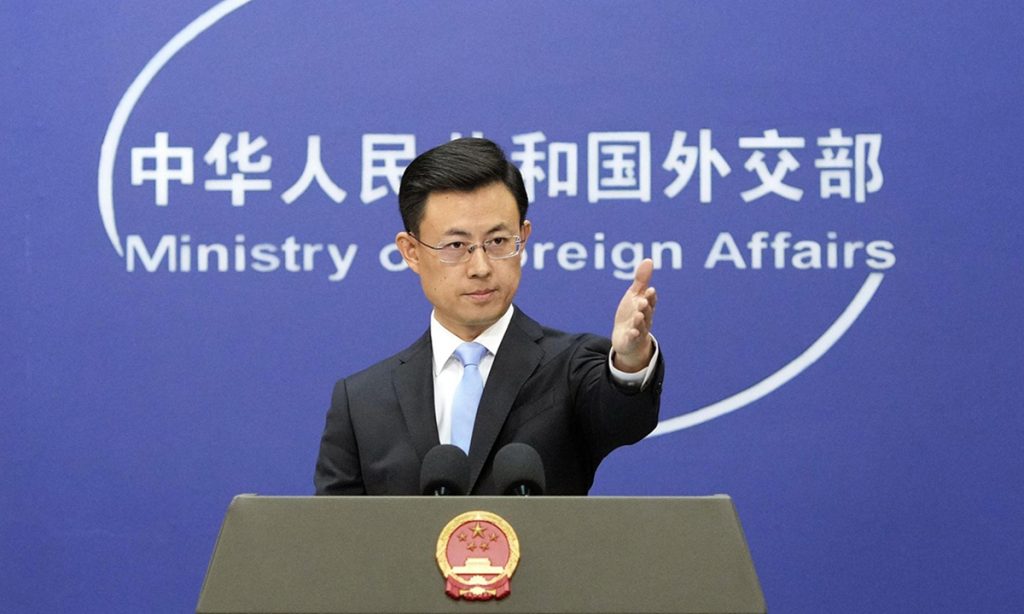
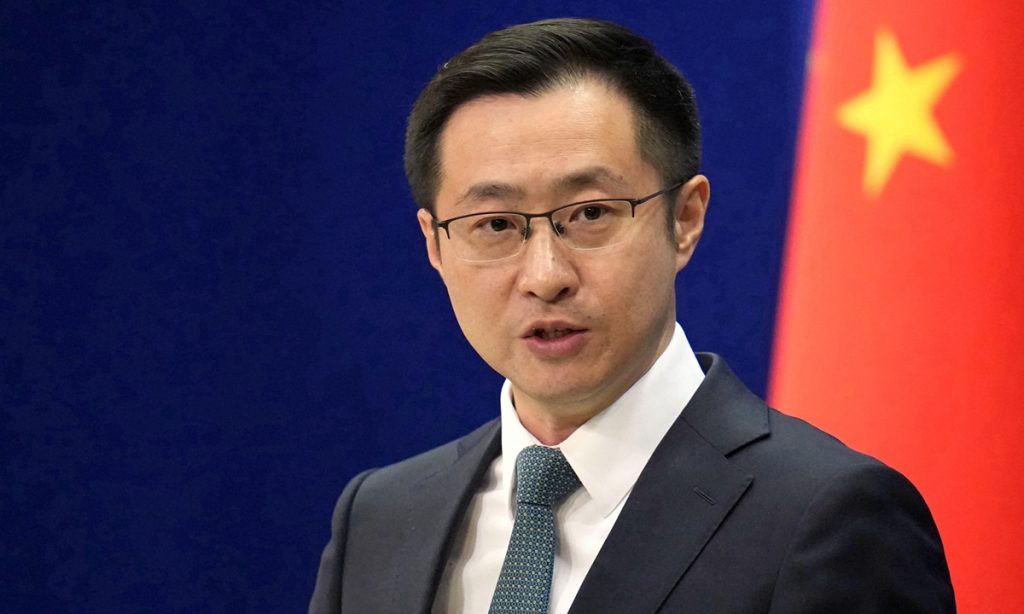
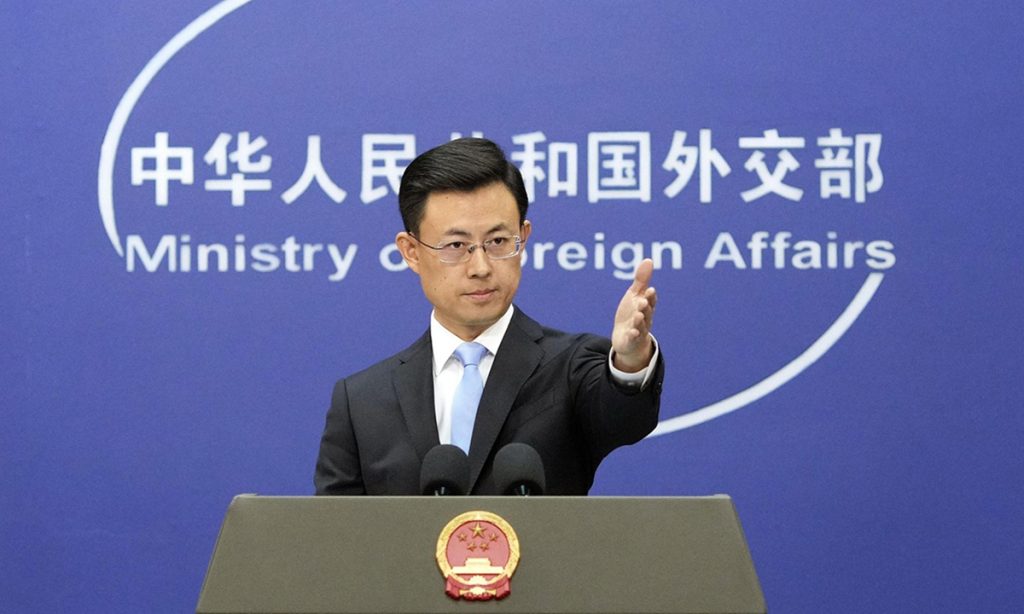
China hopes that the cooperation between relevant country and Pacific nations will be truly conducive to the development and stability of the Pacific islands region. The cooperation should not target any third party, still less be used as an excuse for geopolitical contest, Chinese Foreign Ministry spokesperson Guo Jiakun said on Monday.

He made the remarks at the Monday regular press conference, in response to Australia and Vanuatu on the same day signing an economic and security agreement that prohibits the establishment of any foreign military base on the Pacific island nation's territory. Australian officials have previously expressed concern that China is seeking an expanded security presence in the region, including in Vanuatu.

China always upholds the principles of mutual respect, equality, mutual benefit, openness and inclusiveness in carrying out practical cooperation in various fields with Vanuatu and other Pacific nations, Guo said.

According to the Australian Financial Review (AFR), Australian Prime Minister Anthony Albanese and Vanuatu's leader Jotham Napat signed the Nakamal agreement in Canberra on Monday, almost a year after a planned signing ceremony in Port Vila collapsed over concerns Vanuatu would surrender too much sovereignty to Australia, particularly over foreign investment decisions.

Certain Western media outlets including the AP and the Australian Broadcasting Corporation are falling back on their familiar rhetoric, hyping supposed competition between China and Australia for influence across the region when reporting on the Australia-Vanuatu agreement. 

Chen Hong, director of the Asia Pacific Studies Centre of East China Normal University, told the Global Times on Monday that such hype from Western media largely stems from their tendency to view Pacific island states through a Cold War-style geopolitical lens, treating sovereign nations merely as bargaining chips for major-power rivalry. 

Such narratives overlook the region's most pressing reality: For Pacific island countries, the gravest security challenges lie not in purported competition over military outposts or bloc standoffs, but existential hurdles including natural disasters, energy shortages and inadequate public services that hinder their survival and development, Chen stressed.

China's cooperation with Vanuatu centers on the country's core development priorities, with a sharp focus on livelihood projects that deliver tangible results, enabling local communities to witness meaningful progress spanning transport access, stable power supply, healthcare, education and vocational training, Chen said. "This strong people-centered bond renders bilateral cooperation far less susceptible to outside hyping narratives," he said.

Notably, Australia and Vanuatu have agreed to water down key clauses clearly aimed at limiting Chinese investment in Vanuatu's ports, airports and telecommunications by blocking "third party involvement" in critical infrastructure which could affect either country or "the region's security interest," according to the Australian Broadcasting Corporation.

Albanese said on Monday the updated Nakamal agreement would require Vanuatu to consult on any third-party agreement in critical infrastructure. However, the text of the deal shows Australia would no longer have veto rights over critical infrastructure investment in Vanuatu, per the AFR.

Chen said that Vanuatu's efforts to adjust core provisions with notable exclusionary inclinations may well reflect its consistent commitment to upholding national sovereignty and preserving autonomy over its development roadmap, as it hopes to avoid being cornered into taking sides between China and Australia.

Chen noted that from Vanuatu's perspective, key infrastructure covering ports, airports, telecommunications and energy underpins its economic growth, disaster management and progress in people's well-being; such essential national assets are hardly areas where outside parties ought to draw arbitrary investment limits and restrain collaborative development under the guise of security concerns.

Australia's willingness to adjust relevant provisions also points to a reality that Canberra needs to face, which is that Pacific island nations are no longer geopolitical pieces that external powers can manipulate at will. While outside countries may offer development support to these islands, such aid and cooperation should not translate into exclusive control, nor should bilateral partnerships be burdened with political strings that limit collaboration to a single partner only, the expert said.

At the Monday press conference, spokesperson Guo also responded to two follow-up questions regarding a strategic cooperation pact that China and Vanuatu are slated to sign, specifically, when it will be signed and whether the text of the deal with China would be released once it is signed in the interest of transparency.

For the first question, Guo said that China's cooperation with Vanuatu is based on mutual respect, equal consultation, mutual benefit, openness and inclusiveness. China will, in light of the aspirations and needs of Vanuatu, continue expanding friendly exchanges and cooperation in various fields to the benefit of our two countries and peoples, Guo added.

On the second question, Guo said China's cooperation with Pacific island nations is fair and square. "Our cooperation is not imposed on anyone, nor targets any third party, and has been sincerely received by the people in the region," he said, adding that China always handles the documents on bilateral cooperation with Pacific island nations on the basis of friendly consultation.
Takaichi cabinet’s approval rate reportedly sinks to 54.3%, lowest level since taking office; economic woes, neo-militarism agenda undermine public backing, fuel division: Chinese expert

Public approval rate for Japanese Prime Minister Sanae Takaichi's cabinet fell by 5.1 percentage points from the previous month to 54.3 percent in June, hitting the lowest level since she took office last October, a poll by Jiji Press showed.

Conducted from June 12 to 15 with 2000 people aged 18 or over nationwide, the June survey by the Japanese news outlet also suggested that the proportion of respondents who oppose the Takaichi cabinet rose by 2.5 percentage points to 22.2 percent, the highest since Takaichi took office.  

In terms of the political parties, the ruling Liberal Democratic Party (LDP) maintained the top support rate at 22.8 percent, but the figure fell by 5.0 points from the previous month.

Besides Jiji Press, multiple Japanese media outlets have noted the downward trend in approval ratings for Takaichi's cabinet.

Earlier this month, an NHK poll released on June 8 shows that the approval rate for Takaichi cabinet dropped 1 percentage point from last month to 60 percent. The disapproval rate is 26 percent, up 3 percentage points.

A nationwide opinion poll carried out by the Mainichi Shimbun on May 23 and 24 put cabinet support at 50 percent, logging the third straight monthly decline.

"While Takaichi's top-line support levels remain robust, though, the nature of support for the prime minister is nevertheless changing," Katsuhiro Yoneshige, president of news venture JX Press Corp, wrote in an opinion piece for Nippon.com.

Citing surveys from political survey website Go2senkyo.com and the JX News Agency, the article noted that since Takaichi's inauguration, the level of enthusiasm for Takaichi's cabinet has dropped among the working-age generation (those in their twenties to fifties). In May, those who "strongly support" the government registered only 30 percent, down from 50 percent six months prior in this broad and critically important demographic.

The Jiji Press attributed the sliding approval figures to social media videos released by Takaichi's campaign that smeared rival candidates during electoral races, including last year's LDP leadership contest. There are some other Japanese media outlets attributed the decline in Takaichi's approval ratings in recent months to Japan's pervasive cost-of-living crunch and growing alarm over surging energy prices fueled by tensions across the Middle East. 

Earlier this month, a Mainichi Shimbun survey found that the young age group, which once held high hopes for the Takaichi administration, has turned critical of her leadership.

While the Takaichi cabinet is mulling a consumption tax cut on food and beverages to tackle soaring prices, the measure has sparked worries that it may fail to deliver its intended effects. Even if rolled out as a temporary policy, critics fear it could become permanent and trigger deterioration in public finances, according to the Bloomberg Japan. 

Lü Chao, a professor at the Liaoning Academy of Social Sciences, told the Global Times on Saturday that economic and livelihood concerns remain the core benchmark for Japanese voters to assess the performance of the Takaichi cabinet.

"Takaichi made sweeping campaign promises to improve public livelihood and address economic hardships, but she has largely failed to deliver the commitment," the expert pointed out. "Furthermore, her provocative policies toward China have inflicted substantial economic losses on Japan's business sector, fueling discontent among local industrial and commercial communities."

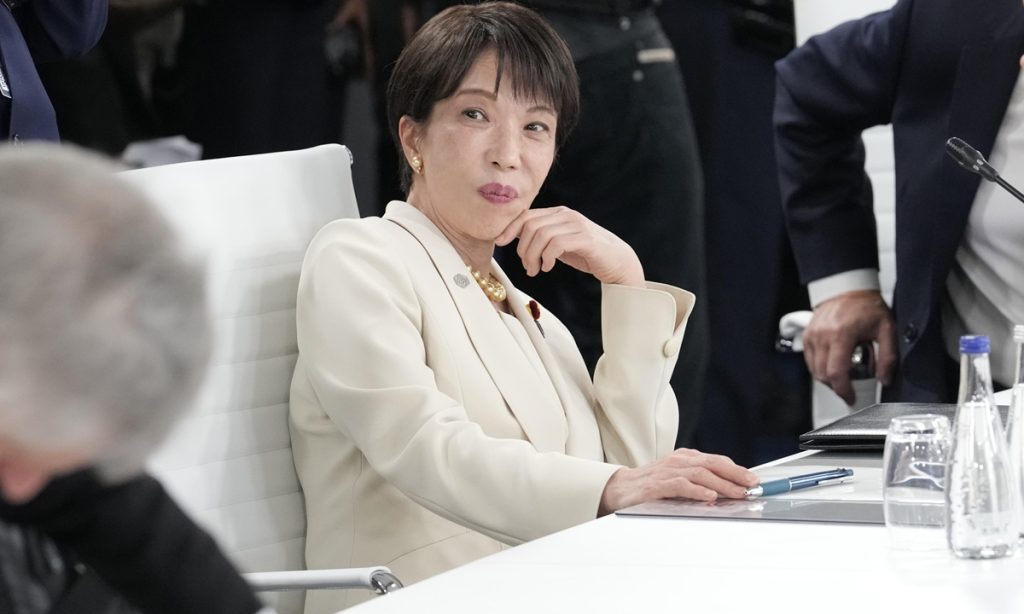
Takaichi's awkward showing on the diplomatic circuit has also drawn fierce backlash from Japanese citizens. On June 18, a clip capturing Takaichi being largely ignored by fellow world leaders ahead of an official G7 group photo went viral across X. 

"Takaichi is isolated, barely able to hold a conversation with anyone. At one point, she even pretended people were talking to her when no one had approached her at all—utterly deranged behavior… All her multiple scandals have become widely known overseas… There is no way world leaders will treat her with genuine respect," commented Japanese netizen with account named Yuma Tsuhara.

Separately, citing France Inter, Japan's Nikkan Gendai reported on Friday that US President Donald Trump clashed with Takaichi during a working dinner at the recently concluded G7 Summit, prompting other world leaders to step in and mediate. The tense exchange erupted after Trump talked about a US strike on Iran and drew a direct parallel between the operation and Japan's attack on Pearl Harbor in 1941.

Ichiro Ozawa, a former member of Japan's House of Representatives, pinned a June 5 report from the Mainichi Shimbun to the top of his X timeline. The article noted approval ratings for the Takaichi cabinet had slipped below 50 percent among young voters for the first time.

His accompanying comment read: "Drive prices ever higher, let the population dwindle further, line pockets with unending illicit slush funds, wear away public morality little by little, dismantle this nation piece by piece, and ultimately lead it to collapse… This is precisely what supporting the LDP means. You are simply tightening the noose around your own neck… It is time people wake up."

According to Lü, while achieving negligible progress in economic recovery and public welfare improvement, the Takaichi cabinet has aggressively advanced far-right and neo-militarist agendas. "Such radical policies have not only exacerbated domestic social divisions and damaged Japan's international reputation, but also undermined the country's overall security environment."

China looks to promote China-Bangladesh comprehensive strategic cooperative partnership to new heights during Bangladeshi PM's upcoming visit: FM

The Chinese side hopes to take this visit as an opportunity to work with Bangladesh's new government to strengthen strategic communication, carry forward traditional friendship, advance high-quality Belt and Road cooperation, expand exchanges and cooperation across all sectors, boost coordination on multilateral affairs, and promote the China-Bangladesh comprehensive strategic cooperative partnership to new heights, Chinese Foreign Ministry spokesperson Guo Jiakun said at a press briefing on Monday, in response to media inquiries over the upcoming China visit by Bangladesh's Prime Minister Tarique Rahman. 

At the invitation of Premier of the State Council Li Qiang, Prime Minister of the People's Republic of Bangladesh Tarique Rahman will pay an official visit to China from June 24 to 26, a Chinese Foreign Ministry spokesperson announced on Monday. 

According to Guo, the visit marks Tarique's first visit to China since he assumed office. During the visit, Chinese leader will hold meetings and talks with him to conduct in-depth exchanges of views on bilateral ties as well as international and regional issues of mutual concern, charting the course for the growth of bilateral relations. 

Tarique will also attend the Summer Davos forum, or the 17th Annual Meeting of the New Champions of the World Economic Forum (WEF), in Dalian, Northeast China's Liaoning Province, he added. 

The spokesperson noted that China and Bangladesh are time-honored friendly neighbors and comprehensive strategic cooperative partners. In recent years, guided by the strategic vision of leaders of the two countries, China-Bangladesh relations have kept forging ahead, political mutual trust has deepened steadily, and fruitful outcomes have been achieved in practical cooperation, delivering tangible benefits to the two peoples.

Chinese top diplomat calls on BRICS to jointly respond to security challenges

Chinese top diplomat Wang Yi on Tuesday called on BRICS countries to join forces and respond to security challenges together.

When meeting Russian Security Council Secretary Sergei Shoigu in New Delhi, India, Wang said that the bloc ought to do its part in safeguarding the security environment, and add more certainty to a turbulent world.

Wang, also a member of the Political Bureau of the Communist Party of China Central Committee and director of the Office of the Central Commission for Foreign Affairs, is in New Delhi for the 16th Meeting of BRICS National Security Advisors and High Representatives on National Security.

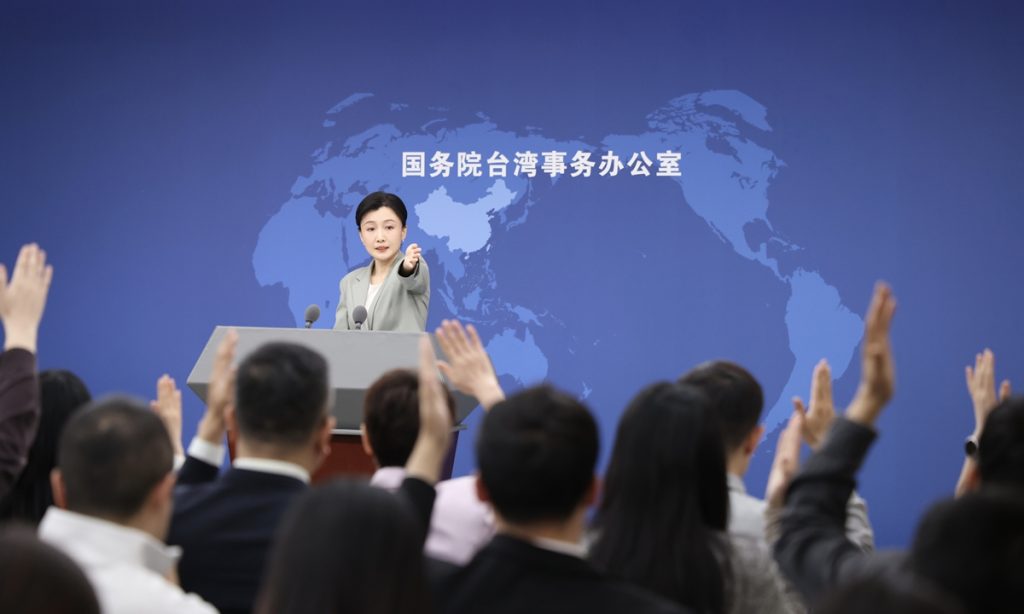
Mainland spokesperson slams Lai's rejection of reunification and US arms purchases intention

Whatever false narratives Taiwan regional leader Lai Ching-te peddles and how many weapons he buys, nothing can change the fact that Taiwan is an inalienable part of China, that Taiwan's future rests entirely with all Chinese people, including Taiwan compatriots, and that any bid for "Taiwan independence" is bound to end in total failure, a Chinese mainland spokesperson said on Wednesday.

Zhang Han, spokesperson for the Taiwan Affairs Office of the State Council, made the remarks in response to media inquiries regarding the recent fallacies spouted by Lai. Lai claimed to "reject reunification" and asserted that Taiwan's future will be determined only by its own people. He also called the US to expedite the approval of a $14 billion arms sale package, according to media reports. 

There is only one China in the world and Taiwan is part of China -- this is a historical and legal fact that no one can alter or shake, as well as a universal consensus of the international community, Zhang said. 

"Our position of firmly opposing US arms sales to China's Taiwan region is consistent and clear-cut. We urge the US side to abide by the one-China principle and the three China-US Joint Communiqués, and handle the Taiwan question with prudence," the spokesperson added. 

This is not the first time Lai expressed his hope to continue US arms purchases, and in his speech on May 20, he said that he had a responsibility to express the voice of so-called Taiwanese society.

In response, Chinese Foreign Ministry spokesperson Guo Jiakun said that the Lai Ching-te authorities have developed a conditioned response of making every attempt to grab attention, which only time and again revealed their true nature as provocateurs and saboteurs of peace. "Taiwan independence" and cross-Straits peace are as irreconcilable as fire and water. Soliciting external support and pursuing military buildup to seek "Taiwan independence" is doomed to fail.

Xi calls on China, Myanmar to steadily advance key projects

Chinese President Xi Jinping said on Tuesday that the China-Myanmar Economic Corridor is a flagship project of the Belt and Road cooperation between the two countries.

Both sides should steadily advance the construction of key projects with safety ensured to help Myanmar develop its economy and improve people's livelihoods, Xi said when holding talks with President of Myanmar Min Aung Hlaing in Beijing.

China releases white paper on global governance

China's State Council Information Office on Wednesday released a white paper titled "More Just and Equitable Global Governance: China's Principles, Proposals and Actions."

The white paper was published to introduce China's principles, proposals and actions on global governance, foster broader consensus within the international community, ensure more effective responses to global challenges, and build a more just and equitable global governance system.

Global governance is a common endeavor that bears on the well-being of all humanity, and building a just and equitable global governance system is a shared vision long pursued by people from across the world, the white paper said, adding that China has always been an active participant in, contributor to, and builder of global governance.

In the new era, President Xi Jinping put forward the vision of building a community with a shared future for humanity. In promoting a global governance system characterized by extensive consultation and joint contribution for shared benefit, he has called for true multilateralism to foster an equal and orderly multipolar world and a universally beneficial and inclusive economic globalization, according to the white paper.

In 2025, Xi proposed the Global Governance Initiative (GGI), which is designed to offer a Chinese solution to the two pressing questions of the era: what kind of global governance system should be established, and how global governance can be reformed and improved.

Upon its introduction, the GGI swiftly gained support from nearly 160 countries and international organizations, with over 60 countries joining the Group of Friends of Global Governance. The international community believes that the GGI sends a clear signal: uphold multilateralism, unite forces, and pursue a fair future, the white paper said.

The GGI aligns with the growing trend towards greater democracy in international relations and bolsters international confidence in practicing multilateralism. It offers a clear and feasible roadmap for improving global governance, bringing valuable stability and positive energy to a turbulent world, according to the white paper.

China has proposed the GGI to expedite the building of a more just and equitable global governance system. Resolutely upholding the UN's authority and status is fundamental to the effective implementation of this initiative, the white paper said.

Success will also hinge on major countries bearing a sense of responsibility, and on all nations uniting and cooperating to address deficits in peace and development. All countries should firmly uphold the international system with the UN at its core, safeguard the international order based on international law, and uphold the basic norms governing international relations underpinned by the purposes and principles of the UN Charter, instead of reinventing the wheel, according to the white paper.

Apart from the preface and conclusion, the white paper has five parts: "The World Today Faces Severe and Complex Challenges," "The Global Governance Initiative Responds to Challenges of Our Times," "China's Contribution to Promoting Global Governance," "Guiding the Direction of Change Towards a Bright Future," and "Moving Forward Hand in Hand at a Critical Juncture in History."

China-Philippines diplomatic relations mark 51st anniversary; scholars urge Manila to eye bigger picture of bilateral ties

June 9 marks the 51st anniversary of the establishment of diplomatic relations between China and the Philippines. Against the backdrop of mixed bilateral interactions, a Filipino scholar said that the relationship need amity, and that stabilizing it is one of the Philippines' most urgent foreign policy challenges.

As China and the Philippines mark 51 years of diplomatic ties today, the anniversary must go beyond ceremony to deliver results through maritime cooperation and ocean governance, according to an opinion piece published in the Inquirer.net on Tuesday by Rommel Banlaoi, president of the Philippine Society for International Security Studies.

The Filipino scholar also published an article in the Manila Times on June 2 entitled "At 51, Philippines-China relationship needs stability and amity." He noted that since 1975, the two nations shared interesting moments of cooperation and confrontation. He wrote that the milestone is a reminder that stabilizing this fragile relationship is one of the Philippines' most urgent foreign policy challenges.

In an interview with the Global Times on Tuesday, Banlaoi said that 51 years after establishing diplomatic ties, China-Philippines relations remain marked by both cooperation and contention. Economic engagement continues to be strong, with China serving as a major trading partner and investor in Philippine development projects. 

Yet political and security tensions — especially in the South China Sea—cast a shadow over these gains, creating fragile bilateral ties, the expert said.

The Philippines and Japan recently announced plans to start talks on maritime delimitation in the waters east of China's Taiwan island. China has taken a series of responsive actions, including a special maritime law enforcement operation on June 6 in waters east of Taiwan island.

Philippine President Ferdinand Marcos Jr also claimed in May that given the geographic proximity of the Philippines to island of Taiwan, the country could be dragged into any conflict involving Taiwan. The remarks draw rebuke from spokesperson of Chinese foreign ministry. 

The Philippines has also continued to strengthen military cooperation with the US, including launching annual joint military drills in April, potentially heightening regional tensions. 

Xu Liping, director of the Center for Southeast Asian Studies at the Chinese Academy of Social Sciences, told the Global Times on Tuesday that against the backdrop of intensifying geopolitical competition, the Philippines has taken the opportunity to court external powers and beef up its military presence, in a bid to strengthen its position in South China Sea issue. However, such moves could backfire ultimately.

Regarding the current bilateral relations, Xu added that the Philippine side needs to realize that maritime differences should not overshadow the broader bilateral relationship, and that Manila should adhere to established bilateral mechanisms and guidelines, rather than involve external powers that could further complicate the situation.

Despite frictions, China and the Philippines have also engaged in maritime consultations. In March, Vice Foreign Minister Sun Weidong co-chaired the eleventh meeting of the China-Philippines Bilateral Consultation Mechanism on the South China Sea (BCM) with Foreign Affairs Undersecretary for Policy and ASEAN SOM Leader of the Philippines Leo M. Herrera-Lim in Quanzhou, Fujian Province.

Banlaoi told the Global Times that despite tensions, feasible cooperation between the two countries still remains in trade, infrastructure, and public health initiatives. 

Banlaoi added that joint efforts in counterterrorism, disaster management, energy security, maritime safety and climate change adaptation also offer avenues for deeper collaboration. 

"These areas allow both countries to compartmentalize disputes and focus on mutually beneficial outcomes," Banlaoi said.

On the occasion of the anniversary, Manila should take further steps to advance China-Philippines cooperation, properly manage differences between the two countries, and return bilateral relations to the track of consultation and dialogue, Xu told the Global Times.

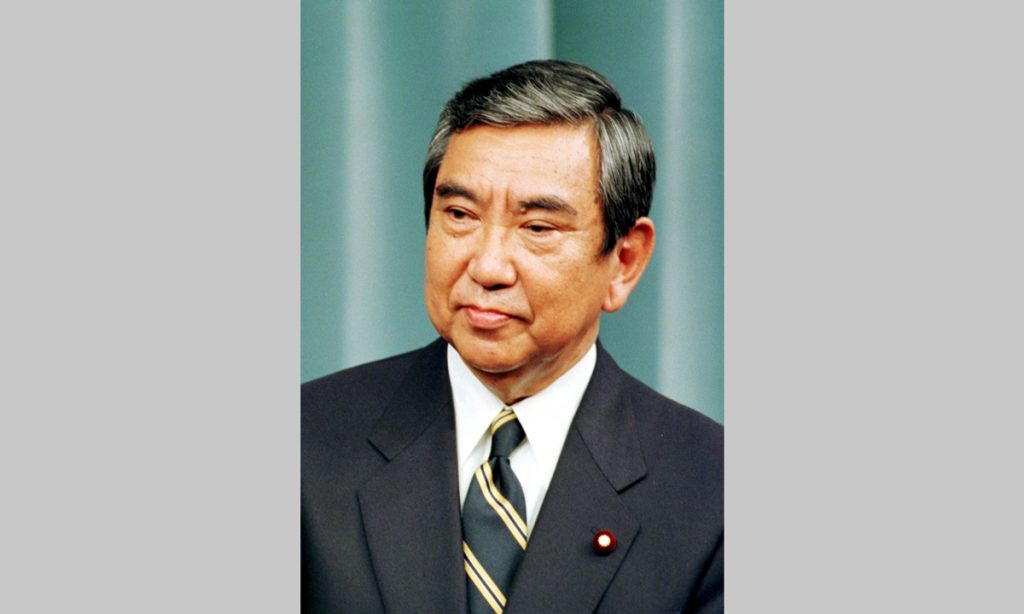
Former LDP president Yohei Kono passes away; Japan’s Takaichi administration should learn from his legacy of facing history: Chinese experts

Japan's former House of Representatives speaker Yohei Kono, who served as president of the Liberal Democratic Party (LDP) and foreign minister, passed away on Monday at the age of 89, according to Japanese media reports. He was widely known for issuing the landmark 1993 Kono Statement acknowledging Japan's wartime responsibilities and had been working for China ties.

Chinese experts noted that Kono represented a generation of Japanese politicians who were willing to confront historical facts and promote friendly ties with China despite huge domestic political pressure. At a time when China-Japan relations remain strained due to Japanese Prime Minister Sanae Takaichi's erroneous remarks regarding Taiwan, Japan should reflect on Kono's political legacy rather than continue down a wrong path.

According to TBS News, Kono was born in 1937. In 1976, he left the LDP after criticizing the party's money-driven political culture and founded the New Liberal Club, before returning to the LDP. In 1993, as chief cabinet secretary in the Miyazawa Cabinet, he issued the Kono Statement.

The full text of the Kono Statement has been publicly released on the official website of Japan's Ministry of Foreign Affairs. The statement acknowledged the Japanese military's direct involvement in the establishment of "comfort stations" on the Korean Peninsula, in China and other places, as well as the coercion of local women into serving as "comfort women," and expressed apologies and remorse over the issue.

The Kono Statement, together with the 1982 Miyazawa Statement and the 1995 Murayama Statement, constitutes the most important set of official statements by the Japanese government reflecting on historical issues stemming from its wartime aggression.

"These three statements were particularly valuable given the broader political climate in Japan at the time, when much of the political establishment avoided confronting historical responsibility and remained reluctant to face their mistakes of the war," Lian Degui, director of the Center for Japanese Studies at Shanghai International Studies University, told the Global Times.

"The three statements represented the official position of the Japanese government. They constituted a rare and full official acknowledgment of issues related to Japan's war of aggression in the postwar era," Lian said.

Lü Chao, a professor at the Liaoning Academy of Social Sciences, told the Global Times that the statements demonstrated that there had once been a group of clear-minded and historically responsible figures within Japan's political establishment.

"The core of today's Japanese right-wing politics is characterized by extreme populism and narrow nationalism, while the three statements challenged such erroneous thinking from the very beginning," Lü said, adding that Japan should face history squarely. "Peaceful and friendly relations across generations remain the shared aspiration of the Chinese and Japanese peoples," Lü said.

Major Japanese media outlets reported on the death of the former LDP president, with some highlighting the significance of the Kono Statement in their coverage of his death. 

Japan's Mainichi Shimbun specifically referred to the Kono Statement on the comfort women issue and noted that Kono had issued the statement acknowledging the responsibility of the former Japanese military and apologizing over the matter.

Yomiuri Shimbun noted that Kono became speaker of the House of Representatives in November 2003 and served for 2,029 days. In September 2008, he announced that he would not run in the next House of Representatives election.  

International media coverage focused heavily on Kono's role in addressing Japan's wartime past. AP News ran the headline "Yohei Kono, who apologized for Japan's wartime sexual abuses of 'comfort women,' dies at 89," while noting in the article that Kono had placed great importance on promoting friendly ties with China, South Korea and other Asian countries that suffered Japanese atrocities before and during World War II.

The Kono Statement led to Japan's broader apology over its wartime atrocities in a 1995 statement by then prime minister Tomiichi Murayama. Both statements were regarded internationally as signs that Japan had come to terms with its wartime past, and they helped to improve relations with its Asian neighbors, according to AP. 

"But the statements have become unpopular among Japanese conservatives who say Japan should stop focusing on negative history to restore national pride," AP reported.

Beyond historical issues, Kono was also widely recognized for his longstanding commitment to improving China-Japan relations. After stepping down as the speaker of the Japanese House of Representatives, Kono devoted his efforts to strengthening Japan-China relations, Yomiuri Shimbun reported.

In 2018, Kono attended an event held as part of the third Understanding China Conference. According to the China Institute for Innovation & Development Strategy (CIIDS), which hosted the event, Kono said he had maintained ties with China for more than 50 years and had visited China many times.

The Mainichi Shimbun reported that Kono was serving as chairman of the Association for the Promotion of International Trade (JAPIT) and had planned to lead a delegation to China later this month. Meetings with senior Chinese officials were reportedly under discussion.

According to the report, official visits to China by major Japanese business organizations have largely stalled following erroneous remarks made by Takaichi regarding Taiwan in November last year. Had the association's visit taken place, it would have been the first such trip since those remarks.

Observers had been closely watching whether Kono's planned exchanges with the Chinese side could help ease tensions in bilateral relations, the Mainichi Shimbun reported.

A person who accompanied Kono on multiple visits to China told the Global Times that Kono was approachable and down-to-earth in daily interactions and devoted decades of efforts to promoting exchanges between the two countries.

The source said Kono made substantial contributions to bilateral relations and, because of his stance, he often faced attacks, smears and criticism from Japanese right-wing forces. Nevertheless, he consistently defended China-Japan relations in public settings.

The source recalled attending an event in Tokyo where a Japanese diplomat made inappropriate remarks about China. Kono immediately reminded the diplomat to "mind your words."

"At a time when bilateral relations have been severely damaged by Takaichi's erroneous remarks and by Japanese right-wing forces, it is even more valuable to have politicians in Japan committed to friendship with China, and continued to push back against the current anti-China tendencies within the Japanese government," Lü said.

"Kono was one of the most representative figures. He consistently advocated friendship with China, faced historical facts directly, and publicly apologized over sensitive historical issues such as the 'comfort women' issue. Such vision and sense of responsibility are rare in Japanese politics and stand in sharp contrast to the short-sighted approach of the Takaichi administration, which prioritizes short-term political gain over long-term regional peace," Lü said.

Lü added that China-Japan relations have now reached their lowest point since the normalization of diplomatic relations between the two countries.

"If Takaichi does not retract and apologize for her erroneous remarks concerning Taiwan, there will be no possibility of restoring China-Japan relations, " he said, adding that "this situation is also deeply saddening for the generations of Japanese politicians and people who have worked to promote China-Japan friendship and improve bilateral relations over the decades."

A show aimed at reaping personal political gain by Teodoro: Chinese FM says of Philippine defense chief’s remarks on Chinese ‘wickedness’

China has noted that Philippine Defense Secretary Gilberto Teodoro Jr. is still confusing black and white and launching smear attacks. His words and actions are not his self-proclaimed "defending national dignity", but rather a grandstanding show aimed at reaping personal political gain, Chinese Foreign Ministry spokesperson Lin Jian said in response to a foreign media inquiry on that according to a Reuters report, following China's imposition of sanctions against Teodoro and his relatives, Teodoro claimed on Friday that he will keep doing his duties in the face of China's "wickedness."

It is precisely the irresponsible and reckless actions of a handful of people like him that will lead to the escalation of China-Philippines disputes, the deterioration of bilateral relations, and ultimately harm the interests of the Philippines and its people, said Lin.