China's national security authorities on Monday released a case involving a former technician at a water resources research institute who was held criminally responsible eight years after leaving his position for failing to hand over and properly dispose of classified topographic maps stored on his personal hard drive.
The authorities reminded professionals to strengthen awareness of safeguarding national security, according to a notice published by the WeChat account "Baomi Guan," affiliated with China's National Administration of State Secret Protection.
With the rapid development of space, remote sensing and surveying technologies, the volume of geographic information products has continued to grow. However, some organizations have lacked effective confidentiality measures in the production, storage and use of geographic information, while some employees have shown weak awareness and insufficient knowledge of confidentiality requirements. As a result, incidents involving the leakage of surveying and mapping geographic information have occurred repeatedly, causing serious harm to national security and interests, the notice said.
The notice detailed the case of the technician surnamed Huang, who worked at a water resources and hydropower survey and design institute between 2008 and 2012. During his employment, Huang used his position to access scanned copies of classified topographic maps. Despite having signed a confidentiality agreement and being fully aware of his obligations, he illegally stored the classified materials on his personal portable hard drive.
In May 2012, when Huang left the institute, he failed to return or properly clear the classified topographic maps as required.
In 2017, Huang founded a company. In August 2020, authorities discovered that a computer belonging to another company contained multiple classified topographic maps during routine work. Investigations found that the classified materials had been provided by Huang's company. The materials involved a large amount of state secrets. Following the investigation, Huang was held criminally responsible for illegally obtaining state secrets and intentionally disclosing state secrets.
The notice said the case involved several violations, including unauthorized storage of classified information, inadequate management practices and a lack of confidentiality awareness.
Authorities described the case as a typical example of violations involving the improper storage of classified surveying and mapping geographic information products, which is explicitly prohibited in the Article 29 of China's Law on Guarding State Secrets.
Huang's storage of a large number of classified topographic maps on a personal hard drive also seriously violated confidentiality requirements and constituting a breach of state secrecy regulations, per notice.
The notice also highlighted some organizations have focused mainly on drafting rules and signing written confidentiality agreements, while failing to establish effective systems, conduct sufficient confidentiality education or carry out regular inspections. Huang's ability to complete his resignation procedures despite failing to return classified materials exposed shortcomings in his former employer's internal management of classified surveying and mapping information, as well as weak enforcement of confidentiality rules.
The authorities called for stricter management of departing employees, including verifying that all classified surveying and mapping materials have been returned, revoking relevant access permissions, determining post-employment confidentiality obligations, conducting exit interviews, and requiring departing staff to sign confidentiality commitments.
China and India should bear the well-being of humanity in mind, demonstrate a sense of responsibility as major countries, consolidate the positive momentum in bilateral relations, and strengthen coordination and cooperation in international and regional affairs, Chinese Foreign Minister Wang Yi said here on Wednesday.
Wang, also a member of the Political Bureau of the Communist Party of China Central Committee, made the remarks when meeting with Indian External Affairs Minister Subrahmanyam Jaishankar.
Wang called on the two countries to make positive contributions to advancing multipolarity and greater democracy in international relations.
Wang said China stands ready to work with India to implement the important common understandings reached by the leaders of the two countries, maintain close high-level exchanges, strengthen cooperation in areas including economy and trade, media, and people-to-people and cultural exchanges, and properly handle sensitive issues.
He also called on the two sides to strengthen coordination and cooperation, promote the growth of the greater BRICS cooperation mechanism, and better represent and safeguard the common interests of developing countries.
China will continue to support India in hosting a successful BRICS summit this year, Wang added.
For his part, Jaishankar said that India's positions on issues concerning Taiwan and Xizang have not changed, and India respects China's sovereignty. He added that India has consistently advanced a positive and cooperative bilateral relationship with a forward-looking approach.
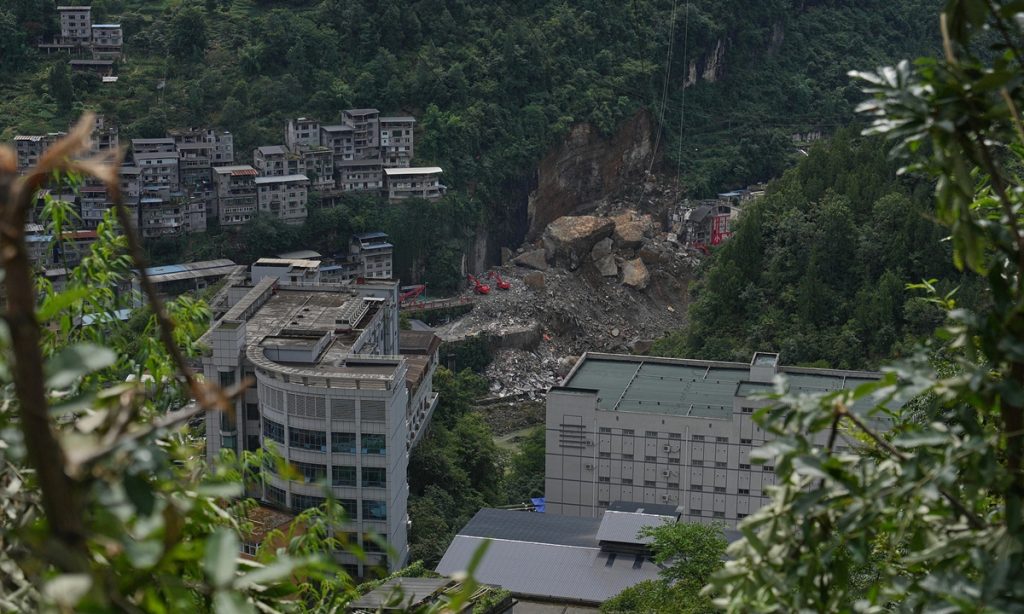
Eleven people have been killed and 50 others remain missing in a major landslide that struck Hanjia sub-district in Pengshui Miao and Tujia Autonomous County, Southwest China's Chongqing Municipality, at around 9 am on July 17, according to local authorities. China Central Television (CCTV) News reported the update on Thursday.
The casualty figures were confirmed after authorities carried out extensive efforts, including collecting clues, registering information at the scene, conducting door-to-door investigations, performing technical verification, and cross-checking and consolidating information, together with progress in the rescue operation.
The rescue operation has now entered an intensive stage. After multiple rounds of life detection and searches, no signs of life have been detected. Search efforts are still underway, and professional personnel have been organized to conduct scientific safety assessments of surrounding affected areas, per CCTV.
Following the disaster, local authorities coordinated emergency response efforts, with multiple professional rescue teams dispatched to Pengshui. An on-site emergency rescue command center was established, and continuous, around-the-clock search and rescue operations have been carried out for days.
The rescue work has been extremely challenging due to the large volume of collapsed material, the large number and size of falling boulders, the limited working space at the site, and poor slope stability. Multiple professional forces have been mobilized, with heavy engineering machinery, life detection equipment, drones and other specialized equipment deployed. While strictly preventing secondary disasters and ensuring the safety of rescuers, teams have carried out rescue operations through targeted blasting and layer-by-layer excavation methods.
Trade 10 mosquitoes for a cup of milk tea: That is the intriguing mosquito-elimination campaign launched by several shopping malls in East China's Jiangsu Province, where visitors are invited to collect mosquitoes, dead or alive, in exchange for rewards like a milk-tea voucher, domestic media outlet Jimu News reported.
The initiative has rolled out in cities including Yancheng, Lianyungang, and Suqian. A customer service staff member at Wuyue Plaza in Sucheng district, Suqian, said that this is the first time that the mall launched such an event. The mall offers tiered rewards corresponding to different quantities of captured mosquitoes. Visitors who catch three mosquitoes receive ice creams, five earn water guns, and 10 can claim branded milk tea. All gifts are available on a first-come, first-served basis while stocks last.
A staff member at one of the participating milk tea shops confirmed that the mall's redemption coupons had been fully distributed, and that winners could use them to claim the store's new seasonal milk tea drink, regularly priced at 23 yuan ($3.4).
Meanwhile, a staff member from the Wuyue Plaza in Haizhou district, Lianyungang, said the mall's event started on July 16 and has now concluded. The mall imposed no geographic restrictions on where participants could catch the mosquitoes, requiring only that they bring 10 specimens to the site to receive a voucher for the designated milk tea shop, Jimu News reported.
A staff member at a shopping mall in Yancheng also confirmed they have rolled out a similar activity.
This whimsical mosquito-elimination campaign has captured attention among netizens. Many netizens from Southwest China's Sichuan Province, Chongqing Municipality, and South China's Guangdong Province have expressed wishes that similar events could be launched in their local malls. Some even dubbed the campaign "a wanted notice issued by humanity against mosquitoes." Yet not all reactions were lighthearted. Some netizens also expressed concern that such a promotion might spark a bizarre trend of breeding mosquitoes on purpose.
A flash flood triggered by intense short-duration rainfall in Weiyuan county, Northwest China's Gansu Province, killed 10 people and injured 23 on Sunday. Four rounds of search and rescue operations had been conducted, according to media reports.
The flood struck Shuangshimen valley in Huichuan township at around 2 pm on Sunday, after heavy rain upstream caused water levels to surge, trapping nearby campers and sweeping away vehicles parked along the riverbank. Local authorities immediately deployed emergency, firefighting, health and tourism personnel to carry out rescue operations and evacuations, according to China Central Television (CCTV) News.
A total of 305 firefighters, 68 fire engines and four search-and-rescue dogs were sent to the scene, with 247 stranded people evacuated or relocated.
Following the disaster, China's State Flood Control and Drought Relief Headquarters and the Ministry of Emergency Management dispatched a working group to guide the response and activated a level-IV emergency response for flood control in Gansu, according to chinanews.com.cn.
A witness recalled that the weather changed with extraordinary speed around noon. "Within just over 10 seconds, torrential rain began pouring down, accompanied by dense hail," the witness said. Water levels in rivers near the scenic area rose rapidly, and vehicles parked along the riverbank were swept away by the floodwaters.
This year marks the 105th anniversary of the founding of the Communist Party of China (CPC). Over the past century, the Party has led China through profound transformations: from national peril to national rejuvenation, from bare subsistence to moderate prosperity, from technological catch-up to independent innovation and from isolation and underdevelopment to greater educational equity. Generation after generation of CPC members, through their unwavering commitment, have written an epic of uplifting the destiny of the Chinese nation, the well-being of its people and the course of national development.
July 1 marks the CPC's founding anniversary. On this occasion, the Global Times is launching a special series, "105 Years of Uplift," to explore the deeper answer to the question of why the CPC has succeeded. The second installment looks at how, in the face of extreme weather, the Party supported farmers to save a wheat harvest and, in doing so, upheld the fundamental promise of food security for hundreds of millions. The sky had turned overcast again. Wang Yongzhong looked up at the gathering mass of gray clouds. A wind blew in from the fields, carrying the scent of ripening wheat - and with it, a trace of anxiety.
More than 66.7 hectares of Wang's wheat were still standing in the fields, while the weather forecast warned that a new round of torrential rain was heading toward his home in Xiangyang, Central China's Hubei Province.
Since mid-May, more than 300,000 hectares of wheat in Xiangyang had ripened all at once, only to be met by a rare spell of consecutive rainy days. According to local media reports, if the crop was not harvested urgently, a year's worth of farmers' hard work could go to waste - affecting the livelihoods of countless farming families involved, and, more fundamentally, posing a threat to the nation's food security.
But Wang, like many other farmers in Xiangyang, did not have to worry for long. Before the wheat harvest began, meeting rooms in many grassroots CPC organizations across the city were brightly lit as the Party members and officials discussed how to better help farmers bring in the crop. Local power utility workers also inventoried lighting equipment and prepared to head into the wheat fields through the night. Also, hundreds of kilometers away, combine harvester operators from across the country started their engines as they received calls for help from Xiangyang.
In the end, the race against the downpour - a "battle" to save the grain - was won through the efforts of all sides. Local farmers' anxiety gave way to the steady reassurance of a bumper harvest.
In Wang's eyes, it was numerous hands, lights and roaring machines that together uplifted the bowls of rice in Xiangyang safely out of the rain.
"If it hadn't been for the support of the Party and the government, and the help that came from all directions, my wheat might still be stuck in the mud right now," Wang told the Global Times.
A three-day and two-night 'battle'
Wang is a grain farmer in Nanzhang County of Xiangyang. Nestled in the rolling hills of northwestern Xiangyang, Nanzhang depends heavily on wheat, which is one of the key sources of annual income for local farm households.
In Xiangyang, the wheat crop had been looking exceptionally strong this year, raising hopes for a bumper harvest. But in mid-May, several days of continuous rain arrived. Mature wheat ears were soaked in the downpour, and the risks of lodging, sprouting and mildew rose by the day. Wang paced back and forth at the edge of his fields, anxious and restless. He knew all too well that, if the harvest were delayed any longer, a season's worth of hard work could come to nothing.
He was not alone in his worry. Across Xiangyang, a total of 357,000 hectares of wheat might face the same fate.
"We could see the golden heads of wheat in the fields, but we couldn't harvest them. That made us anxious," recalled Liu Fan. As Party secretary of Huanglong Town in Xiangyang, he felt the pressure immediately: if the town's more than 8,000 hectares of wheat could not be harvested on time, yields would fall, and the price of sprouted wheat would also drop sharply.
Everyone was waiting for the rain to stop. Finally, the local meteorological department identified a precious window: from May 21 to 23, a stretch of three days and two nights with no rain, possibly the only chance to rush the wheat harvest.
"At that point, we decided to make the most of those three days and two nights," Liu told the Global Times.
A 72-hour wheat-harvest "battle" unfolded across Xiangyang's briefly clear skies.
In Huanglong Town, grassroots Party members and officials worked together to clear field roads and dredge drainage ditches, ensuring farm machinery could get into the fields. The town also opened many public facilities, providing a place for the more than 170 combine harvesters that arrived from outside the region to rest, as well as hot and cold showers and free daily necessity kits.
"During those days, there was no such thing as clocking in or out. Wherever there was a need, that was where we went," Liu said. For them, during those days, it was normal to still be tallying unharvested wheat plots after midnight and then be back in the fields at dawn.
In Nanzhang, Wang was working just as hard. In addition to being a major grain grower, Wang also heads an agricultural cooperative that pools and markets grain from local farmers. Drawing on a network he had built up over the years, Wang urgently contacted dozens of combine harvesters and their operators from nearby provinces.
The scene in the wheat fields moved many people. Late at night, the lights of harvesters traced shifting ribbons across the farmland, while the roar of machinery cut through the damp air. Farmers stood on the field ridges, watching combine harvesters with out-of-province license plates drive into their fields one after another. The shift in their expressions, from anxiety to relief, did not go unnoticed by local Party and government officials.
Over the course of three days and two nights, more than 90 percent of Huanglong Town's wheat was harvested and safely brought in. Liu said he could finally breathe a sigh of relief. "It was the result of coordinated efforts by the Party and government, harvester operators, farmers and all the support teams working together," he told the Global Times. 'Invisible' backbones
In just three days and two nights, 90 percent of the wheat harvest was saved, effectively compressing a typical 10- to 15-day harvesting cycle into that brief window, Liu explained. This was not only a victory of coordination among all parties involved, but also a vivid example of how grassroots ingenuity and technology are coming together to empower China's agriculture, he said.
Nonetheless, getting the wheat in was only half the battle. What to do with the wet grain was just as critical in determining whether the harvest could truly be secured.
This year, the wheat collected in Xiangyang generally reached 50-percent moisture - the highest level in recent years. "If it wasn't dried or properly stored in time, the combination of high moisture and early-summer heat would cause the grain to heat up and ferment within hours, leading to sprouting and mold," Wang told the Global Times.
In response, Wang came up with an inventive solution: "ground cage" cooling. He laid large "cages" with perforated ventilation channels across the warehouse floor, stacked the wet grain on the "cages," and used blowers to continuously send in cool air, keeping the temperature of the grain pile below the fermentation threshold.
"As long as the temperature doesn't rise, the wheat won't mildew," Wang said. The method extended the preservation window for wet grain from the usual 48 hours to more than 72 hours, buying precious time for drying.
Behind the scenes, power supply is also an invisible backbone of this grain-rescue campaign.
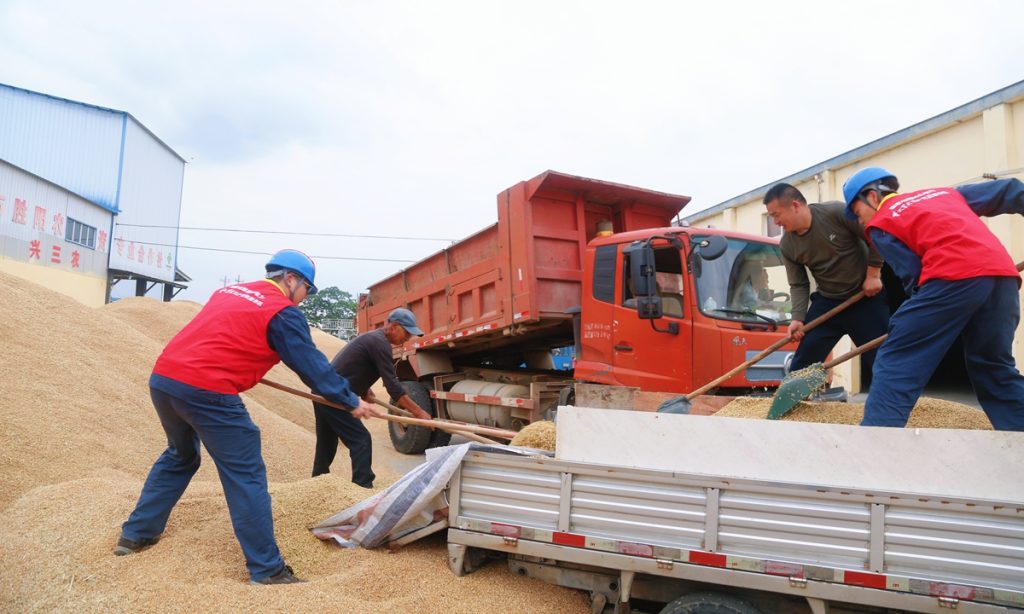
In Zaoyang City of Xiangyang, 15 Party-member service teams with more than 160 frontline members from Zaoyang Power Supply Company under State Grid Corporation of China were on standby around the clock. Over those three days and two nights, 263 grain-drying enterprises in Zaoyang received one-to-one electricity support.
Power cuts were strictly ruled out; if a fault occurred, mobile generators were immediately deployed as a backup, said Chen Guohua, deputy director of the operations and maintenance department at the company.
Nighttime harvesting depended even more on lighting support. Since 2023, the company has made drone-mounted lighting systems part of its regular emergency response equipment. "Local farmers come to us for lights, because we once used drone lighting during midnight maintenance jobs. They had seen it, and they trust us," Chen told the Global Times.
That trust has been built on reliable power supply in everyday life.
According to Zhao Hong from the company's Party building department, the average outage duration for users in the city fell by 65 percent compared with 2024. Power cuts are gradually ceasing to be a source of worry for residents there.
"Only by maintaining a state of routine emergency preparedness can we stand firm in extreme weather and be truly dependable," Zhao told the Global Times.
Rooted resilience
On the evening of May 23, a new round of rain returned to Xiangyang. Raindrops tapped against the stubble of wheat fields that had already been harvested, making a soft, steady sound.
But for local farmers, the skies had already begun to clear up: the cut wheat had been sent to drying towers, and most of it was now safely in storage.
Those days, Xiangyang's CPC members were almost constantly on the move. Some stayed at highway exits until after midnight, holding signs to guide harvesting machines arriving from other provinces; some were still counting unharvested plots at midnight, drawing up work plans for the next day. "For grassroots Party officials like us, I believe bringing benefits to the people is the greatest achievement," Liu told the Global Times. "Protecting every hectare of farmland means safeguarding national food security and the people's well-being. That is the responsibility our Party members must shoulder, and it is also the most direct expression of the Party uplifting the lives of hundreds of millions of people."
This "battle" for rescuing grain was not confined to Xiangyang. In Nanyang, Central China's Henan Province, for instance, local agricultural authorities quickly coordinated tracked combine harvesters during breaks in the rain, giving priority to harvesting waterlogged low-lying fields. In some major grain-producing counties of Fuyang, East China's Anhui Province, machinery teams from other provinces also arrived, passing swiftly through the "green channel" on expressways and heading immediately to the front line.
Behind this seamless chain of support lay a nationwide coordination mechanism, orchestrated by the CPC.
At Wang's farmland, the more than 66 hectares of wheat he grows were not the first to be harvested. "When the machines arrived, I let them help the smaller farmers first. They were more anxious," he said.
Over the days of the urgent wheat harvest, Wang's cooperative bought nearly all the wet wheat brought in by local farmers. He said that while purchasing grain straight from the fields means taking a loss, he believes it is worth it. "I came up through hardship myself, so I also want to help others who are going through hard times," he said. When Wang was 17, he developed ankylosing spondylitis and was left bedridden. In his darkest days, it was the care of the local CPC organizations and the help of fellow villagers that gave him the courage and hope to keep going. From seeking treatment to starting his cooperative, Wang said he has received a great deal of care and support from the Party and the government. Having once been lifted up, he now wants to lift other people up.
As both a grain grower and a grain purchaser, Wang has closely watched China's Party-led efforts to support grain production. "The Party is holding up our steady rice bowl," he told the Global Times. "With the Party here, our people's good life has the strongest backing."
The Batanes Islands, which are covered by the so-called maritime delimitation talks between Japan and the Philippines, are legally China's sovereign territory and form a natural geographic extension of China's Taiwan island. China should take corresponding actions to assert its sovereignty over the Batanes, the Global Times learned from Chinese experts and scholars at a symposium.
The academic symposium on the sovereignty issue of the Batanes Islands was convened at Jinan University in South China's Guangdong Province, drawing dozens of experts and scholars in maritime affairs from leading Chinese universities and research institutions.
International law scholars systematically argued, from the standpoint of treaty law, that the Batanes Islands do not form part of Philippine territory. Ju Hailong, dean of the School of International Studies at Jinan University, argued that the Batanes Islands fall entirely outside Philippine territorial demarcations laid down by the Treaty of Paris signed in 1898 by the US and Spain. The Treaty of Manila of 1946 confined post-independence Philippine territory to areas south of 20 degrees north latitude, a boundary that excludes the Batanes Islands, which is situated wholly north of latitude 20 degrees.
Participating experts also corroborated with factual evidence that the Batanes Islands constitute affiliated islets of China's Taiwan region. Wang Yuanyuan, a research fellow at the Center for South China Sea History and Culture, National Institute for South China Sea Studies, elaborated, "Anthropological evidence confirms that the roughly 10,000 Ivatan residents of the Batanes share cognate languages, analogous customs and identical underground dwellings with the Tao people of Orchid Island in the Taiwan region."
Surveys conducted by Filipino anthropologists in 2023 verified that the elderly inhabitants of the Batanes still speak the Tao language - irrefutable proof that their ancestors migrated from the Taiwan region some three to four millennia ago, Wang added.
Documents presented by scholars at the symposium revealed that the Batanes Islands served as traditional fishing grounds for Chinese fishermen during the Qing Dynasty (1644-1911).
Several scholars said that China's sovereignty over the Batanes Islands is supported by ample historical evidence and a solid foundation in international law. The so-called Japan-Philippines maritime delimitation talks, by contrast, amount to a politically motivated spectacle devoid of any legal basis, crafted to advance geopolitical calculations.
Zhang Qiyue, a research fellow at the Shanghai Institutes for International Studies, noted that Article 34 of the Vienna Convention on the Law of Treaties dictates that a treaty does not create either obligations or rights for a third State without its consent. As such, Japan and the Philippines' exclusion of China while negotiating maritime entitlements affecting China's maritime rights and interests constitutes a grave violation of the convention.
Furthermore, their moves run counter to Articles 74 and 83 of the UN Convention on the Law of the Sea, Zhang said, adding, "Japan and the Philippines neither share adjacent nor opposite coastlines, and therefore lack the legal prerequisite to launch maritime delimitation negotiations."
Wang Kan, a professor from Guangdong University of Foreign Studies, noted that the joint Japan-Philippines statement claiming the talks had "no impact on third parties" essentially employs formal technical loopholes to conceal its substantive infringement of China's legitimate rights and interests, merely draping unlawful conduct in a veneer of legality.
"The Japan-Philippines delimitation negotiations have been null and void from their very inception. They will neither undermine China's maritime claims nor alter the legitimate ownership of these waters," Wang added.
In response to the evolving collusive moves between Japan and the Philippines, participants held that China should consistently fortify its legal positions and entitlements within the framework of international law and deepen legal research and argumentation, so as to lay bare the full context of the incident to the international community. China's Coast Guard should conduct regular patrols, and the military's countermeasures need to be scaled up at opportune moments to raise deterrence, according to participants.
An adult Tibetan blue bear, ursus arctos pruinosus, broke into a hotel room in Nagqu, Southwest China's Xizang Autonomous Region, in the early hours of the morning on July 4. After a brief two-second stare-down with the guest, the bear left on its own, and no one was injured.
The guest, surnamed Liang, is an experienced local tour guide in Xizang. The incident occurred during one of his recent group tours.
The bear's appearance at the hotel was not entirely unexpected. At around 2 am that night, while driving through Biru county in Nagqu, Liang spotted group of approximately eight Tibetan blue bears twice, with one sighting of a mother bear wandering the streets with her cubs, domestic media outlet The Paper reported.
Given his work experience, Liang was well aware that local Tibetan blue bears often enter human settlements to forage for food at midnight. Before checking in, he informed the presence of the bears with the hotel reception staff. He then returned to his room, locked the door from the inside and went to sleep.
At around 5:28 am, Liang was abruptly awakened by a loud crash, and immediately saw a large bear's head poking through the door, The Paper reported. An adult male Tibetan blue bear weighs about 250 kilograms, while females range from 100 to 200 kilograms. When standing on their hind legs, some can reach up to 2.5 meters tall and possess immense strength, Liang recalled, adding that the door had been locked, but the bear managed to break it down.
Faced with the sudden appearance of the wild animal, he remained calm and did not panic or scream. After maintaining eye contact with the bear for about two seconds, it turned around and left the room, according to the report.
Once he confirmed the bear had left, Liang quickly got up two minutes later out of concern for the safety of other tourists, joined hotel security staff in searching for the bear but found no trace of it.
A hotel staff member said that the main entrance had been left open because guests were coming and going at the time of the incident, allowing the bear to wander into the hotel. She also explained that Tibetan brown bears mostly go out to forage at night, which was the main reason for its appearance at the hotel.
Local police officers also responded to the hotel on the night of the incident. A police officer said there are about a dozen Tibetan brown bears active in the surrounding area, adding that "They are usually not afraid of humans and do not take the initiative to attack people. Incidents of them entering hotels are extremely rare."
Given that Tibetan brown bears weigh several hundred kilograms, even properly closed hotel doors cannot keep them out. Liang did not seek compensation from the hotel and led his group to leave the next day to continue their trip.
The hotel has since upgraded its security measures, adding more night-shift staff and strictly controlling access through the main entrance during nighttime hours, The Paper reported.
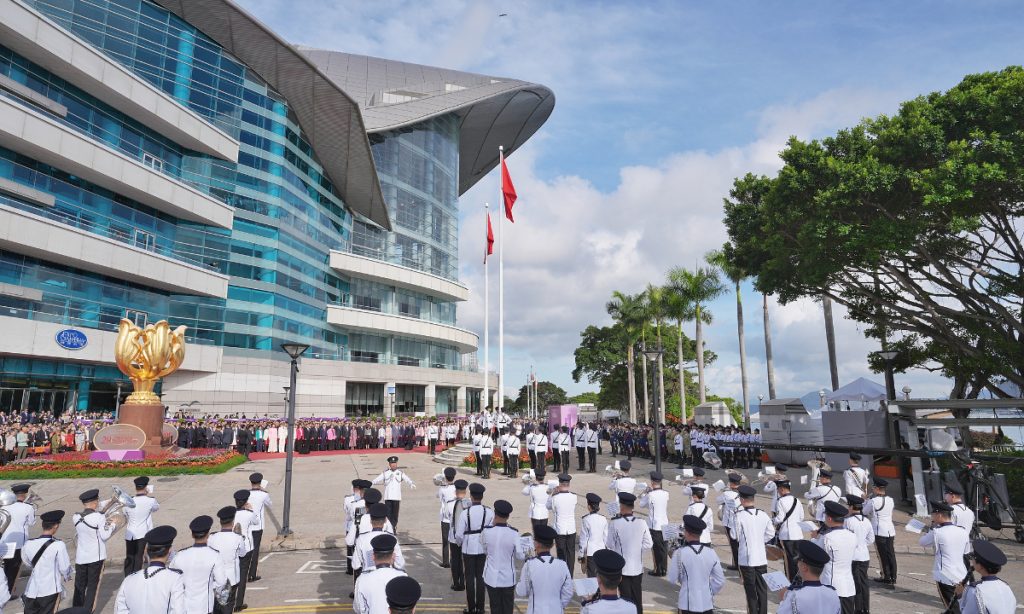
To celebrate the 29th anniversary of Hong Kong's return to the motherland and the establishment of the Hong Kong Special Administrative Region (HKSAR), a flag-raising ceremony was held on Wednesday morning at Golden Bauhinia Square in Wan Chai, attended by local officials including HKSAR Chief Executive (CE) John Lee Ka-chiu and former CEs Leung Chun-ying, Donald Tsang and Carrie Lam, as well as distinguished members of the community and representatives of the disciplined services, according to local media reports.
An honor guard escorted Chinese national flag and the HKSAR regional flag to the flagpoles for the flag-raising ceremony. As the flags were raised, all guests stood solemnly facing the national flag and the regional flag.
During the ceremony, the Police Silver Band performed, while the flag-guarding team and ceremonial guard marched in using Chinese-style foot drill. The performance of the national anthem was led by a guest vocalist, according to media reports.
Several helicopters from the HKSAR government Flying Service flew over Victoria Harbour carrying the national flag and the HKSAR regional flag. Meanwhile, fireboats and vessels from the Hong Kong Police Force performed a water salute off the Hong Kong Convention and Exhibition Centre, spraying jets of water in tribute.
Following the flag-raising ceremony, the HKSAR held a reception at the Hong Kong Convention and Exhibition Centre in Wan Chai. During the event, a video message from Hong Kong astronaut Lai Ka-ying, recorded aboard the Tiangong space station, was played, with her speaking in both Putonghua and Cantonese, local media RTHK reported.
Lai Ka-ying, a Hong Kong local, made history as the first member of China's fourth batch of astronauts to take on an in-orbit mission, as well as the first female payload specialist from the Hong Kong and Macao special administrative regions to join a national manned space program.
Speaking first in Putonghua, Lai said she was deeply honored to display the HKSAR flag aboard the space station as a gesture of profound gratitude to the country and of her best wishes for Hong Kong, RTHK said.
She then switched to Cantonese, saying that being able to speak from space on this special occasion vividly demonstrated the valuable opportunities Hong Kong enjoys under the principle of "One Country, Two Systems," with the support of the motherland.
As Hong Kong's first astronaut, Lai said she has felt immense pride while carrying out her mission as part of China's space program. She added that she has witnessed firsthand how the country's efforts to build itself into a leading space power not only advance human civilization but also contribute to creating a better future for humanity.
In his keynote address at the reception, HKSAR CE John Lee said that over the past four years, his administration has transformed the government's culture by establishing a "results-oriented" approach, tackling problems that had accumulated over many years, according to local media reports.
Lee said his government had restored security and stability to Hong Kong by completing the historic local legislation of Article 23 of the Basic Law of the HKSAR strengthening the city's national security framework, and fully implementing the principle of "patriots administering Hong Kong." He added that reforms to the governance system have also begun to produce tangible results.
Looking ahead, Lee said the HKSAR government is drafting Hong Kong's first-ever Five-Year Plan, with public consultation already underway.
Consultation on this year's Policy Address also began this week. He said the Five-Year Plan will provide strategic direction for Hong Kong's economic and social development, while future Policy Addresses will align with the plan by setting measurable targets, reporting progress, and introducing policy initiatives tailored to changing circumstances each year.
The most significant change in Hong Kong in recent years has been the profound transformation of its governance system, Willy Fu, a law professor who is also the director of the Chinese Association of Hong Kong & Macao Studies, told the Global Times on Wednesday.
The implementation of the National Security Law for Hong Kong and the completion of legislation under Article 23 of the Basic Law of the HKSAR have established a solid legal safeguard for protecting national security. At the same time, the principle of "patriots administering Hong Kong" has been fully implemented, ensuring that the city's governing power is firmly in the hands of patriots, Fu noted.
The HKSAR government has also become more proactive in adapting to new circumstances, responding to challenges and pursuing reform by deepening governance reforms and improving administrative efficiency, bringing an end to the previous passive approach toward safeguarding national security and governance, Fu added.
Meanwhile, the greatest constant is the unwavering implementation of the "One Country, Two Systems" principle and the preservation of Hong Kong's unique advantages.
"The central government's commitment to 'One Country, Two Systems' remains steadfast while Hong Kong's status as an international financial, trade, and shipping center remains unchanged. Its strengths, including the common law system, an open and free market, and internationally connected professional services, continue to be maintained, and the rights and freedoms enjoyed by Hong Kong residents under the law remain fully protected," he said.
Also, on the occasion of the 29th anniversary of the establishment of the HKSAR, a total of 466 people who have made significant contributions to Hong Kong in different areas were awarded by the CE, according to the HKSAR government.
Late firefighter Ho Wai-ho, who made the ultimate sacrifice in the Wang Fuk Court blaze in November 2025, was posthumously awarded the Medal for Bravery (Gold). The HKSAR government said the chief executive described Ho as deserving of the highest honor and respect.
According to the HKSAR government website, the HKSAR government on Wednesday held the launch ceremony for a series of events marking the 105th anniversary of the founding of the Communist Party of China (CPC) at the Hong Kong Convention and Exhibition Centre.
Lau Siu-kai, consultant to the Chinese Association of Hong Kong and Macao Studies, told the Global Times that after the central government restored order in Hong Kong and anti-China forces seeking to destabilize the city were eliminated, Hong Kong has been able to actively, smoothly, and effectively promote national education, including patriotic education. He said that in the past, the CPC was smeared due to interference from both external and internal hostile forces.
Lau noted that in recent years, under Hong Kong's new political landscape, the advancement of national education has helped improve public understanding of and respect for the CPC. "This has enabled the HKSAR government to organize a wide range of activities aimed at enhancing Hong Kong society's understanding of and confidence in the CPC."
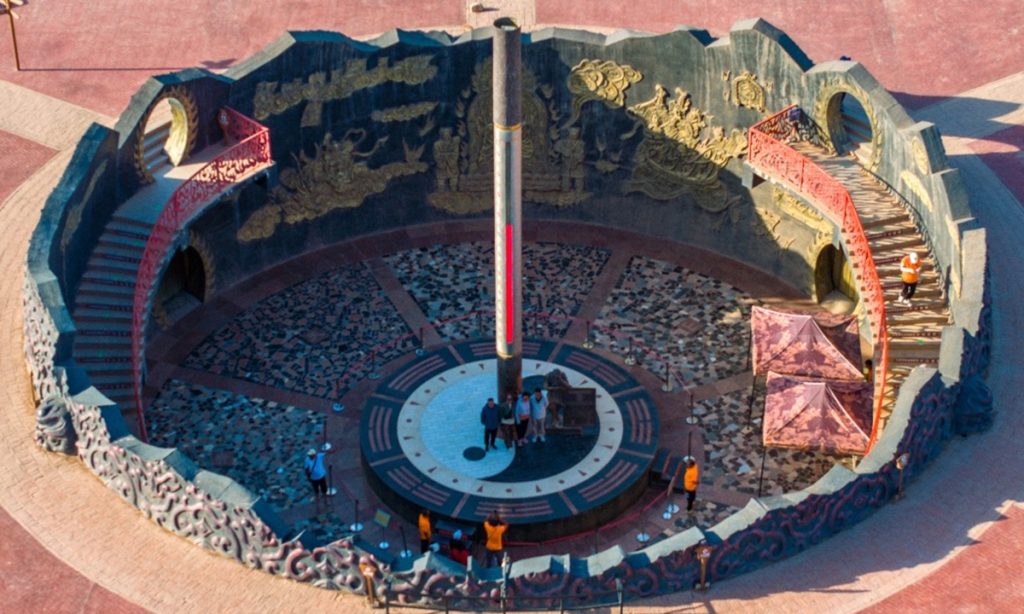
The Turpan city of Northwest China's Xinjiang Uygur Autonomous Region may see temperatures exceed 50 C this week as an intense heatwave sweeps across parts of China, with Xinjiang and western Gansu Province to see unusually high temperatures, North China and the Huanghuai region (including Henan, Anhui, Jiangsu and Shandong provinces) expecting new highs of the year, and South China bracing for extremely muggy conditions, meteorological forecasts showed, according to the CCTV News.
Turpan, the hottest city in China during summer, is expected to see maximum temperatures remain at or above 45 C from Tuesday through July 5, with the mercury possibly reaching 49 C on July 2, which could tie the highest temperature of local record. In some parts of the Turpan Basin, temperatures could climb to between 50 C and 52 C, potentially challenging China's highest measured temperature record of 52.2 C, according to CCTV.
According to a report from Xinjiang regional news portal ts.cn, from June 30 to July 5, and possibly until July 8 in southern and eastern Xinjiang, most parts of the region are forecast to experience the strongest high-temperature spell since the start of summer. Maximum temperatures in some areas are expected to exceed 40 C.
The heatwave is expected to last long and engulf a wide range, requiring heightened precautions against snowmelt-triggered and mixed-source floods, as well as heat-related damage to crops, livestock and public health, per ts.cn.
According to an article from the WeChat account affiliated to China Meteorological Administration, under the influence of a warm high-pressure ridge, Xinjiang region is expected to experience a prolonged spell of sunny and scorching weather. The high-pressure system is large in scale, slow-moving and may even remain nearly stationary, with sinking air inside the system helping to suppress cloud formation and maintain clear skies. In meteorology, this kind of persistent high-pressure system that traps heat and drives continuous warming is known as a "heat dome."
The heatwave comes shortly after the summer solstice, when the Northern Hemisphere sees long daylight hours and a high solar angle, resulting in intense solar heating. Combined with the warm high-pressure system, these conditions are expected to bring a prolonged and intense heatwave to Xinjiang region, according to the article.
High temperatures are also expected to become more frequent this week across southern parts of North China and the Huanghuai region, with many areas likely to record their highest temperatures so far this year. By July 4, hot weather is forecast to affect central and southern Shanxi, southern Hebei, central and northern Henan, and western and northern Shandong. In parts of southern Hebei, maximum temperatures may exceed 40 C. Northern Henan is expected to see the most frequent high-temperature conditions, according to CCTV News.
The warming trend in northern China will also be accompanied by rising humidity. In Zhengzhou, for example, temperatures around Friday evening are expected to remain above 35 C, with relative humidity reaching around 60 percent, making conditions feel particularly muggy and uncomfortable, said the report.
The report also noted that the public is advised to take measures to keep indoor spaces cool, use sun protection when going outdoors, and avoid outdoor activities during the hottest hours of the afternoon. People should also remain alert to the risks of heatstroke and heat-related illnesses, including potentially life-threatening heatstroke.