White, fierce and fluffy, snowy owls are icons of Arctic life. But some of these owls are not cool with polar winters.
Every year, part of the population flies south to North American prairies. Ornithologists thought those birds fled the Arctic in desperation, haggard and hungry. But the prairie owls are doing just fine, researchers report August 31 in The Auk: Ornithological Advances.
Over 18 winters, wild snowy owls caught and banded in Saskatchewan, Canada — one of the species’ southerly destinations — were 73 percent heavier than emaciated owls in rescue shelters. Females were heavier and had more fat than males, and adults were in better condition than youngsters. But regardless of age or sex, most snowy owls that made the journey south were in relatively good health.
That means southern winters may not be such a desperate move after all. Prairies are probably just a normal wintering ground for some of the Arctic snowy owl population, the researchers say. Snowbirds, indeed.
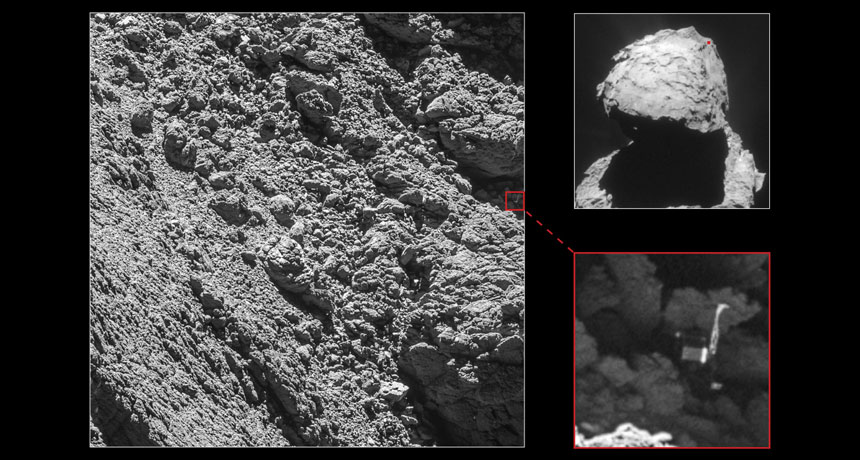
Philae has been found, nestled in a shadowy crevice on comet 67P/Churyumov-Gerasimenko. The comet lander, lost since its tumultuous touchdown on the comet on November 12, 2014, turned up in images taken by the Rosetta orbiter on September 2.
Philae is on its side with one leg sticking out into sunlight. Its cockeyed posture probably made it difficult for Philae to reliably get in touch with Rosetta, explaining why scientists had trouble reestablishing communication. The discovery came about a month before the end of the Rosetta mission; the orbiter was scheduled to land on the comet on September 30and then shut down.
Philae spent just a few days transmitting data from the comet’s surface (SN: 8/22/15, p. 13). It had a rough landing, bouncing twice before stopping. Sitting in the shadow of a cliff, Philae was unable to use solar power to recharge its battery. Rosetta picked up intermittent communication in June and July 2015. Since January, temperatures on the comet have been too chilly for Philae’s electronics; scientists stopped listening for radio signals in July.
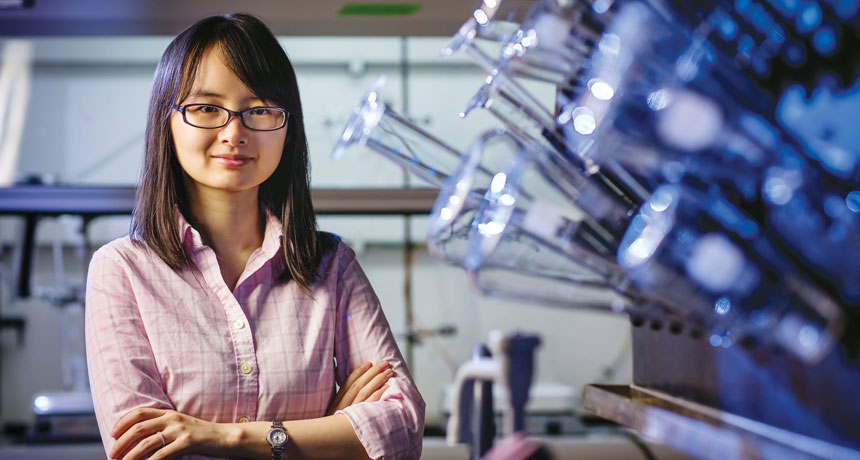
Qian Chen, 30 Materials scientist University of Illinois
The SN 10 In a darkened room, bathed in the glow of green light, materials scientist Qian Chen watches gold nanorods dance. They wiggle across a computer screen displaying real-time video from a gigantic microscope — a tall, beige tube about as wide as a telephone pole.
Chen has observed these and other minuscule specks of matter swimming, bumping into one another and sometimes organizing into orderly structures, just like molecules in cells do. By pioneering the design of new biologically inspired materials, she’s exploring what it means to be “alive.” Next, Chen wants to get an up-close and personal view of cellular molecules themselves: the nimble, multitasking proteins that work day and night to keep living organisms running.
At age 30, Chen is already racking up high-profile publications and turning some far-out ideas into reality. Her ultimate goal: To mimic the machinery that living cells have already perfected. To create life, or something like it, out of nonliving materials.
“If you can see it, you can start to understand it,” Chen said when I visited her lab at the University of Illinois at Urbana-Champaign earlier this year. “And if you understand it, you can start to control it.”
Chen didn’t always want to be a scientist. Growing up in China, she imagined one day becoming a writer. In middle school, she wrote an award-winning story about a girl who figures out how to repair the ozone layer. “My idea was to get some material that can be stretched, like the skin of the balloon,” Chen says. Her interest in inventing new and unusual materials took off years later, in the United States. After graduating from college in China in 2007 — Chen was the first in her family to do so — she headed to Illinois to work with materials scientist Steve Granick.
From the start, Chen stood out. “She made hard things look easy,” says Granick, now at the Ulsan National Institute of Science and Technology in South Korea. He recalls one experiment in particular, when Chen performed a feat some scientists thought impossible: She got thousands of tiny beads to form an open and orderly two-dimensional structure — all by themselves.
Chen had been studying colloidal particles, microscopic specks roughly a micrometer in size. People normally think of these particles as a component of paint, not all that interesting.
But Chen had the idea to cover the particles with a kind of sticky coating that acted something like Velcro. When the particles bumped into one another, they stuck together. At first, “It looked like a mess, like a failed experiment,” says Granick. “Most graduate students would have just chalked it up to a mistake and gone home.”
After a day of knocking around in solution, sticking together and tearing apart, the particles finally settled into something stable. The special coating and the way Chen applied it (capping the top and bottom of each particle) led to a “kagome lattice,” something sort of like a honeycomb. Never before had scientists coaxed colloidal particles into such an open, porous framework. Usually, the particles pack together more tightly, like apples stacked on the shelf at a grocery store, Chen says. That work led in 2011 to a publication in Nature: “Directed self-assembly of a colloidal kagome lattice.” A week earlier, Chen and Granick had published a different paper in Science, “Supracolloidal reaction kinetics of Janus spheres,” about particles that self-assemble into a twisting chain, or helix. At the time, Chen was 24.
“Her work is at the leading edge,” says Penn State chemist Christine Keating. “She’s so full of enthusiasm for science, and energy and creative ideas.”
Exactly how such particles might one day be used is still anybody’s guess. Some researchers envision self-assembling materials building smart water filters or adaptable solar panels that change shape in response to the sun. But the full range of possibilities is hard to fathom. Chen is “trying to invent the rules of the game,” Granick says. “She’s laying the groundwork for future technologies.”
Her next big focus will take her field from self-assembly 101 to the master class level, by mimicking how biological molecules behave. But first she has to see them in action.
Into the cell In 2012, Chen traveled west to the University of California, Berkeley to work with National Medal of Science winner Paul Alivisatos on a new microscopy technique.
Scientists today can view the details of proteins and DNA close up under a microscope, but the results are typically still-life images, frozen in time. It’s harder to get action shots of proteins morphing in their natural, fluid world. That view could unveil what roles different protein parts play.
Even a technique that won its developers a Nobel Prize in 2014 (SN: 11/2/14, p. 15) — it relies on fluorescent molecules to illuminate a cell’s moving parts — can’t always reveal the intricacies of proteins, Chen says. They’re just glowing dots under the microscope. Imagine, for example, looking at a dump truck from an airplane window. You can’t see how the truck actually works, how the pistons help lift the bed and the hinges open the tailgate.
“I use this as inspiration,” Chen says, grabbing her laptop and starting up a video that may well be the fantasy of anyone exploring biology’s secret world. The computer animation shows molecules whizzing and whirling deep inside a cell. Gray-green blobs snap together in long chains and proteins haul giant, gelatinous bags along skinny tracks. No one yet has gotten a view as clear as this hypothetical one, but a technique Chen is now helping to develop at Illinois could change that.
It’s called liquid-phase transmission electron microscopy, and it’s a slick twist on an old method. In standard TEM, researchers create subnanometer-scale images by shooting an electron beam through samples placed in a vacuum. But samples have to be solid — still as stone — because liquids would evaporate.
By sandwiching beads of liquid between thin sheets of graphene, though, Chen gets around the problem. It’s like putting droplets of water in a plastic baggie. The liquid doesn’t dry up, so researchers can observe the particles inside jittering around. Chen has used the technique to see gold nanorods assembling tip-to-tip and DNA-linked nanocrystals moving and rotating in 3-D. Now, she may be on the verge of a big advance.
With liquid-phase microscopy, Chen is attempting to see cellular machinery with a clarity no scientist has achieved before. She is cautious about revealing too many details. But if Chen succeeds, she may be on her way to cracking the code that links biological structure to function — figuring out the parts of a protein, the pistons and hinges, that let it do its specific job. Knowing the structural building blocks of life, she says, will help scientists create them — and everything they can do — out of artificial materials.
“We’re not there yet,” Chen says, “but that’s the big dream.”
A baby boy born on April 6 is the first person to be born from a technique used to cure mitochondrial diseases, New Scientist reports.
The child’s mother carries Leigh syndrome, a fatal disease caused by faulty mitochondria. Mitochondria generate most of a cell’s energy and perform other functions that keep cells healthy. Each mitochondria has a circle of DNA containing 37 genes needed for mitochondrial function. A mutation in one of those genes causes Leigh syndrome. The woman herself is healthy, but previously had two children who both died of Leigh syndrome.
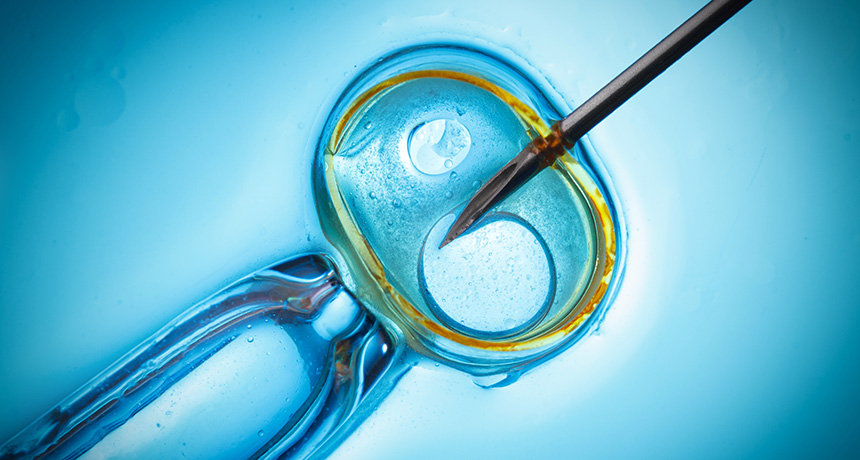
John Zhang, a fertility doctor at New Hope Fertility Center in New York City, and colleagues transferred a structure called the spindle with chromosomes attached to it from one of the woman’s eggs into a healthy, empty donor egg. The resulting egg was then fertilized with sperm from the woman’s husband. The procedure was done in Mexico.
The technique, called spindle nuclear transfer, is one of two ways of creating “three-parent babies” to prevent mitochondrial diseases from being passed on. Such three-parent babies inherit most of their DNA from the mother and father, but a small amount from the donor. Other three-parent children who carried mitochondria from their mothers and from a donor were born in the 1990s, but the baby boy is the first to be born using a nuclear transfer technique. Zhang and colleagues will report the successful birth October 19 in Salt Lake City at the American So
A GPS app can plan the best route between two subway stops if it has been specifically programmed for the task. But a new artificial intelligence system can figure out how to do so on the fly by learning general rules from specific examples, researchers report October 12 in Nature.
Artificial neural networks, computer programs that mimic the human brain, are great at learning patterns and sequences, but so far they’ve been limited in their ability to solve complex reasoning problems that require storing and manipulating lots of data. The new hybrid computer links a neural network to an external memory source that works somewhat like RAM in a regular computer.
Scientists trained the computer by giving it solved examples of reasoning problems, like finding the shortest distance between two points on a randomly generated map. Then, the computer could generalize that knowledge to solve new problems, like planning the shortest route between stops on the London Underground. Rather than being programmed, the neural network, like the human brain, responds to training: It can continually integrate new information and change its response accordingly.
The development comes from Google DeepMind, the same team behind the Alpha Go computer program that beat a world champion at the logic-based board game.
Clever chemistry could take the salt out of water softening.
Aluminum ions can strip minerals from water without the need for sodium, researchers report online October 4 in Environmental Science & Technology. The new technique could sidestep health and environmental concerns raised about the salt released by existing sodium-based water softening systems, says study coauthor Arup SenGupta.
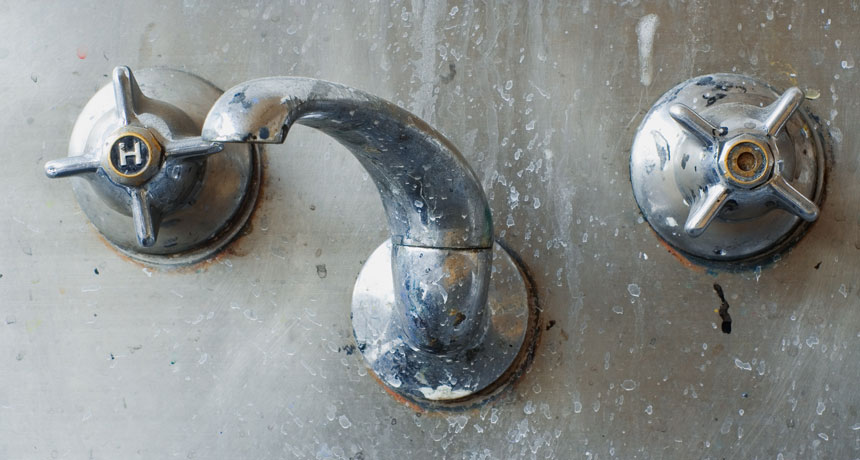
“This is a global need that hasn’t been met,” says SenGupta, an environmental engineer at Lehigh University in Bethlehem, Pa. “We’re just changing the chemistry by adding aluminum ions, which is not something outlandish, but with that we can reduce the environmental impact.” Hard water contains dissolved minerals such as calcium and magnesium that make it harder for soap to lather and that can leave scaly deposits inside faucets and showerheads. Many water softening systems combat these problems by passing water through a special tank containing beads covered in sodium ions, charged particles that can swap places with the calcium and magnesium, resulting in softer water.
This technique adds extra sodium to the outgoing water, though, which can raise blood pressure when used as drinking water (SN Online: 3/12/14). The system also has to be recharged periodically using a sodium-rich brine. That extra salt can end up in local groundwater and streams, prompting bans on salt-based water softeners in many areas, including many counties in California. While some sodium-free substitutes exist, many are expensive while others are “snake oil” and don’t actually work, SenGupta says. He and colleagues decided to try aluminum, a counterintuitive choice based on its chemistry. An aluminum ion has a net positive charge of three, meaning that it has three fewer negatively charged electrons than a neutral aluminum atom. That charge difference makes it less likely for aluminum to swap places with a calcium or magnesium ion, which each have a positive charge of two. But when an ion exchange does happen, the aluminum often quickly precipitates back onto the water softener’s beads rather than dissolving into the water and being swept away. The process allows the same aluminum ion to swap in for multiple calcium and magnesium ions. Setting up a prototype water softening system in the laboratory, the researchers successfully reduced the amount of calcium and magnesium in a groundwater-like mixture using aluminum ions. Recharging the system also resulted in fewer wasted ions than sodium-based systems, the researchers found, lowering the potential environmental impact. The process uses a similar setup to sodium-based systems, SenGupta says, meaning existing systems could be easily retrofitted to use aluminum ions.
While an exciting idea, the new design might not work as well in real life as it does in the lab, says Steven Duranceau, an environmental engineer at the University of Central Florida in Orlando. Bacteria and other substances in groundwater can reduce effectiveness, and strict guidelines surrounding drinking water could prove an unsurmountable hurdle, he says. “I see these great things all the time, but a lot of them just don’t make it financially.”
SenGupta remains optimistic, though. “This is not a magic bullet; there are shortcomings, but none of these problems are impossible to overcome.”
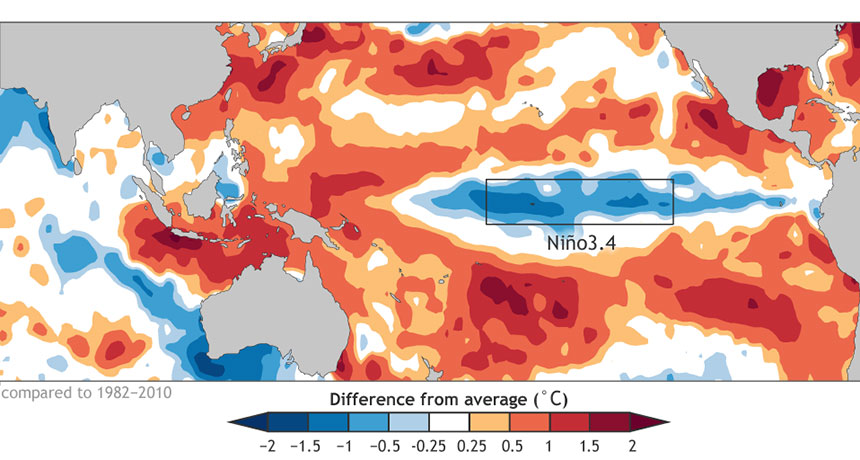
El Niño’s meteorological sister, La Niña, has officially taken over.
This year’s relatively weak La Niña is marked by unusually cool sea surface temperatures in the central and eastern equatorial Pacific Ocean. That cold water causes shifts in weather patterns that can cause torrential downpours in western Pacific countries, droughts in parts of the Americas and more intense Atlantic hurricane seasons.
The event has about a 55 percent chance of sticking around through the upcoming Northern Hemisphere winter and is expected to be short-lived, the National Oceanic and Atmospheric Administration’s Climate Prediction Center reported November 10.
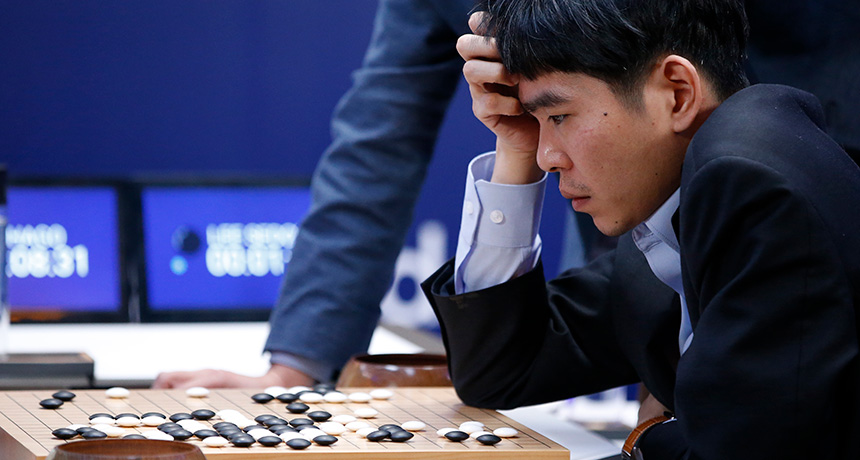
In a hotel ballroom in Seoul, South Korea, early in 2016, a centuries-old strategy game offered a glimpse into the fantastic future of computing.
The computer program AlphaGo bested a world champion player at the Chinese board game Go, four games to one (SN Online: 3/15/16). The victory shocked Go players and computer gurus alike. “It happened much faster than people expected,” says Stuart Russell, a computer scientist at the University of California, Berkeley. “A year before the match, people were saying that it would take another 10 years for us to reach this point.” The match was a powerful demonstration of the potential of computers that can learn from experience. Elements of artificial intelligence are already a reality, from medical diagnostics to self-driving cars (SN Online: 6/23/16), and computer programs can even find the fastest routes through the London Underground. “We don’t know what the limits are,” Russell says. “I’d say there’s at least a decade of work just finding out the things we can do with this technology.”
AlphaGo’s design mimics the way human brains tackle problems and allows the program to fine-tune itself based on new experiences. The system was trained using 30 million positions from 160,000 games of Go played by human experts. AlphaGo’s creators at Google DeepMind honed the software even further by having it play games against slightly altered versions of itself, a sort of digital “survival of the fittest.”
These learning experiences allowed AlphaGo to more efficiently sweat over its next move. Programs aimed at simpler games play out every single hypothetical game that could result from each available choice in a branching pattern — a brute-force approach to computing. But this technique becomes impractical for more complex games such as chess, so many chess-playing programs sample only a smaller subset of possible outcomes. That was true of Deep Blue, the computer that beat chess master Garry Kasparov in 1997.
But Go offers players many more choices than chess does. A full-sized Go board includes 361 playing spaces (compared with chess’ 64), often has various “battles” taking place across the board simultaneously and can last for more moves.
AlphaGo overcomes Go’s sheer complexity by drawing on its own developing knowledge to choose which moves to evaluate. This intelligent selection led to the program’s surprising triumph, says computer scientist Jonathan Schaeffer of the University of Alberta in Canada. “A lot of people have put enormous effort into making small, incremental progress,” says Schaeffer, who led the development of the first computer program to achieve perfect play of checkers. “Then the AlphaGo team came along and, incremental progress be damned, made this giant leap forward.”
Real-world problems have complexities far exceeding those of chess or Go, but the winning strategies demonstrated in 2016 could be game changers.
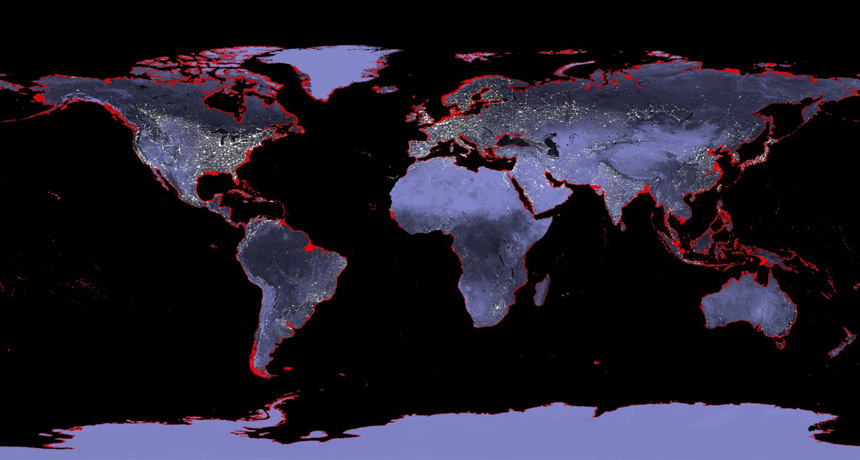
The last time Earth’s thermostat was cranked as high as it is today, sea levels were high enough to completely drown New Orleans (had it existed at the time), new research suggests.
Ocean surface temperatures around 125,000 years ago were comparable to those today, researchers report in the Jan. 20 Science. Previous estimates suggested that this period, the height of the last warm phase in the ongoing ice age, was as much as 2 degrees Celsius warmer. Climate scientists often use the last interglacial period as a reference point for predicting how rising temperatures will affect sea levels. The new results, the researchers write, will help scientists better predict how Earth’s oceans and climate will respond to modern warming. Warming 125,000 years ago raised sea levels 6 to 9 meters above present-day levels.
The global scale of that warming has been difficult to estimate. Chemical clues inside dozens of seafloor sediment samples collected from around the world provide only regional snapshots of the ancient climate. Combining 104 of these dispersed data points, climate scientist Jeremy Hoffman of Oregon State University in Corvallis and colleagues pieced together a global climate picture.
Average global sea surface temperatures around 125,000 years ago were indistinguishable from the 1995 to 2014 average, the researchers estimate.
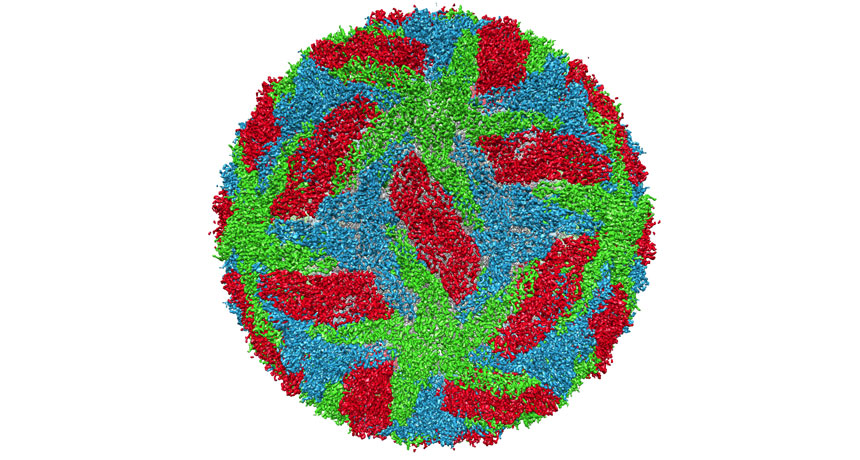
The playground ditty “first the worst, second the best” isn’t always true when it comes to dengue fever. Some patients who contract the virus a second time can experience more severe symptoms. A rogue type of antibody may be to blame, researchers report in the Jan. 27 Science. Instead of protecting their host, the antibodies are commandeered by the dengue virus to help it spread, increasing the severity of the disease.
Four closely related viruses cause dengue, a mosquito-transmitted disease marked by fever, muscle pain and other flulike symptoms. When a previously infected person contracts a second type of dengue, leftover antibodies can react with the new virus. Fewer than 15 percent of people with a second infection develop severe dengue disease. Those who do may produce a different type of antibody, says Taia Wang, an infectious diseases researcher with the Stanford University School of Medicine.
Wang and colleagues found that dengue patients with a dangerously low blood platelet count — a sign of severe dengue disease — had an abundance of these variant antibodies.
Tests in mice supported the connection. “We found that when we transferred the antibodies from patients with severe disease into mice, they triggered platelet loss,” Wang says.
Wang says it’s not known why some people have this alternate antibody. She and her team want to determine that, along with how these antibodies are regulated by the immune system. With further research, they may be able to screen people to identify those more susceptible to severe dengue disease, Wang says.
Anna Durbin, a dengue vaccine researcher at the Johns Hopkins Bloomberg School of Public Health, doesn’t see a strong connection between this type of antibody and the severity of dengue disease. But she says that the research was interesting in how it connected dengue to low platelet count, a condition known as thrombocytopenia.
“There’s a lot of different theories out there about the role of dengue antibodies and thrombocytopenia, and whether or not the virus itself can enter platelets,” Durbin says. “I think this paper may provide more insight into what is the pathogenic mechanism of thrombocytopenia and dengue, and raises some good avenues for further research.”