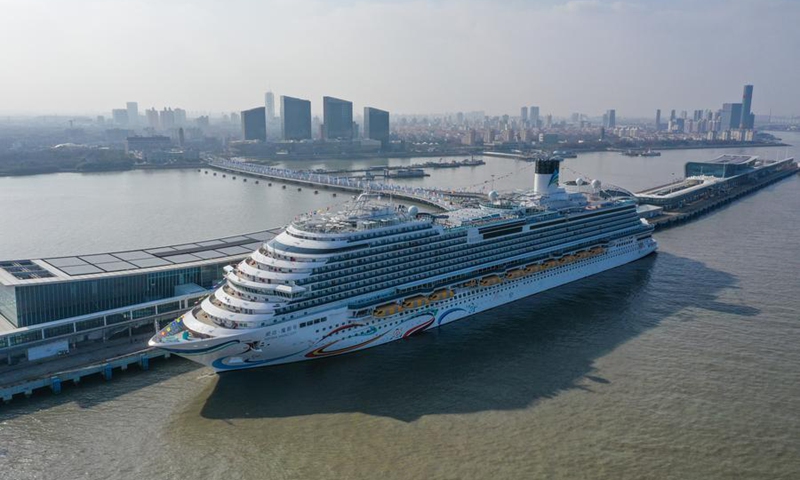
The Adora Magic City, China's first homegrown large cruise ship, departed from Shanghai on Saturday, marking the launch of the country's first-ever cruise-to-nowhere voyage.
Unlike traditional cruises, the new itinerary involves the ship leaving from and returning to its home port, Shanghai Wusongkou International Cruise Terminal, without making any stops, cruising solely on the high seas.
The three-day, two-night voyage from Saturday to early Monday offers passengers a relaxed, immersive experience without the need to rush from one port to another.
"It feels very relaxing, and I don't have to take extra days off work. I am really looking forward to experiencing the homegrown large cruise ship," said a tourist surnamed Hu, a white-collar worker from Shanghai, as she stepped on board.
The operator has enhanced onboard entertainment, including a stand-up comedy show, magic performances, theme parties and late-night dining. To ensure comfort, the passenger load was capped at 80 percent, with an average age of 47, lower than the usual 55 on regular routes.
On Friday, Shanghai issued China's first entry-exit permit for such cruises. The following day, streamlined customs and border inspection services were in place for travelers.
Tong Danying, an official with the Shanghai Municipal Transportation Commission, said cruises to nowhere are not a simplified version of traditional cruises, but a brand-new product that turns the ship into the destination itself, creating a new consumption scenario.
Figures show that China has seen booming cruise tourism, with total cruise passenger throughput in 2025 surging 25.3 percent year on year.
Chinese President Xi Jinping has pointed out that interactions between civilizations provide the most solid foundation for the Shanghai Cooperation Organisation's (SCO) development, and people-to-people exchanges provide the strongest driving force for the organization. Kyrgyzstan will host this year's summit, which marks the 25th anniversary of the founding of the SCO.
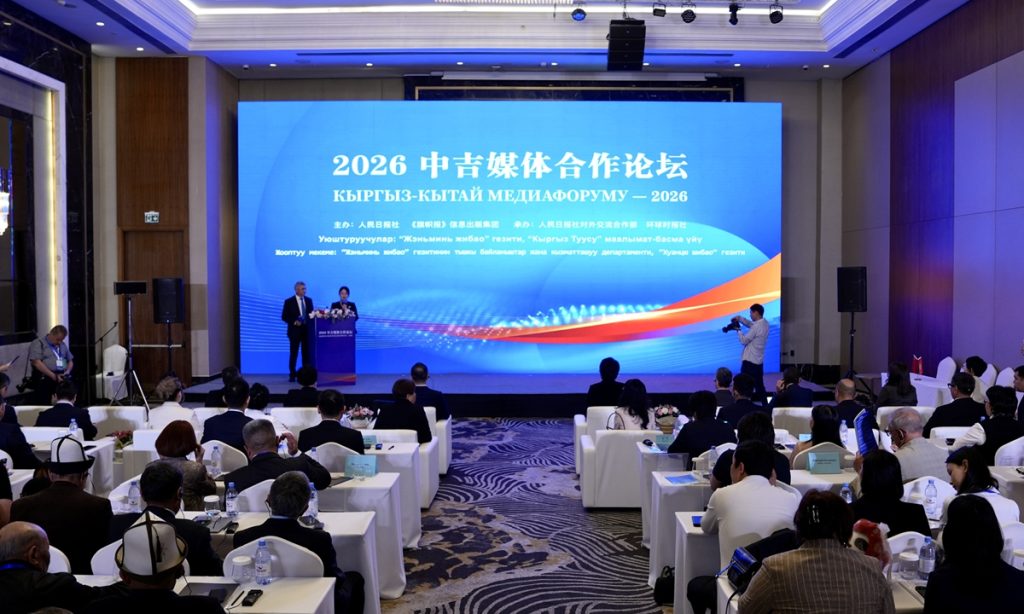
On May 27, the 2026 China-Kyrgyzstan Media Cooperation Forum, themed "Deepening China-Kyrgyzstan Media Cooperation for a Brighter SCO Future," was held in Bishkek, the capital of Kyrgyzstan. Nearly 100 media representatives, officials from relevant departments, experts, scholars and business representatives from China and Kyrgyzstan attended the forum, engaging in in-depth exchanges and discussions on topics including economic and trade development, cultural exchange and media cooperation. The forum was jointly hosted by the People's Daily and Kyrgyz Tuusu Publishing House.
Media in unity, building consensus for development
"Amity and good-neighborliness are invaluable to a country." Linked by mountains and rivers, China and Kyrgyzstan are good neighbors, good friends and good partners enjoying close people-to-people ties. In recent years, under the strategic guidance of the two heads of state, the China-Kyrgyzstan comprehensive strategic partnership for a new era has maintained a strong momentum of development. Media outlets from both countries have played an active role in promoting the building of a closer SCO community with a shared future and a China-Kyrgyzstan community with a shared future.
Cui Shixin, Deputy Editor-in-Chief of the People's Daily, said that holding the China-Kyrgyzstan Media Cooperation Forum is both an implementation of the important consensus reached by the two heads of state on deepening the China-Kyrgyzstan comprehensive strategic partnership for a new era, and a concrete action to create a favorable public opinion environment and lay a solid public foundation for the upcoming Bishkek SCO Summit. China and Kyrgyzstan are companions on the path to modernization. Media of both countries should build consensus on development to anchor mutual trust, boost mutually beneficial cooperation to pave the way for prosperity, deepen cultural exchanges to nurture the tree of friendship and consolidate institutional foundations to amplify the voice of the SCO. With a constructive attitude, they should build bridges of understanding, present a true, multidimensional and comprehensive picture of China-Kyrgyzstan cooperation, and tell vivid stories of mutually beneficial cooperation between the two countries.
Salkyn Sarnogoeva, Deputy Minister of Culture, Information, Sports and Youth Policy of the Kyrgyz Republic, said that the friendship between China and Kyrgyzstan has a long history, and the spirit of the Silk Road has firmly bound the two peoples together. In the digital era, media are a bridge connecting the peoples of the two countries, and it is very important for the two sides to strengthen media exchanges and cooperation. At present, the SCO is in a period of vigorous development, and the media of both countries should jointly respond to the challenges posed by fake news and information disorder, learn from each other in areas such as artificial intelligence applications, creative industry development, and media platform building, and support the growth and development of young journalists.
Since its founding, the SCO has always upheld the Shanghai Spirit of mutual trust, mutual benefit, equality, consultation, respect for diverse civilizations and pursuit of common development. It has become the world's largest regional cooperation organization in terms of population, geographic area and development potential.
Galina Baitekerek, head of Kyrgyz Tuusu Publishing House in Kyrgyzstan, said that the SCO is becoming an important platform for different civilizations to strengthen dialogue and mutual respect. Strengthening cooperation between Chinese and Kyrgyz media in various fields will help establish an objective image of SCO member states internationally and is of great significance for promoting the development of the SCO. The two sides have broad prospects for cooperation in many areas, including promoting exchanges of experience between journalists and experts, creating joint media projects, advancing digital platforms and new media development, and increasing support for young journalists.
Sun Dapeng, counselor of the Chinese Embassy in Kyrgyzstan, said that media play an irreplaceable role in deepening mutually beneficial cooperation and promoting people-to-people affinity. Media cooperation is also a key direction of SCO cooperation and China-Kyrgyzstan cooperation. This forum is another important achievement of China-Kyrgyzstan media cooperation. He hopes that media from both countries will continue to deepen cooperation, firmly promote the Shanghai Spirit, introduce successful experiences in SCO development, show the bright prospects of cooperation among countries and tell the "SCO story" well.
Mutual benefit and win-win outcomes, broadening path of cooperation
Civilizations become colorful through exchange, and cooperation becomes profound through pragmatism. At the forum, guests from the tourism, aviation, logistics, automotive and technology sectors of both countries shared cooperation achievements and discussed future visions, painting a vivid picture of coordinated development and mutual benefit across multiple fields between China and Kyrgyzstan.
Eduard Kubatov, Director of the State Agency for Tourism Development of Kyrgyzstan, said that China-Kyrgyzstan relations are currently at their best in history, with political mutual trust, economic and trade investment, and cultural exchanges continuing to deepen. Tourism cooperation is an important part of the bilateral friendship. The two sides have already opened direct flights and are actively 8ancient city of Suyab), and will also work with Uzbekistan to build an international tourism hub. He said Kyrgyzstan is willing to take this forum as an opportunity to work with China to advance tourism and cultural cooperation and jointly promote the continued development of bilateral relations.
A representative from Air China's Bishkek office said that Air China will officially enter the Kyrgyzstan market. Earlier media reports indicated that Air China will launch a direct flight between Beijing and Bishkek starting July 17. The opening of this route will pave a smoother "air Silk Road" for personnel exchanges and economic and trade cooperation between the two countries, and the bilateral passenger flow is expected to exceed 200,000 for the first time this year.
Deputy General Director of "Kyrgyz Post" JSC, Uulzhan Masiyanova, said that Kyrgyzstan and China are engaged in close cooperation in political, economic, logistics, digital technology, information and communications, and cultural fields. In particular, cooperation in cross-border e-commerce and logistics has become one of the vivid examples of practical cooperation between the two countries. Their cooperation is reflected not only in the extension of roads and the growth of trade, but also in the integration of information spaces, mutual understanding in the media sector, and deeper awareness and understanding between the peoples of the two countries.
In his remarks, Lu Yunran, CEO of 212 Off-Road Vehicle Co., Ltd., shared the story of how 212 became a flagship independent Chinese off-road model. He said that China's complete industrial and supply chain system, the creativity of millions of engineers and the breakthroughs made by Chinese automobiles in the new energy and intelligent era have provided a solid technological foundation and a broad stage for Chinese brands to go global. At present, 212's global sales network covers more than 80 countries and regions. In the future, the company will deepen cooperation with partners in Central Asian countries and work together with all parties under a "Chinese technology + local market" model.
Ulanbek Satiev, General Director of the National Television and Radio Broadcasting Corporation of the Kyrgyz Republic (NTRK), said that while NTRK has been deeply cultivating traditional television media, it has also built a strong influence on new media platforms. At present, NTRK is also actively embracing cutting-edge technology and has officially introduced artificial intelligence to broadcast daytime news.
Li Dahai, CEO of Beijing MODELBEST Technology CO., LTD, said that artificial intelligence is not only a new round of technological revolution, but also a new development channel, and should become an inclusive infrastructure for common development among countries. Relying on key laboratories and an open-source ecosystem, ModelBest AI has already established the technical chain for "sovereign large models" and created a sample of an intelligent foundation. He looks forward to working with partners in Kyrgyzstan and other Central Asian countries to make AI better understand local languages, be closer to local industries and better serve local people.
People-to-people exchanges, painting picture of future together Ideas collide to gather wisdom, and dialogue deepens friendship. In the roundtable discussion session of the forum, guests engaged in in-depth exchanges on the topic of "Media building bridges of people-to-people exchanges and empowering cooperation and development between the two countries," sharing experiences, building consensus and offering suggestions to improve the quality and effectiveness of China-Kyrgyzstan media cooperation.
Guan Kejiang, President and Editor-In-Chief of the Global Times, said that language is a bridge for communication, and media can use each other's languages to better tell the stories of their own development, China-Kyrgyzstan cooperation, SCO cooperation and the Global South. This is the proper mission of the media.
Du Hua, Director of the Confucius Institute on the Chinese side at Bishkek State University, has worked in Bishkek for seven years. She said that Chinese brands can be seen everywhere in Bishkek, and the idea of mutual benefit and win-win cooperation has taken root in people's hearts. The media are witnesses and communicators of friendly cooperation, and young students can deepen their understanding of each other's cultures through the media.
Kurmanbek Mambetov, a commentator for Kyrgyz newspaper Kyrgyz Tuusu, said he hopes the media will focus more on practical cooperation projects between Kyrgyzstan and China, such as Chinese investment in Kyrgyzstan, technological cooperation and tourism exchanges, so as to enhance mutual trust and promote cooperation. At the same time, the media need to embrace new technologies to better meet the information needs of local audiences.
Ismail Dairov, an international commentator for Slovo Kyrgyzstana, has long promoted environmental protection ideas through the media. He said China has made great achievements in the field of new energy, and the prospects for cooperation between Kyrgyzstan and China are broad. The Kyrgyz side hopes to learn from China's technological experience to support local green development.
At the end of the forum, Kubat Chekirov, head of the "Kut Bilim" media center, told the Global Times that "as journalists, when we convey new knowledge, new trends and new developments from the other country to our own people, cooperation between the two countries will become closer, and mutual understanding will be further deepened."
As the tide rises over the Tianshan Mountains and the wind fills the sails, hearts and hands joined together move toward the future. Standing at the new starting point of the 25th anniversary of the founding of the SCO, the media of China and Kyrgyzstan will continue to carry forward the Shanghai Spirit, fulfill their media mission, and use the pen as a medium and the camera as a bridge to tell the story of China-Kyrgyzstan friendship and spread the voice of the SCO.
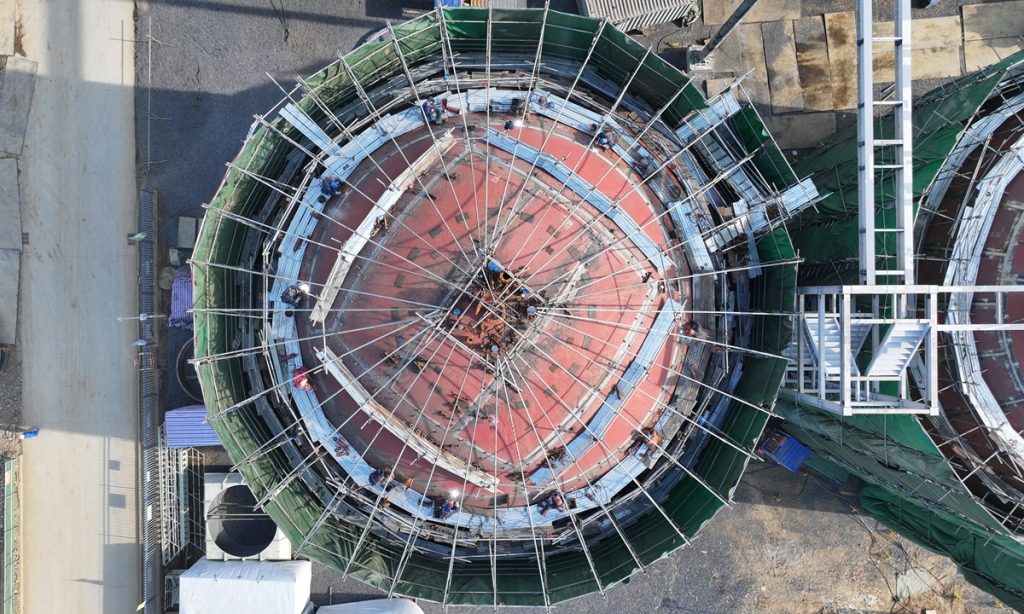
The world's first 300-megawatt compressed air energy storage project in Yingcheng, Central China's Hubei Province, will be put into commercial operation soon, Song Hailiang, a member of the National Committee of the Chinese People's Political Consultative Conference (CPPCC) and the Secretary of the Party Committee and Chairman of China Energy Engineering Corporation Limited (CEEC), told the Global Times.
Song made the remarks after Chinese Premier Li Qiang announced that China will strengthen the construction of ecological civilization and promote green and low-carbon development in 2024 when he delivered the government work report on Tuesday.
As the national team and main force in energy and power and infrastructure construction in China, CEEC is dedicated to contributing more optimal energy construction solutions to building a low-carbon, smart, and harmonious beautiful world, Song noted.
He stated that in the field of comprehensive energy storage, we have successively built compressed air energy storage power stations in Hubei, East China's Shandong Province, Northwest China's Gansu Province and Northeast China's Liaoning Province, taking the lead in technology routes, solutions and industrial ecology.
Among them, the Yingcheng project in Hubei is the world's first 300-megawatt compressed air energy storage project, which will be put into commercial operation soon. The Jiuquan project in Gansu is the world's first 300-megawatt artificial cave compressed air energy storage project, solving the world's geographical constraints on compressed air energy storage, according to Song.
In the process of China's all-round opening up, CEEC is one of the world's largest comprehensive solution providers in the power industry and infrastructure investment and construction contractors. Song said that currently, CEEC's business covers more than 140 countries and regions worldwide, with over 100,000 international business personnel, ranking among the top five in contract amounts among Chinese enterprises undertaking foreign projects.
Over the past five years, the cumulative contract amount of CEEC with countries associated with the Belt and Road Initiative (BRI) has exceeded 500 billion yuan, accounting for over 10 percent of the proportion of contracts signed by all Chinese enterprises, according to Song.
According to Song, CEEC's overseas projects have three major characteristics. First, they are large in scale, such as the Nestor Kirchner-Jorge Cepernic Hydroelectric Power Plant located on the Santa Cruz River in Argentina, which is the largest overseas power project undertaken by Chinese enterprises, demonstrating the strong resource integration capabilities of Chinese enterprises.
Second, the advantages of the entire industry chain are well utilized, with strong integrated service capabilities from survey planning and design to investment construction and operation. Third, the technological level continues to upgrade, accelerating the transformation from traditional energy to new energy, especially in the integrated construction of wind, solar, hydro, and storage energy, he added.
"Faced with the new pattern and trends of global energy development, we are facing a valuable window of opportunity," Song noted.
He suggested that, in the future, China should further optimize the top-level design at the national level, continue to adjust and improve the financial support system, accelerate the establishment of a large investment platform for joint development of production, finance, and technology, and jointly create joint venture platforms and alliance organizations composed of Chinese enterprises, local enterprises, and international enterprises in order to jointly promote the stable and far-reaching development of the BRI.
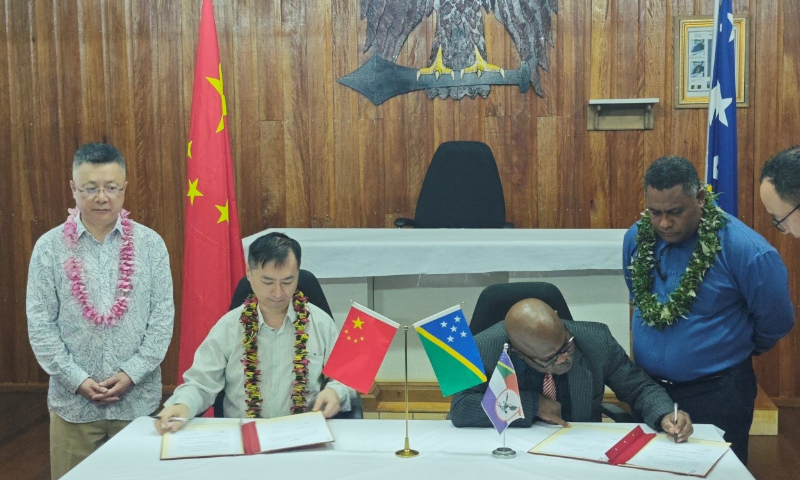
A memorandum of understanding to establish friendly exchange relations was signed last week between Malaita Province of the Solomon Islands and East China's Jiangsu Province in Auki, the provincial capital of Malaita. This new chapter follows years of skepticism, indicating a pivot toward cooperation and mutual growth, analysts noted.
The ceremony on April 4 was attended by nearly 40 people, including Chinese representatives, the ambassador, and provincial legislators and officials from Malaita, the Global Times learned from the Chinese Embassy in the Solomon Islands.
Cai Weiming, the Chinese Ambassador to the Solomon Islands, stated that China would actively promote friendly provincial cooperation with the Solomon Islands central government and Malaita's government. This includes projects like construction of the Auki Road, broadband networks, and sustainable rural development, aiming to foster economic and social advancement locally and benefit the people of Malaita and beyond.
Jiangsu Province is renowned for its economic prosperity, ranking second in GDP in China at more than 12 trillion yuan ($1.74 trillion) in 2023.
On the same day, a ceremony for the handover of livelihood supplies from Jiangsu to Malaita took place in Auki. Ambassador Cai, on behalf of Jiangsu, delivered essential items like water tanks, solar lamps, and fishing nets to Malaita's governor, Martin Fini.
Cai said that the donation from Jiangsu to Malaita injects new vigor into their collaboration, expressing hope that it will play a positive role in the province's development. He emphasized that the cooperation between Solomon Islands and China is not about exploitation or creating debt traps, but about sharing development opportunities.
Governor Fini thanked China for its generous support, noting that the supplies would alleviate local hardships and improve living conditions. Malaita is keen to deepen cooperation with Jiangsu, fostering continuous socio-economic growth and contributing to the bilateral relations between the two nations.
During a visit to the Kilusakwalo community in Malaita Province, Ambassador Cai and China's Special Envoy for Pacific Island Affairs Qian Bo were greeted with traditional dances and songs, demonstrating the warm local welcome.
Previously, Malaita had a unique political stance within the Solomon Islands, showing skepticism toward closer bilateral ties with China. However, four years of constructive engagement with China has sparked real hope for development in the Solomon Islands.
The two countries established diplomatic ties on September 21, 2019. Half a month later, Solomon Islands Prime Minister Manasseh Sogavare paid his first visit to China, during which the Solomon Islands officially joined the Belt and Road Initiative.
Currently, key initiatives include a Chinese-funded comprehensive medical center, which broke ground in December 2023 and is advancing rapidly, promising enhanced healthcare services for the locals.
In November last year, the Solomon Islands successfully hosted the Pacific Games in a stadium built with Chinese aid. Additionally, the Chinese Navy hospital ship Peace Ark provided medical services in Honiara, and the police cooperation between the Solomon Islands and China has improved local social stability.
These tangible benefits have gradually warmed the Malaitians to China, with a recent poll showing 61 percent of respondents favor maintaining the relationship after this year's elections.
Local experts said that Malaita's shift indicates a deep-rooted recognition of China.
"The China-Solomon Islands relationship, forged under very trying conditions, is now maturing," Dr Luke Mani, director of the Solomon Islands Foreign Policy Advisory Secretariat, told the Global Times. "Evidence abounds that Solomon Islanders [have now] firmly and openly embraced China."
Various infrastructure projects funded by traditional multilateral development partners such as the Munda Airport and terminal upgrades, Henderson Airport runway extensions, and East-West Honiara highway have benefited from the expertise and quality of Chinese engineering firms such as China Civil Engineering Construction Company and China Railway, Mani said.
The former premier of Malaita Province, Daniel Suidani, attracted attention for his opposition to the Solomon Islands' relations with China. His stance led to conflicts with the central government, culminating in his removal from office in February 2023, following a no-confidence motion passed by the provincial assembly.
Suidani also maintained close ties with the island of Taiwan. In May 2021, he traveled to Taipei for medical treatment, a move that was condemned by the Solomon Islands' government as "unauthorized."
These political tensions sparked demonstrations and riots, particularly in Honiara, the capital of the Solomon Islands. In 2021, residents of Malaita and other islands expressed opposition to the Solomon Islands government's decision to establish diplomatic relations with China, leading to violent incidents. Parts of Honiara, especially the Chinatown in the city center, were burned and looted, resulting in significant losses for Chinese nationals.
Days after the riots, Prime Minister Sogavare told the press that the crisis was "influenced and encouraged by other powers." He further indicated that these forces influencing Malaita, the main island of the nation, are those that "don't want ties with the People's Republic of China," according to the Sydney Morning Herald.
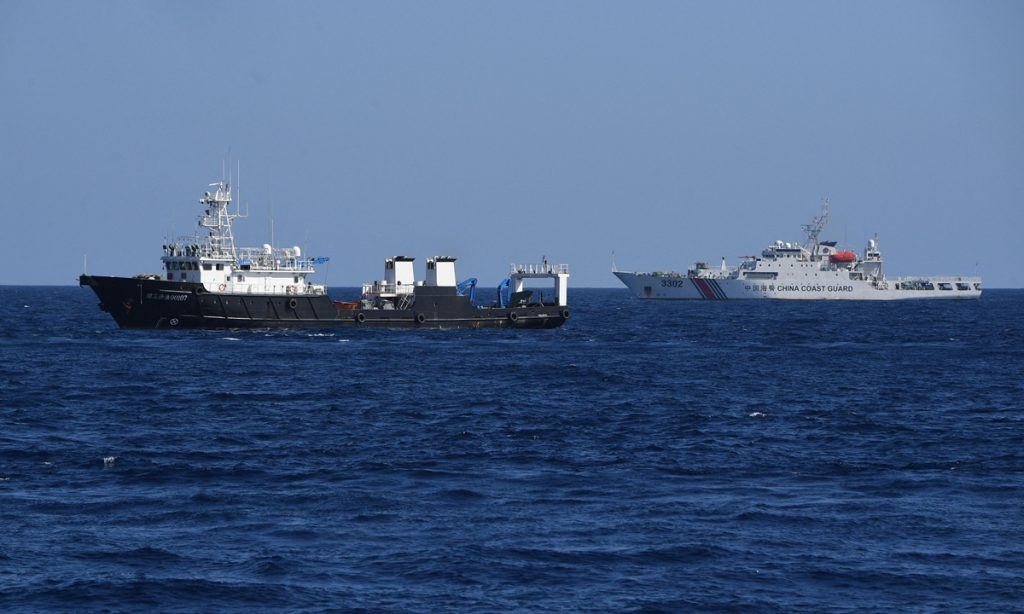
After recruiting journalists and "fisherfolk" to launch infringing activities in the South China Sea, the Philippines is about to play a new round of trick in staging another incident. Philippine media outlets recently reported that a Filipino non-governmental organization called Atin Ito, or "This is ours," is planning to rally a group of so-called Philippine fisherfolk to travel to the waters around China's Huangyan Dao (also known as Huangyan Island) in an attempt to use "fisherfolks" as "human shields, " to initiate a fresh round of provocation in the South China Sea and deliberately engage in "sadfishing" to the international community.
The Global Times noted from publicly available information that this so-called Filipino civic organization is, in fact, a "hired gun" fed by the US and long sponsored by US organizations. Atin Ito has continuously stirred up troubles in South China Sea and has been exerting its influence in the Philippine government's decision-making on the issue.
This organization's plan of direct involvement in the frontline of the South China Sea conflict further exposes the increasing interference from countries outside of the region, like the US, as they incite the Philippines to "step on the gas" toward confrontation in the South China Sea. Upcoming publicity stunt
Multiple Philippine media outlets have recently covered the plan of this publicity stunt. Philippine news website rappler.com reported on May 8 that Atin Ito, a coalition that counts fisher and farmer groups, civic organizations, fisherfolk, and youth activists among its members, will travel to Huangyan Dao from May 14 to 17.
Rafaela David, one of the lead convenors of the coalition, said in a press conference on May 8 that "this is not a sightseeing excursion to seek out Chinese marine vessels or a provocation to incite conflict." However, this coalition also invited international observers to join the voyage to monitor and document the situation in the region and "witness firsthand the challenges faced by Filipinos in those waters."
David contradicted herself in her performance art by stating, "By mobilizing civilians and engaging in peaceful activities within our EEZ, we reclaim our space and assert our territorial integrity in a manner that champions peace and diplomacy."
According to Philippine media, about 200 participants are expected to join the mission, among them fisherfolk, volunteers, journalists, and observers. They are scheduled to set out from the Philippines on May 15 and trespass into waters adjacent to China's Huangyan Dao, bring supplies to Filipino fisherfolk, and deploy "symbolic buoys" bearing a provocative message: "The West Philippine Sea is ours."
This is not the first time that the Atin Ito has conducted so-called peaceful activities in the South China Sea, as this coalition had also organized dozens of fishing ships and a marine training vessel carrying Philippine civilians to bring Christmas gifts to local Philippine military personnel on islands and reefs in the region, according to Philippine media reports.
Ding Duo, deputy director of the Institute of Maritime Law and Policy at the China Institute for South China Sea Studies, told the Global Times that Atin Ito's latest plan to stir up troubles around Huangyan Dao at a larger scale will likely first have Philippine fishing vessels staying from a distance, as they would need to coordinate with the Philippine Coast Guard and journalists to take staged photos.
The coalition will likely then play the staged show of "resupply," as they could have fishing vessels coordinate with Philippine governmental ships to conduct infringing activities, Ding predicted, noting that it is also possible that civilian vessels rallied by the organization will trespass into waters restricted by China under the demand of the Philippine Coast Guard, directly disrupt law enforcement operations by the China Coast Guard, or disrupt normal fishing activities by Chinese fisherfolk.
While this scheduled infringing plan seems big under the propaganda of the Atin Ito coalition and the Philippine media, its actual scale might fall short significantly. A source close to the matter told the Global Times that while the plan allegedly rallied over 100 civilian vessels, the fact is that only about 10 ships or so will likely end up joining the publicity stunt, with most of them operating in waters not far away from the Port of Masinloc.
The source said that Philippine government ships are expected to arrive in designated waters in the early morning of May 15, then the civilian ships will hold a regatta for entertainment near the Port of Masinloc. After that, these ships will scatter, with two Philippine commercial ships carrying journalists and social activists heading toward Huangyan Dao on May 16 and return to the Philippines on the same day.
Atin Ito is expected to hold a press conference in Manila on May 17 to continue to hype this farce, the source said.
Ding said that this organization's activities often fall short of expectations and follow fixed patterns. They usually hype up their activities beforehand, make high profile forecasts on domestic media and social media platforms, and instigate nationalist sentiments. At the same time, the organization also raises donations through its website, urging for supplies to Philippine fishing ships operating around China's Huangyan Dao and Ren'ai Jiao (also known as Ren'ai Reef). In addition, this organization also makes various publicity stunts, including live shows, press conferences, and seminars in a bid to increase its political presence. 'Hired gun' by US military
Although it publicly claims to be an independent Philippine organization pursuing peace, the actions of the Atin Ito coalition are more akin to a "hired gun" serving the US strategy in the South China Sea. In fact, its ability to coordinate resources within the Philippines, as well as its intricate relationships with pro-American figures in the US military and Filipino politics, all highlight that it is far from a simple Filipino civil organization.
In a recent field interview in the Philippines, Global Times reporters noted that similar to many Western civil organizations that serve political purposes, Atin Ito excels at expanding its influence in a people-friendly manner. For example, it manufactures and sells exclusive brand accessories, handicrafts, or tourist souvenirs. Through this method, it raises funds for activities, promotes its image, and advocates its political stance.
Ding said that, "the Atin Ito coalition seems to be a so-called non-profit civil organization, as it intentionally downplays its political color in its official website introduction and propaganda campaign, but in fact, it has a certain political background. This is first reflected in the fact that the actual leader of the organization, Rafaela David, is also the chairman of the Akbayan Party in the Philippines. Although this political party is relatively small in the Philippine political arena, it has been using various political issues in the Philippines to increase its presence and influence in recent years. Atin Ito and the Akbayan Party present a complementary relationship, as the Akbayan Party provides political resources for the activities of Atin Ito, and the activities organized by Atin Ito can increase the exposure of Rafaela David, granting her more political benefits."
Philippine media reports showed that the Akbayan Party has been an active participant and organizer of many anti-China demonstrations in the Philippines, and Atin Ito was often present at these events. In return, the Akbayan Party actively gathers Philippine political figures to support the activities of Atin Ito.
Philippine media Palwan News reported in March that Philippine political figures such as Senator Risa Hontiveros, former ambassador Victoria Bataclan and civilian opinion leaders, as well as representatives from the British, Australian, Dutch, Swedish, and European Union embassies attended a photo exhibit and film screen held in Manila that month, when Altin Ito announced Huangyan Dao as a potential destination for its next mission of "delivering aid to fisherfolk." This highlighted the close ties between the coalition and the party.
In addition, the militaries of the Philippines and the US also do not hide their relations with Atin Ito. The Philippine Star, on May 3, reported that, Commodore Roy Vincent Trinidad, a Philippine Navy spokesman, voiced support on May 2 for Atin Ito's upcoming "civilian supply mission" to Huangyan Dao. "And so long as they abide by all the guidelines given by the government, we support all activities, civic society," he said.
Philippine naval vessels or Philippine Coast Guard vessels were also often seen accompanying Atin Ito's activities in their previous activities in the South China Sea, Philippine media reports showed.
A report titled America's Project Myoushu and the Philippine's Atin Ito Coalition is gearing up for a proof of concept that may lead us to war published on the Philippine-based Asian Century Journal in December 2023 asked, "Who is funding the Atin Ito Coalition and their operations? A marine convoy like this involves a tremendous amount of logistical planning and support not to mention the financial means to undertake one." It further questioned, "Who are the people behind the Atin Ito Coalition? They claim it's a civil society group aiming to further our country's vital security interests yet they defy our National Security Council's advice."
Citing an article titled Lighting Up The Gray Zone by US Air Force Captain Benjamin Goirigolzarri published on the US Naval Institute's website, the Asian Century Journal report said that the US established a new strategy in the South China Sea called Project Myoushu, which is a derivative of the US Naval Institute's Maritime Counterinsurgency (COIN) Project tailored specifically to counter China's "dominance" in the South China Sea. The project previously hyped the China Coast Guard's law enforcement operations in the South China Sea, attempted to incite public opinion and push for governments of countries in the South China Sea to become hard on China, and damaged the peace China and other countries in the region have created.
The Asian Century Journal report deduced that the Atin Ito Coalition is indeed a joint US-Philippines effort, as the Project Myoushu is described as an independent, civil society-led initiative that maintains separation from potential public perceptions of bias and bureaucratic obstacles that can hinder government-led efforts.
Further evidence the report provided is that the Project Myoushu as a concept was presented only in Manila in January 2023 at a conference hosted by local think tank Stratbase, and the report suggested that Stratbase is funded by the US. "So, there they are hiding in plain sight where no one is looking -- America's manipulative hands still pulling the Philippine government's strings," the report said.
Underestimated China's determination
Whether it is the so-called Philippine non-governmental organizations such as the Atin Ito coalition, or Project Myoushu behind it, their operating patterns are nothing more than orchestrated shows and staged behaviors to exert public opinion pressure on China, undermine China's efforts of pursuing peace in the South China Sea, and try to force China to make concessions over its sovereignty in the South China Sea issue. However, the Philippine politicians with these calculations clearly underestimated China's determination and will to safeguard its sovereignty.
Ding said that Atin Ito's plan cannot reach its goals. Given China's ability to safeguard sovereignty and maritime rights on Huangyan Dao, no matter what form or scale the Philippines uses to infringe and provoke, it will definitely be met with strong countermeasures.
Videos released by Philippine media showed that when dealing with the Philippines' infringement actions in waters off Huangyan Dao, the China Coast Guard's law enforcement forces have rich methods. During the handling process, a series of measures including verbal warnings, navigation route restrictions, and warning shots with water cannons were used based on different situations. Such law enforcement actions were conducted in accordance with laws and regulations, and were reasonable, powerful, but also restrained. It shows that China will resolutely safeguard its territorial sovereignty and maritime rights, and will not give the Philippines any space for hype from a legal perspective.
Chen Xiangmiao, director of the World Navy Research Center at the National Institute for South China Sea Studies, told the Global Times that some fanatics in the Philippines are driven by a revanchist mentality and repeatedly stage "the Farmer and the Snake" scenarios, attempting to copy the Ren'ai Jiao model - pursuing territorial sovereignty in the name of so-called fishing boat replenishment. In this regard, China's patience definitely has limits.
The normalization of the Philippines' trespasses is seeing confrontation replacing dialogue and cooperation as the main line for China and the Philippines to resolve conflicts over Huangyan Dao. The Marcos Jr administration's tough actions may earn diplomatic applause from the US and the West, but the frequent and tense confrontations on the frontline have also restrained the huge military, police and diplomatic energy of both the Philippines and China. Other than wasting economic investment and escalating the risk of unexpected events at sea, such moves have no other valuable benefits, Chen said.
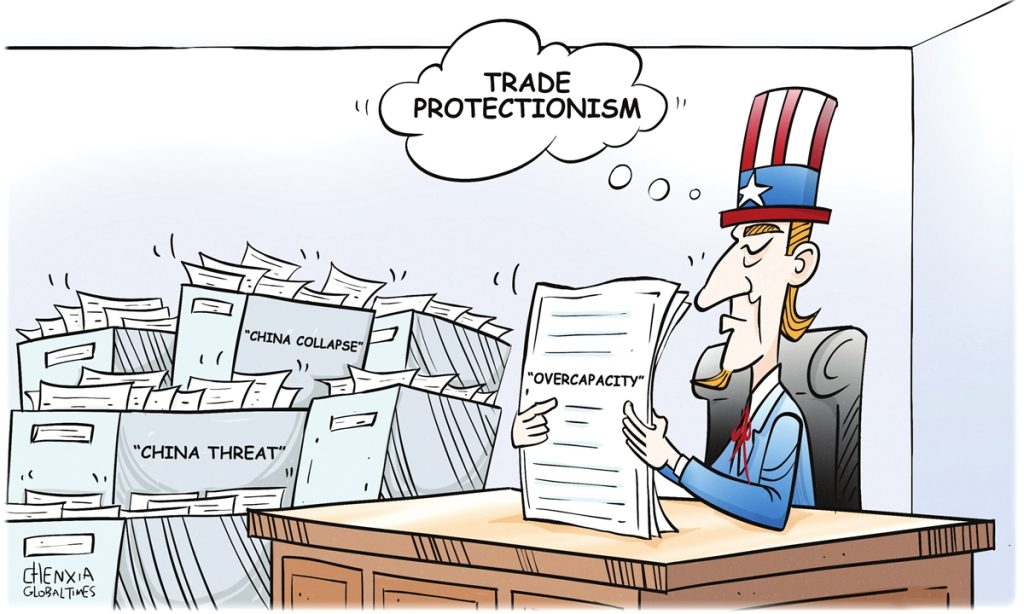
Chinese economic officials have slammed the hyped “overcapacity” tag on Chinese new energy products on Friday, calling it “a carefully crafted narrative trap created by some countries with the aim of making it a pretext to implement trade protective measures.” While voicing strong objection to the action, they also warn against its dire consequences, which will disrupt the stability and smooth flow of global supply chains, hinder the global green transition and eventually backfire on the initiators of trade protectionism.
For some time, certain officials and media outlets in some countries have intensively accused China’s new energy products of “overcapacity.” These hypes are attempts to set the stage for unilateralism and the implementation of trade protection policies, according to an article posted on Friday on the WeChat account of the National Development and Reform Commission (NDRC), the country’s top economic planner.
Those allegations on China’s new energy products do not hold ground as they are neither in line with facts nor economic rules, the NDRC article said, while rebutting every piece of the fallacy with solid proof and data.
With regards to the claim that “the overcapacity of China’s new energy exports was a result of insufficient domestic market and thus have to sell to the global market at a low price,” the NDRC blasted it with a reference to the fundamental law of international industrial division and cooperation.
Take the US exports as an example, it noted. About 80 percent of high-end chips produced in the US are destined for export, and the country is also the world’s largest exporter of liquefied natural gas, while one-fifth of US agricultural products are shipped to China, however, the US has not been accused of exporting “overcapacity” in these areas. In contrast, China’s new energy vehicle (NEV) exports only represented 12.5 percent of its total output last year, showing that China's new energy products currently mainly satisfy domestic demand.
It is also key to view the global supply-demand relationship from a developmental perspective, or the demand of global market and its development potential, the NDRC said, lambasting the claim that “China’s new energy capacity has surpassed global demand, making other countries unable to absorb.”
The NDRC highlighted a bunch of data by IEA which showed that the forecasted global demand for NEVs and power battery by 2030 will be almost five times from China’s capacity in relevant industries in 2023. In terms of the cumulative photovoltaic installed capacity, the projected global demand by 2030 is calculated to be around 9 times from China’s capacity in 2023. All underscore huge room for future demand growth.
On the one hand, the advantage is built upon a vast domestic market, a complete industrial system, intense market competition and continuous technological innovation under market mechanism, the NDRC pointed out. On the other hand, individual country has been encouraging and supporting the growth of relevant industries amid global green transition, and in particular the US is providing prodigious subsidies and tax incentives to new energy industries through legislation such as the Infrastructure Investment and Jobs Act and the Inflation Reduction Act.
There isn't a “China overcapacity,” but a US overcapacity of anxiety stemming from a lack of confidence and smears against China, Lin Jian, spokesperson from China's Ministry of Foreign Affairs, said at a press briefing on April 30.
During US Secretary of State Antony Blinken’s recent visit to China, he pointed finger at China over the so-called “unfair trade practices and the potential consequences of industrial overcapacity to global and US markets,” naming some industries including electric vehicles, batteries, and solar panels. US Treasury Secretary Janet Yellen recently reiterated in an interview with Reuters the "overcapacity" in China, claiming that the so-called overcapacity in China is not only a problem faced by the US, but also by Europe, Japan, India and Mexico.
It is indeed despicable and hypocritical for nations to proclaim that addressing global climate change is their “noble mission,” while simultaneously adopting protectionist measures under the pretext of “overcapacity” to suppress the development of new energy industries in other countries, according to the NDRC article.
Such actions not only undermine the global efforts to combat climate change but will also backfire, the NDRC warned, while citing a list of examples from the past decades that show that there’s no winner out of trade protectionism.
Also, the moves could wreak havoc on the stable operation of global new energy industry supply chains, creating “blockages,” “choke points,” and “breakpoints” that affect the efficiency of economic operations and may even trigger various potential risks, the NDRC stressed.
“Economic globalization has become a major trend. Countries are interdependent and integrated into a community of shared interests. Being open and inclusive, and pursuing win-win cooperation is the only correct choice,” the NDRC article concluded, urging countries to oppose the politicization of economic and trade issues or make them security issues, advocate for “tearing down walls rather than building them, for openness rather than isolation, for integration rather than decoupling, and promote the construction of an open world economy.”
The China Chamber of Commerce to the EU (CCCEU) raised deep concerns regarding the European Commission's selective transparency and potential discriminatory application of the Foreign Subsidies Regulation (FSR) against Chinese products.
The CCCEU submitted a comprehensive response on Tuesday to the EC's recent initiation of in-depth FSR investigations into Chinese companies that participated in a solar photovoltaic project tender in Romania, according to a statement released by CCCEU.
The rebuttal voiced a range of concerns about various shortcomings in the EC's actions and its potential ramifications for Chinese businesses operating in the European market.
The chamber noted the heightened scrutiny imposed on Chinese companies compared to those subjected to non-EU entities in the same tender process. "This selective enforcement of the FSR raises serious questions about the fairness, objectivity, and consistency of the Commission's approach," the chamber said.
On April 3, the EC launched two in-depth FSR investigations on two bidders involved in the tender process for Romania's 110MW solar photovoltaic park project. Afterward, the commission conducted a raid on a Chinese company's offices in Poland and the Netherlands without prior notice on April 23, following another probe targeting Chinese wind turbines which began on April 9.
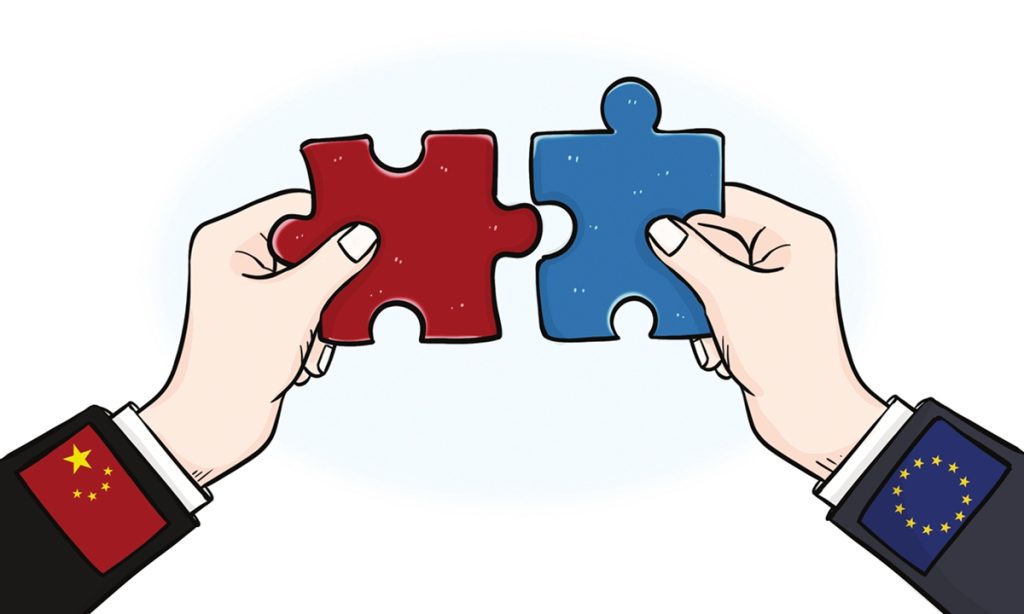
The FSR has increased uncertainties for Chinese bidders, causing concern about the EU's growing protectionism and misapplication of policy tools, the chamber noted in the statement, urging the European Union to ensure Chinese enterprises' operations in Europe in "a fair, transparent, and non-discriminatory environment."
Since the end of 2023, the bloc has launched a series of subsidy investigations targeting Chinese businesses in emerging sectors such as electric vehicles, solar panels, and wind turbines, which has been labeled by China's Ministry of Commerce as protectionist behavior that distorts fair competition.
Top executives at BMW and Volkswagen on Wednesday warned against imposing EU import duties on electric vehicles made by Chinese automakers, saying it could upend the bloc's Green Deal plan and harm automakers that import cars made in China. The comments were in response to the bloc's probe launched in October into Chinese automakers for alleged subsidies and extra tariffs, Reuters reported.
In Thursday's statement, the Chamber also contended that the EC has not provided sufficient justification or interpretation of "foreign subsidies" under the FSR, and expressed concern about the burden placed on Chinese companies by the broad information requests and the potential disclosure of sensitive business data.
The chamber's observations follow the recent publication of EU summary notices, inviting stakeholders' feedback. Throughout the legislative and implementation process of the FSR, the chamber has been actively involved, stressing the importance of legality, transparency, and non-discriminatory application.
Peng Liyuan, wife of Chinese President Xi Jinping, on invitation visited the National Museum of Serbia with Tamara Vucic, wife of Serbian President Aleksandar Vucic, in Belgrade on Wednesday morning.
The two first ladies toured the museum's painting exhibition together. The museum boasts a long history and abundant collections, Peng remarked, noting that the classic paintings exhibited there feature delicate brushstrokes and rich emotions.
Peng emphasized that museums serve not only as windows for preserving and displaying cultural relics but also as halls for promoting civilization. She also expressed hope for enhanced cultural exchanges and cooperation between China and Serbia to build bridges for dialogue among civilizations.
The two first ladies also watched demonstrations of traditional Serbian women's hand weaving and warmly interacted with the artisans. Peng praised the exquisite and distinctive craftsmanship of Serbian hand weaving, considering it an important intangible cultural heritage that has been well preserved and promoted.
Highlighting the similarities between Chinese and Serbian embroidery cultures, she suggested mutual learning and encouragement for young people from both countries to actively engage in preserving traditional handicrafts from generation to generation. The two also enthusiastically participated in making Serbian wool felt balls.
Established in 1844, the National Museum of Serbia houses over 400,000 artifacts, making it the largest and oldest museum in Serbia.
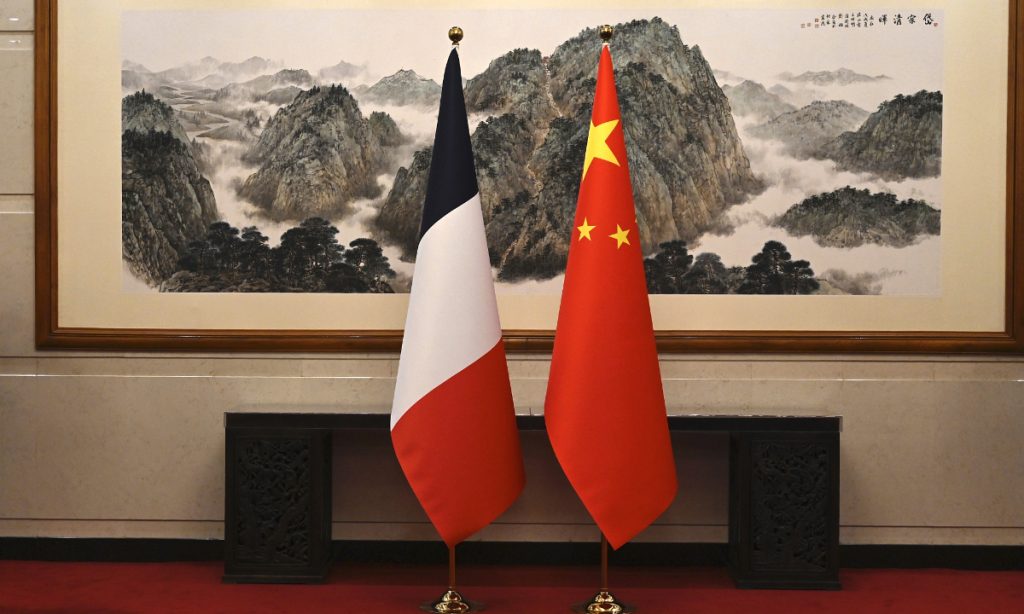
China and France have issued a joint statement on the situation in the Middle East, condemning all violations of international humanitarian law, including all acts of terrorist violence and indiscriminate attacks against civilians.
The statement was released during Chinese President Xi Jinping's state visit to France, where Xi and French President Emmanuel Macron exchanged in-depth views on the situation in the Middle East.
China and France condemn all violations of international humanitarian law, including all acts of terrorist violence and indiscriminate attacks against civilians. They recall the absolute imperative of protecting civilians in Gaza in accordance with international humanitarian law. The two heads of state expressed their opposition to an Israeli offensive on Rafah, which would lead to a humanitarian disaster on a larger scale, as well as to forced displacement of Palestinian civilians, according to the joint statement.
The two heads of state stressed that an immediate and sustainable ceasefire is urgently needed to enable the delivery of large-scale humanitarian aid and the protection of civilians in the Gaza Strip. They called for the immediate and unconditional release of all hostages and the guarantee of humanitarian access to meet their medical and other humanitarian needs, as well as respect for international law with regard to all detainees, it said.
The two heads of state called on all parties to refrain from unilateral measures on the ground that might aggravate tensions, and in this respect condemned Israel's policy of settlement construction, which violates international law and constitutes a major obstacle to lasting peace as well as to the possibility of establishing a viable and contiguous State of Palestine. The two heads of state reiterated that the future governance of Gaza cannot be dissociated from a comprehensive political settlement of the Palestinian-Israeli conflict based on the two-State solution, according to the statement.
The two heads of state called for a decisive and irreversible relaunch of a political process to concretely implement the two-State solution, with Israel and Palestine living side by side in peace and security, both with Jerusalem as their capital, and the establishment of a viable, independent and sovereign State of Palestine based on the 1967 borders. The two heads of state reaffirmed their commitment to this solution, which is the only way to meet the legitimate aspirations of the Israeli and Palestinian people for lasting peace and security, it said.
China and France reaffirm their commitment to promoting a political and diplomatic solution to the Iranian nuclear issue. The Joint Comprehensive Plan of Action concluded in 2015 is a major outcome of multilateral diplomacy. The two countries are concerned about the risks of escalation, recall the importance of cooperation with the International Atomic Energy Agency and facilitation of diplomatic efforts, and reaffirm their commitment to safeguarding the international non-proliferation regime and promoting peace and stability in the Middle East, according to the statement.
The statement was issued as Israeli military forces have taken control of the Palestinian side of the Rafah crossing between Gaza and Egypt, a key strategic objective and the sole gateway between Egypt and Gaza for humanitarian aid, the Guardian quoted Israeli military officials as saying on Tuesday.
In response to Israeli military operations in Rafah, Lin Jian, spokesperson of China's Ministry of Foreign Affairs said at a Tuesday briefing that China expresses serious concern over Israel's action, and strongly urges Israel to listen to the overwhelming calls from the international community to cease the attack on Rafah and to prevent a more serious humanitarian disaster in the Gaza Strip.
The spokesperson stated that the Gaza conflict has been going on for over 200 days, resulting in a shocking humanitarian crisis, which is a test of human conscience. War and violence cannot fundamentally solve problems and bring real security, but only exacerbate hatred. The international community must take action. The immediate priority is to effectively implement UN Security Council Resolution 2728, immediately cease fire, ensure humanitarian aid returns as soon as possible, and return to the basis of the two-state solution to politically resolve the Palestinian question.
Defense chiefs from the US, Australia, Japan and the Philippines gathered in Hawaii on Thursday (local time) for their second joint meeting, lining up yet another regional group dubbed the "Squad" by Pentagon officials, while vowing a strengthened alliance among the four countries.
Chinese analysts warned on Sunday that this new quadrilateral grouping, distinct from the older version of the Quad which was also assembled by the US, poses a more targeted challenge to China. The grouping, part of Washington's "Indo-Pacific Strategy," aims at containing China, leading to concerns about more complex tensions and division among regional countries.
Chinese analysts warned that the Philippines, increasingly manipulated by the US, is losing its autonomy and becoming a pawn of the US in the region, which could lead to the "Ukrainization" of the Philippines.
Speaking after the talks on Friday, US Secretary of Defense Lloyd Austin announced the four-country group would look at undertaking more maritime exercises, as well as providing greater security assistance to the Philippines, US media reported.
The defense chiefs of the "Squad" met for the first time in June 2023 on the sidelines of the Shangri-La security dialogue in Singapore. And in April 2024, the four countries conducted joint maritime patrols within the Philippines' exclusive economic zone against the backdrop of ongoing tensions between the Philippines and China.
Citing an anonymous US official, Bloomberg reported on Friday that the "Squad" aims to counter coercion and aggression across Asia, as well as ensure that defense capabilities among their militaries are increasingly inter-operable, allowing them to work more efficiently together in the event of conflict.
The US official said the quadrilateral group aims to conduct more joint patrols in the coming months and years and that these patrols will add more capabilities over time.
The report also highlights that this new quadrilateral grouping is one of a number of regional partnerships that the US has used to push back against China in Asia. There is also the "Quad" comprised of the US, Australia, India and Japan and "Aukus," a defense pact among Australia, the UK and the US.
At the tactical level, the new grouping would form a more targeted mechanism against China which is similar but more effective than the previous Quad grouping as Japan, Australia and Philippines are all allies of the US, where India, although it is in the Quad group, it is not technically a US ally. Therefore, this new "Squad" has a stronger sense of direction, meeting the needs of the US to manage the security situation in the regions of the South China Sea and the Taiwan Straits, Li Haidong, a professor at the China Foreign Affairs University, told the Global Times on Sunday.
At the strategic level, the new "Squad," like the old "Quad," is led by the US, adjusting the Asia-Pacific security architecture and promoting the implementation of overall planning through small-scale multilateral cooperation, Li noted.
An official release from the US-Japan-Australia Trilateral Defense Ministers' Meeting (TDMM) 2024 Joint Statement on Saturday, read that the ministers of the three countries emphasized "the importance of peace and stability across the Taiwan Straits."
They called for peaceful resolution of cross-Straits issues and reaffirmed their enduring commitment to a peaceful, secure and prosperous Southeast Asia, where sovereignty is respected, international law is followed and nations can make decisions free from coercion.
In the short term, "Squad" exerts highly targeted strategic pressure on China, making the situation in the Asia-Pacific region even more complex. In addition to aspects such as intelligence network security and naval security, various dimensions including fisheries have a significant impact on Asia-Pacific security, Li predicted.
Another Chinese military analyst who requested not to be named told the Global Times on Sunday that the new "Squad" is centered around the US, with the roles of the Philippines and Australia relatively minor.
By assembling the "Squad," the US seeks to make use of Australia's homeland, defense budget and military to expand the US' influence overseas, while extending the US' military presence in the "Indo-Pacific" region through the Philippines' military bases. However, the military capabilities of these two countries are limited, and the US regards them as pawns, the military analyst explained.
Analysts pointed out the current Philippine government is being manipulated by the US, and is increasingly lacking autonomy, especially under the Ferdinand Marcos Jr administration which follows the US obediently, and it has become an unstable factor in the Asia-Pacific region.
Li warned that blindly following the US encouragement would only lead to the "Ukrainization" of the Philippines. "By creating crises, the US profits and establishes a situation where no country in the region can be secure without American leadership. The tragic result of the Philippines' provocation against China ultimately suggests that the Philippines should be more autonomous, harmonious with other regional countries, and avoid being used as a pawn by other countries."
Analysts believe that the forming of the new anti-China grouping will lead regional countries to feel there exists a more complex and divisive security situation, with stronger antagonism and conflict, forcing more countries to take sides in geopolitics.
Gu Xiaosong, dean of the ASEAN Research Institute of Hainan Tropical Ocean University, told the Global Times on Sunday that the forming of the new anti-China "Squad" poses a significant challenge to the historically cordial relations between China and ASEAN.
Over the years, the China-ASEAN relationship has continually developed in the political, economic and cultural spheres, bringing tangible benefits to both sides. Both parties cherish peace and stability in the region and should work to preserve it, Gu said.
However, the consequences of the Philippines drifting further away could have detrimental effects on the bilateral relationship between China and the Philippines. It is important for both parties to manage their differences and prioritize their shared interests. It is crucial for the current Philippines' leaders to prioritize the common interests of China and the Philippines, maintaining and nurturing the friendly relationship between the two countries for the benefit of both sides, Gu noted.