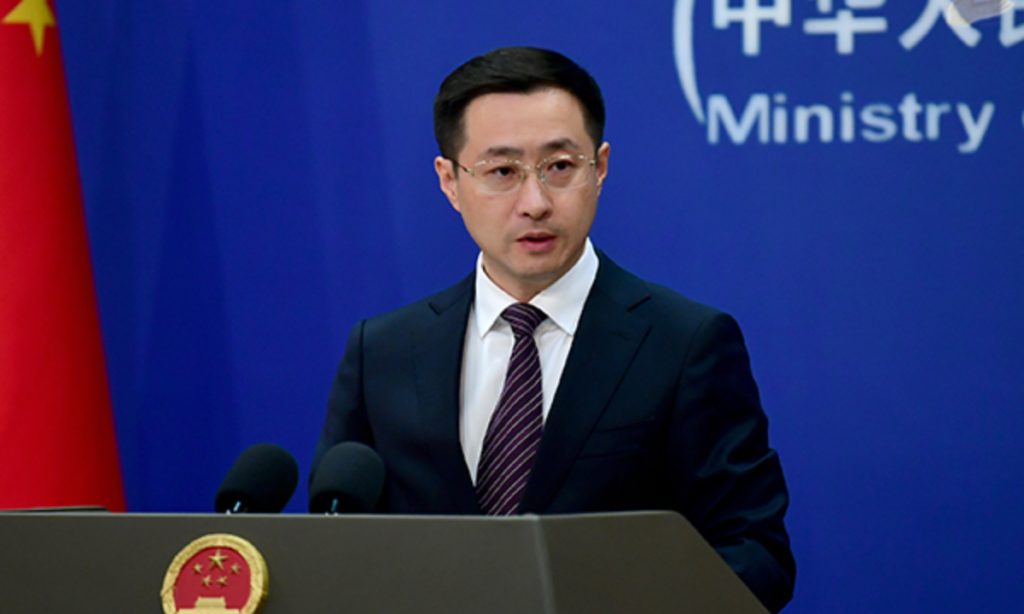
The remarks by Rear Admiral Thomas Buchanan reflect the outdated thinking of the US in its pursuit of global hegemony and absolute strategic advantage, the Chinese FM spokesperson Lin Jian said on Thursday, in response to Buchanan, spokesperson for the US Department of Defense's Strategic Command, who said that the US would allow an exchange of nuclear strike only on the condition that it retains some of its arsenal to further deter potential adversaries.
Buchanan said it at the Center for Strategic and International Studies, commenting on the possible use of nuclear weapons, according to media reports. The reports quoted Buchanan as saying that the US would not want to find itself in an environment that would lead to such a situation. According to Buchanan, he considers the most acceptable conditions in which the US "continues to lead the world", which means maintaining a stockpile of strategic weapons.
Chinese FM spokesperson Lin Jian said that in recent years, the US has continuously upgraded its nuclear triad, expanded the role of nuclear weapons in its national security policy, reinforced nuclear-sharing and "extended deterrence" arrangements with its allies, and promoting forward deployment of medium-range missiles and anti-missile systems. These actions have destabilized the global strategic balance, intensified military competition and confrontation, and heightened nuclear risks, Lin noted.
Lin also stressed that the US should earnestly fulfill its special and priority responsibility for nuclear disarmament, further substantially reduce nuclear arsenals, to create conditions for attaining the ultimate goal of complete and thorough nuclear disarmament and make efforts to reduce strategic risks and maintain regional peace and stability.
A woman pregnant with nine babies in East China's Jiangxi Province decided to reduce seven embryos and keep two for her safety and the well-being of the two remaining babies.
A 25-year-old woman surnamed Hou had struggled to conceive for medical reasons, but conceived in October after receiving ovulation-boosting treatment.
The initial examination showed that Hou was pregnant with triplets. However, a follow-up examination revealed nine embryos tightly clustered in her uterine cavity, all with detectable heartbeats.
Hou's husband said in a video clip that, considering his wife's limited physical capacity, the doctor recommended reducing the number of embryos. In addition, he said they also considered the children's future growth and financial factors, so they decided to have surgeries to remove seven fetuses.
Hou may require multiple surgeries due to the high number of embryos and associated risks, a challenge for the doctors as well, Hou's husband noted.
According to Hou, the reduction procedures will be conducted in two phases. Four embryos will be removed for the first time, and the second procedure, reducing three embryos, will be performed pending favorable follow-up test results.
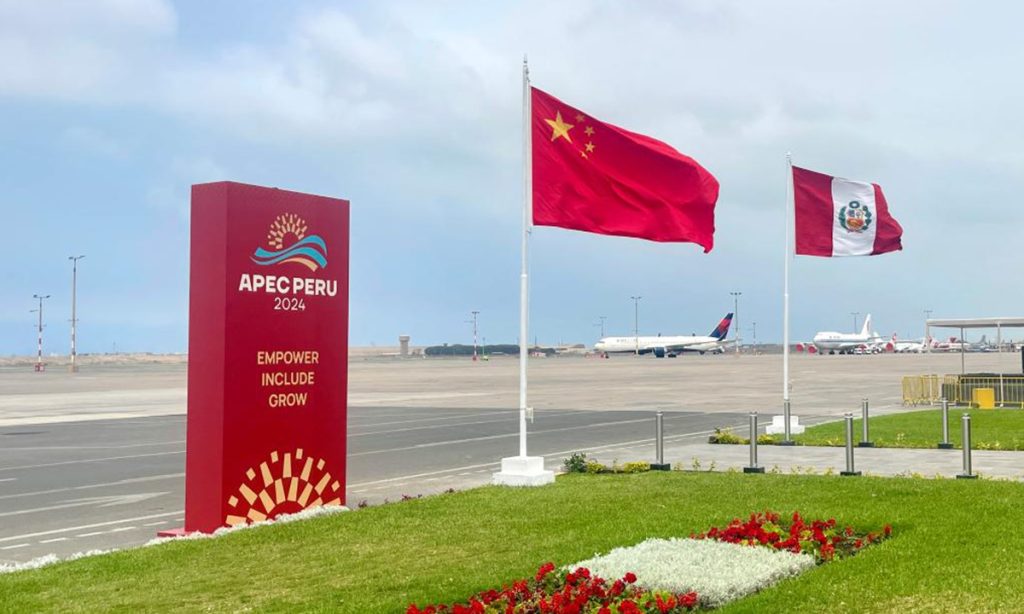
Chinese President Xi Jinping’s visit to Peru is extremely important, not just for the inauguration of the Chancay Port, which is a great opportunity not only for Peru but also for the entire Latin America region, Juan José Santiváñez, interior minister of Peru, told the Global Times on Thursday local time, expressing appreciation for the trip.
Xi arrived in Lima, capital of Peru, on Thursday for a state visit to Peru and the 31st APEC Economic Leaders' Meeting, the Xinhua News Agency reported.
“The visit of the President of China is extremely important, not only for the inauguration of the new Chancay Port, which turns out to be a great opportunity for Peru, but also for all of Latin America. We appreciate the visit,” Santiváñez told the Global Times, while holding a copy of the Thursday edition of the Peruvian newspaper El Peruano, which featured a signed article by the Chinese president.
Santiváñez further said that the visit will strengthen the ties between China and Peru and expressed great expectations for its outcomes.
“The expectation we have regarding China is extremely high. Today we have the virtual inauguration of the Port of Chancay, which definitively places Peru as one of the main players in Latin America, becoming the most important hub, and will definitely contribute greatly to the economy of Peru,” the Peruvian interior minister said.
Xi said in the signed article that during his visit, he and President Dina Boluarte will attend the inauguration ceremony of Chancay Port via video.
“This is not only an important project under Belt and Road cooperation, but also the first smart port in South America. The first phase of the project, when completed, will reduce the sea shipping time from Peru to China to 23 days, thus cutting logistics costs by at least 20 percent. It is expected to generate $4.5 billion in yearly revenues for Peru and create over 8,000 direct jobs,” read the article.
The signed article garnered great attention at the Lima Convention Center, the main venue for the APEC meeting which was filled with reporters from various countries and regions on Thursday. While the Peruvian Interior Minister carried the newspaper during media interviews, others were eager to present it.
“This is our newspaper from today, Thursday, 14th in November. We have today a message, a very important message, of the President of China, Mr. Xi Jinping, who arrives today in Peru,” César Chaman, editor general of Agencia Andina, told the Global Times on Thursday. Both Agencia Andina and El Peruano are official media outlets in Peru. With a palpable sense of excitement, Chaman held up the front page of the newspaper to fully display it before the camera, while speaking to the Global Times.
“This is a very important material to read and to understand the kind of relationship between Peru and China,” Chaman said, adding that he hopes that the bilateral relationship will expand into more areas such as environmental protection, energy and social development, in addition to investments in infrastructure.
Sandra Gonzales, head of the Marketing and Sales Department of Editora Peru, whose outlets include Agencia Andina and El Peruano, also keenly introduced the newspaper and shared the Chinese president’s signed article.
After showing the front page, she flipped to the full page article inside the newspaper, while speaking to the Global Times.
“El Peruano is an official newspaper in Peru and in this edition, I can present this important article. This article is from the Chinese president,” Gonzales said. “It’s important to mention that Peru and China have good relationships.”
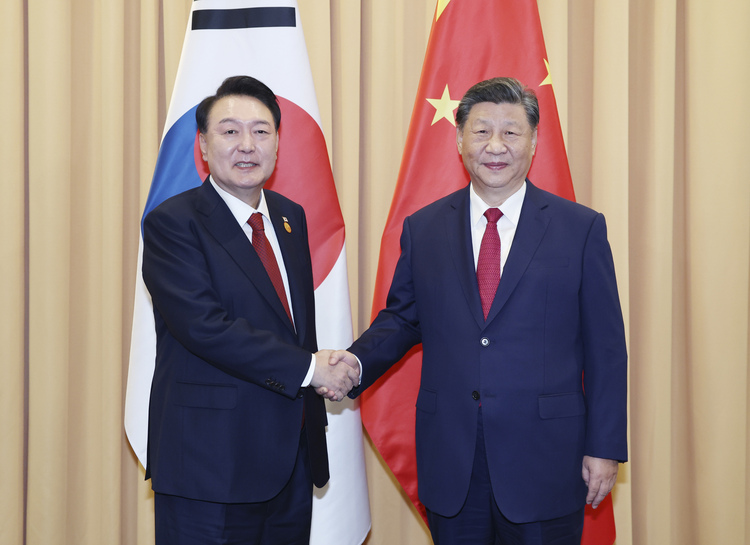
Chinese President Xi Jinping on Friday called on China and South Korea to promote a sound and steady development of the strategic cooperative partnership between the two countries.
Xi made the remarks in his meeting with South Korean President Yoon Suk-yeol on the sidelines of the 31st APEC Economic Leaders' Meeting.
Since their last meeting two years ago in Bali, Indonesia, the international and regional situations have undergone many changes, Xi noted, adding that bilateral ties have maintained a momentum of development on the whole.
No matter how the situation changes, China and South Korea should stick to the original intention in establishing diplomatic ties, firmly adhere to the direction of good-neighborliness and friendship, and remain committed to the goal of mutual benefit and win-win cooperation, Xi said.
Xi also called on the two sides to give full play to the advantages of geographical proximity, cultural affinity and economic integration to strengthen exchanges and deepen cooperation, and promote a sound and steady development of the strategic cooperative partnership between the two countries, so as to better benefit the two peoples and make greater contribution to regional peace, stability, development and prosperity.
He stressed that China and South Korea should strengthen high-level exchanges, enhance mutual understanding and trust, and strive for mutual achievements and common development.
China is committed to expanding high-level opening-up and welcomes more investment by South Korean enterprises in China, said Xi, urging both sides to jointly safeguard the international free trade system and the stability and smooth flow of global and regional industrial and supply chains.
China and South Korea should also engage in more activities that promote friendship and encourage exchanges between the media, academia, local communities, and especially the youth, he noted.
More South Korean citizens are welcome to visit China, and it is hoped that the South Korean side will introduce more measures to facilitate Chinese citizens' travels to South Korea, said Xi.
China supports South Korea in taking over the role of APEC host next year and is ready to expand multilateral coordination and cooperation with South Korea, he added. For his part, Yoon said that exchanges and cooperation across various fields between the two sides have developed in an orderly manner since his meeting with Xi two years ago, highlighting China's role as an important engine for global economic growth and a major contributor to addressing the challenges faced by the world.
He noted that South Korea regards China as an important partner and hopes to promote the continuous development of the strategic cooperative partnership between the two countries, based on mutual respect and the original intention of establishing diplomatic ties, in order to better address shared challenges and contribute to regional peace and stability.
Yoon said South Korea's policy of respecting the one-China principle remains unchanged, and hopes to participate in China's modernization process and further strengthen economic and trade cooperation between the two countries.
He welcomed China granting visa-free entry to South Korean citizens, adding he is willing to work closely with China to promote closer cultural and people-to-people exchanges and enhance the friendship between the two peoples.
Yoon said South Korea is willing to enhance communication and cooperation with China within multilateral mechanisms such as APEC to jointly uphold multilateralism and free trade.
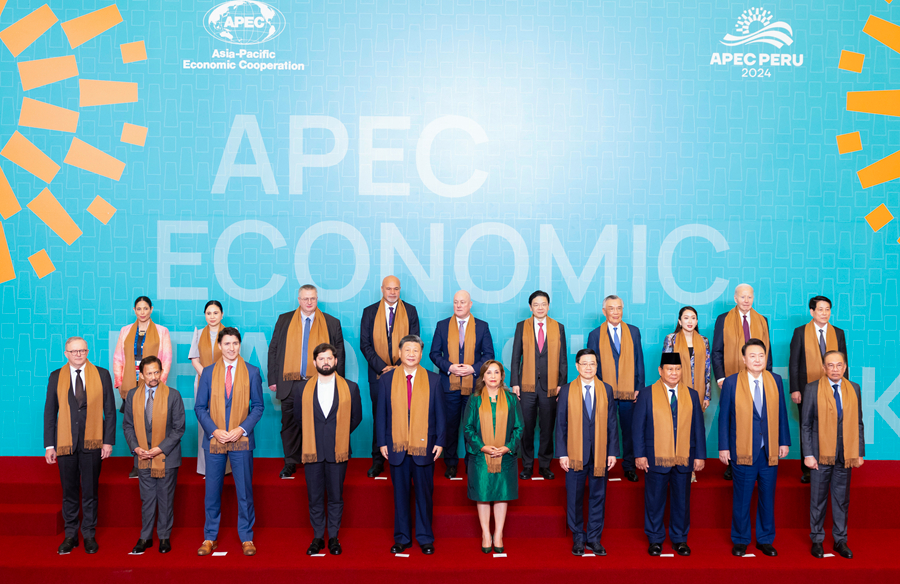
Asia-Pacific cooperation is confronted with challenges such as rising tendencies of geopolitics, unilateralism and protectionism, Chinese President Xi Jinping said on Saturday at the 31st APEC Economic Leaders' Meeting in Lima, Peru, while proposing building an open and interconnected paradigm for Asia-Pacific cooperation.
In a speech at the APEC Economic Leaders' Meeting, Xi called for tearing down the walls impeding the flow of trade, investment, technology and services, and proposed upholding a universally beneficial and inclusive vision for Asia-Pacific development. The Chinese president also announced that China will host the APEC Economic Leaders' Meeting in 2026.
In his speech, Xi further called for making green innovation a catalyst for the Asia-Pacific, adding that China is developing new quality productive forces in light of actual conditions and deepening cooperation with interested parties on green innovation.
China's further development will provide new opportunities for the Asia-Pacific region and the world at large, said Xi, adding that China welcomes all parties to continue riding the "express train" of its development and grow together with the Chinese economy.
Promoting cooperation
In Lima, local officials and reporters hailed the Chinese president's trip as productive and pivotal in advancing inclusive, sustainable development across the Asia Pacific and globally, and making great contributions to regional and global cooperation.
"During his speech, he pointed out the need for inclusive and sustainable development. Those remarks conveyed China's vision of collaboration, in my view," Cinthia Velarde, political editor of Agencia Andina, an official news agency in Peru, told the Global Times on Saturday. "I think it is key, because China, with its rich cultural heritage, has much to offer and has proven to be at the forefront of cooperation with developing countries, such as Peru."
China's efforts to promote inclusive and sustainable development through fostering cooperation in the Asia Pacific and globally have also drawn praises from officials of the APEC Peru 2024.
"As APEC chair 2024, we are happy to host not only a very important delegation from China here in Peru, but also we are glad to have heard the message delivered this morning, the message of President Xi," Julia Torreblanca, chair of APEC Business Advisory Council (ABAC) 2024, told reporters, referring to a written speech made by Xi at the APEC CEO Summit on Friday.
In the speech, Xi called for efforts to steer economic globalization in the right direction, jointly promoting a universally beneficial and inclusive economic globalization to the benefit of various countries and communities.
Torreblanca said that the speech lays a foundation for enhanced collaboration, which aligns with ABAC and APEC's core principles, and bolsters commercial ties throughout the Asia-Pacific.
Also highlighting China's pivotal role at APEC and its contributions to regional and global cooperation is China's announcement of hosting the APEC Economic Leaders' Meeting in 2026. The announcement has raised expectations for China to advance economic and trade collaboration further.
APEC is an important economic cooperation mechanism in the Asia-Pacific. To advance Asia-Pacific cooperation, China took the initiative to shoulder the responsibility by offering to host APEC in 2026, which is welcomed by APEC members and received their endorsement at this year's APEC Economic Leaders' Meeting, said a Chinese Foreign Ministry spokesperson on Sunday.
China attaches great importance to Asia-Pacific cooperation and hosted APEC twice in 2001 and 2014. In 2026, China will host APEC for the third time. China stands ready to enhance communication and cooperation with other parties on hosting APEC in 2026 to jointly implement the Putrajaya Vision 2040, advance the building of an Asia-Pacific community and the Free Trade Area of the Asia-Pacific, deliver more results through practical cooperation and inject fresh impetus into the economic growth of the Asia-Pacific and beyond, the spokesperson said.
"It will be, for me, an excellent opportunity to visit China in 2026," Fernando Carvallo, a host at Peruvian ration station RPP Noticias, told the Global Times on Saturday.
Carvallo said that the region should prioritize cooperation over geopolitical tension and rivalry. "Let's hope that in two years, we will be talking less about war, and less about competition, and much more about cooperation, in about trade," he said.
Velarde also noted that China's hosting of the APEC meeting in 2026 will highlight its commitment to openness and fostering cooperation.
"I believe that it is a central point and it is a significant opportunity for China to present itself to the 21 economies and to the world as a country with open doors, a country that says yes to cooperation - cooperation and social aid that developing countries, like Peru, need so much," Velarde said.
Xi also held a series of bilateral meetings on Friday local time in Peru, on the sidelines of the 31st APEC Economic Leaders' Meeting hosted in the capital Lima.
On Friday, Xi met with Thai Prime Minister Paetongtarn Shinawatra, Singaporean Prime Minister Lawrence Wong, South Korean President Yoon Suk-yeol, Chilean President Gabriel Boric, New Zealand's Prime Minister Christopher Luxon and Japanese Prime Minister Shigeru Ishiba, respectively. On Saturday, Xi met with US President Joe Biden.
Fruitful trip
In Lima, China-Peru bilateral talks also garnered significant attention over Xi's state visit to Peru, during which Xi held talks with Peruvian President Dina Boluarte.
During talks with Boluarte, Xi said that China is ready to work with Peru to build a new land-sea corridor between China and Latin America with Chancay Port as a starting point.
The corridor, which will connect the Inca Trail with the 21st Century Maritime Silk Road, will open up a road of common prosperity and happiness for Peru and other Latin American and Caribbean countries.
The two heads of state also witnessed the signing of a Belt and Road cooperation plan and the protocol on upgrading the bilateral free trade agreement, and exchanged several bilateral cooperation documents spanning economy, trade, industrial investment, education, and green development.
In a significant event during Xi's visit, the two sides inaugurated the Chancay Port, a landmark Belt and Road Initiative project highlighting China-Peru collaboration.
In Peru, the Chancay Port has been celebrated as a pivotal development set to deepen economic and trade ties between China and Peru, while also further enhance the long-standing, deep bonds between the two peoples.
"Watching the extraordinary inauguration of the Chancay Port was deeply moving for everyone, even though it was a virtual ceremony," Julio Perez Alvan, president of Peruvian Association of Exporters, told the Global Times on Friday.
The expanding partnership between China and Peru, exemplified by the Chancay Port, holds immense significance for the broader Latin American region, Peruvian officials and experts said.
The Chinese president's visit to Peru is highly significant, especially for the inauguration of the Chancay Port, a pivotal development for both Peru and the wider Latin American region, Juan José Santiváñez, interior minister of Peru, told the Global Times.
After Lima, Xi will attend the 19th G20 Summit in Rio de Janeiro and pay a state visit to Brazil from November 17 to 21 at the invitation of President of the Federative Republic of Brazil Luiz Inácio Lula da Silva.
Data from the first three quarters has garnered much public attention. Some see only the challenges. On a quarterly basis, the year-over-year growth rates of 5.3 percent, 4.7 percent, and 4.6 percent indicate a downward trend. In the third quarter particularly, key economic indicators slowed in July and August, sparking doubts about economic growth prospects and achieving annual targets.
However, more people are recognizing both the difficulties and the favorable conditions and factors. In the first three quarters, China's economy grew by 4.8 percent year-over-year, placing it among the world's leading major economies. Although some economies have posted relatively high growth rates, their economic volume and incremental growth are not comparable to China's. More importantly, China has achieved a reasonable growth rate while enhancing economic structure, shifting momentum, and improving in quality. From a global perspective, China's economy still shows that "the landscape here is beyond compare."
The challenges and problems that have emerged in China for a while can be summarized in four main parts:
First, the external environment has become more complex and severe. Global economic instability has increased, political uncertainty has grown, trade protectionism is rising, and some countries are intensifying containment efforts against China, adding pressure on the stabilizing of foreign trade and investment.
Second, domestic demand remains weak. Consumer spending power and willingness are not strong, investment stabilization is challenging, and the vitality of private investment needs further stimulation.
Third, some enterprises are experiencing operational difficulties, facing challenges such as sluggish sales, declining profitability, and weakened market expectations.
Fourth, there are multiple risks and concerns in some sectors. It is challenging for some local governments to reduce or eliminate their debt through various means; some local governments face financial problem; some enterprises begin to educe salaries and lay off jobs; young groups like college graduates are facing employment pressure; and the growth of urban income is slowing down.
It is essential to both face these challenges and remain confident. The difficulties Chinese people face today are issues in development and the pains of transition, which can be fully overcome through efforts.
Since the beginning of this year, the Communist Party of China (CPC) Central Committee with Comrade Xi Jinping at its core has taken a comprehensive view and responded steadily. In particular, the Party Central Committee has made scientific decisions and taken prompt action to address new situations and problems in economic performance, implementing a package of incremental policies as a coordinated "combo," focused on promoting economic stability, structural improvements. All these contributed to a favorable development momentum.
Results are beginning to show. Since September, positive changes have been increasingly evident in areas such as industry, consumption, investment, and stock and real estate markets. Market confidence is strengthening, social expectations are improving, and growth in various economic indicators is being restored.
Overall, China has withstood downward pressure, overcome challenges, maintained stable economic performance, optimized structural adjustments, and achieved continued improvement in people's livelihoods. Signs of economic transition from finding the bottom to stability, then to recovery are becoming clearer.
With continued effectiveness of existing policies, accelerated implementation of increment policies, and the combined effects of policy synergies, favorable factors and conditions will increase constantly. China's economy is likely to show a positive upward trend in the fourth quarter, making the meeting of the annual economic growth target highly probable.
Recently, the International Monetary Fund predicted that global economic growth will rely more heavily on BRICS nations. Bloomberg also noted that China is expected to be the largest contributor to global growth over the next five years.
"To reach the summit, one must not shy away from hard work." At this moment, Chinese people need to take a comprehensive, objective, and calm view of the economic landscape, see the big picture, grasp the trend, focus on priorities, act proactively, effectively address issues and challenges, and make every effort to boost the country's economy.
On correct path
In responding to new situations, it is essential to adhere to a specific analysis of specific issues.
When faced with normal fluctuations, it is important to maintain a calm mindset. Regarding growth rates, although there have been fluctuations in economic growth over the last three quarters, the variations have been minor, remaining close to the expected target of "around five percent."
In terms of incremental growth, while the year-on-year growth rate saw a decline, the total economic output in the third quarter was still 1.2934 trillion yuan ($1780 billion), higher than the same period in 2023.
Promoting structural adjustment requires a greater sense of initiative. In the first three quarters of this year, the proportion of the service sector in GDP increased by 0.3 percentage points compared to the same period in 2023, contributing 53.9 percent to economic growth. Investment in high-tech industries grew by 10 percent year-on-year, outpacing the overall investment growth rate by 6.6 percentage points, and has maintained double-digit growth for seven consecutive months. This provides strong support for the accelerated formation of new quality productive forces and the rapid transformation and upgrading of the economic structure. Addressing the pains of transformation requires more confidence. In the first three quarters, the growth rate of investment in the purchase of equipment and tools exceeded overall investment by 13 percentage points, while investment in manufacturing upgrades increased by 9.5 percent. The production and export of integrated circuits grew by 26 percent and 22 percent year-on-year, respectively, and the production and export of new energy vehicles rose by 31.7 percent and 12.5 percent year-on-year. These figures strongly demonstrate the accelerated transition from old to new growth drivers, reinforcing Chinese people's resolve.
To have a comprehensive view, one must consider both sides; and by examining both sides, one gains a holistic perspective.
The favorable conditions for China's economic development - such as a solid foundation, strong resilience, and significant potential - remain unchanged. The country continues to benefit from a vast market, a complete industrial system, robust supporting capabilities, and ample growth opportunities.
At the same time, China's economy is at a critical juncture of structural adjustment and transformation. This involves a shift in development methods, optimization of industrial structure, transformation of development quality, and conversion of growth drivers. The cyclical and structural contradictions are intertwined, making it impossible to avoid or circumvent the pains of transformation.
In such times, it is even more essential to maintain resolute determination and confidence to face challenges head-on and gain new achievements. An unwavering and relentless pursuit of a path of high-quality development is imperative. Falling back into the old habits of seeking extensive growth and low-efficiency development must be avoided.
Fundamentally, breaking the "bottlenecks" that constrain the development of China's economy hinges on technological innovation.
The key to Chinese modernization lies in technological modernization, and achieving high-quality development relies on technological innovation to cultivate new driving forces.
The recently released "Global Innovation Index 2024" indicates that China is one of the fastest-growing economies in terms of innovation capability over the last decade, with innovative development demonstrating strong momentum and broad prospects.
It is also important to recognize that, China's technological development is currently at a critical stage where it is strong but not yet strong enough, and without progress, there will be regression. Some key core technologies are still reliant on external sources, and there is a shortage of top-tier scientific and technological talent.
The transition from a technological power to a country strong in science and technology will inevitably encounter various obstacles and challenges. Technological innovation cannot be achieved overnight. Cultivating a strong driving force for development requires a sustained and dedicated effort over time.
President Xi emphasized that "the country must further enhance its sense of urgency and intensify its efforts in sci-tech innovation, so as to secure a leading position in sci-tech competition and future development." He encouraged scientists and researchers to seize every opportunity in life, and unleash their innovative potential.
The resolution adopted at the Third Plenary Session of the 20th CPC Central Committee in July proposed to "support all-around innovation," and various measures for integrated reform of institutions and mechanisms pertaining to education, science and technology, and talent, are being implemented with urgency. In 2023, China's total R&D expenditure exceeded 3.3 trillion yuan for the first time, ranking second in the world.
There should neither be a rush nor a delay in tackling the critical core technology challenges. It is essential to maintain strategic focus and persistently pursue our goals. Given time, it is expected that the "bottleneck" issues will be overcome, allowing for a firm grasp of the initiative in development.
"Yet if the path is correct, one will eventually reach his destination."
To bright future
The more severe the challenges, the more Chinese people must muster our strength and tackle them head-on. Once the right course of action is identified, the act should be taken decisively.
Macroeconomic policies for counter-cyclical adjustments were strengthened, placing greater emphasis on expanding domestic demand and increasing policies that benefit people's livelihoods and promote consumption. Support for enterprises, and the introduction of strong and effective measures stabilized the real estate market and boosted the capital market. This comprehensive set of incremental policies is problem-oriented and highly targeted. The implementation of major national strategies and security capacity building in key areas, as well as large-scale equipment upgrades and trade-in of consumer goods are being accelerated, with a 10-trillion-yuan plan to China's debt relief resources, together help alleviate burdens and enhance momentum for local development. The entire trillion yuan worth of ultra-long-term special government bonds were allocated to projects and localities. A comprehensive service platform for the development of the private economy was established, along with a coordination mechanism to support financing for small and micro enterprises. This package of incremental policies not only focuses on addressing prominent contradictions and issues at present, but also looks toward the long-term healthy and sustainable development of China's economy, with a greater emphasis on logical coherence.
Strengthening the overall coordination and systematic integration of macro policies such as fiscal taxation, monetary finance, investment consumption, and income distribution and making good use of the consistency evaluation work mechanism to coordinate policy connections and work connections for this year and 2025… A raft of incremental policies adhere to systematic measures, combining both short-term and long-term approaches, fully reflecting systemic characteristics.
Accelerating the formulation of guidelines for the construction of a unified national market, releasing a new version of the negative list for foreign investment access, and revising and expanding the catalog of industries encouraged for foreign investment… A series of reform measures are being rapidly introduced and are expected to play a leading role.
In September, industry, services, consumption, and expectation indicators improved. The added value of industrial enterprises above designated size increased by 5.4 percent year-on-year, accelerating by 0.9 percentage points compared to the previous month; the Index of Services Production grew by 5.1 percent, accelerating by 0.5 percentage points compared to the previous month.
In October, the purchasing managers' index (PMI) was 50.1 percent, marking a month-on-month increase for two consecutive months and returning to the expansion zone for the first time in five months. The Non-Manufacturing Business Activity Index was 50.2 percent, with a month-on-month increase of 0.2 percentage points.
In October, the real estate market became more active, with several indicators showing positive growth after a prolonged period of year-on-year decline. In first-tier cities, the transaction volume of newly built commercial housing and second-hand housing increased by 14.1 percent and 47.3 percent year-on-year, respectively. Many other cities also saw varying degrees of growth in the transaction volume of commercial housing. For the first time since 2007, the transaction volume in "Silver October" exceeded that of "Golden September."
A package of incremental policy measures to boost confidence and promote growth has shown continuous effects, with the financial market responding rapidly and positively in both the stock and bond markets.
Under the impact of a package of incremental policies, market activity has quickly rebounded, business operating expectations have improved rapidly, domestic demand potential has been effectively stimulated, and the growth rates of the industrial and service sectors have accelerated.
A package of incremental policy measures to boost confidence and promote growth has shown continuous effects, with the financial market responding rapidly and positively in both the stock and bond markets.
China's economy is currently navigating challenges, and during this critical period, it is essential to maintain stability. We should avoid being a "mad bull" and instead aim to be a "slow bull." By further enhancing the specificity and effectiveness of policy measures, China's economy can surely progress steadily and sustainably.
"Follow the path, but strive diligently halfway through."
With action at the forefront, united we stand.
China's economy has always developed by overcoming challenges, grown up in the baptism of wind and rain, and become stronger in the face of tests.
In a critical period and a pivotal year, it is essential to unite efforts, uplift spirits, and muster determination. Moving forward undeterred by wind and rain, no difficulty can hinder the progress of the Chinese people.
"We have the confidence and determination that China's development has a bright future."
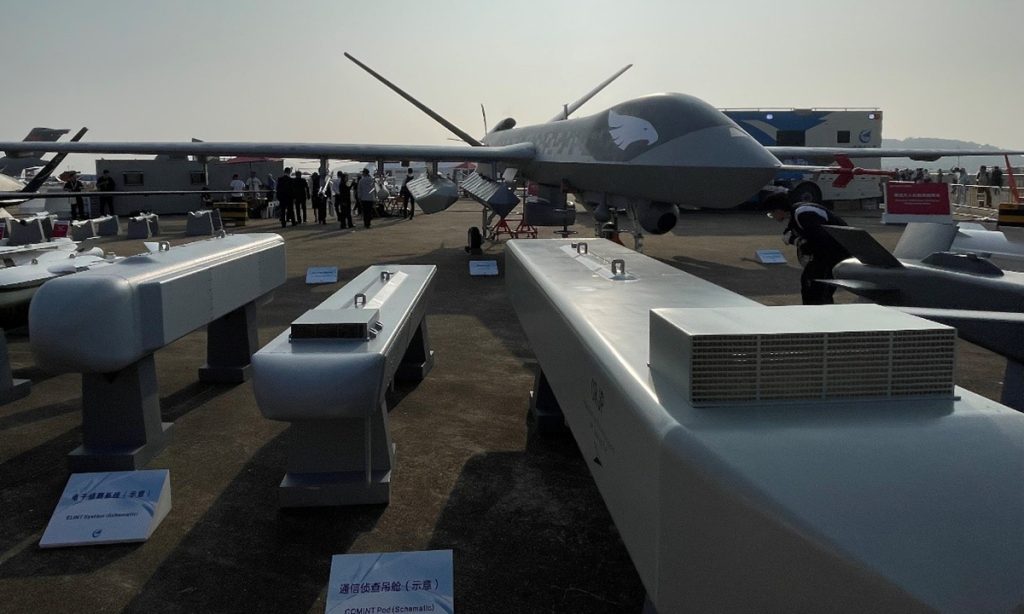
China's Wing Loong-X drone, showcasing its full anti-submarine capabilities for the first time, is on exhibit at the ongoing Airshow China 2024 in Zhuhai, South China's Guangdong Province. The drone has begun routine test flights, the Global Times learned from the aircraft's developer.
Built with fully independent intellectual property, the Wing Loong-X drone is a medium-altitude long-endurance unmanned aerial system with long range, heavy payload capacity, and the ability to perform multiple tasks, said the state-owned Aviation Industry Corporation of China (AVIC).
The Wing Loong-X incorporates the latest advancements in drone technology and inherits the Wing Loong drone series' mature technologies and combat experiences, and stands at the forefront of medium-altitude, long-endurance drones, according to AVIC.
At the Airshow China 2024, the Wing Loong-X is displayed with its full suite of anti-submarine capabilities, equipped with various payloads such as sonar buoy pods, torpedoes, air-to-air missiles, and anti-ship missiles, the Global Times noted at the event.
Chief designer Tang Yong told the Global Times at the airshow that the Wing Loong-X's advanced anti-submarine capabilities can provide key support to maritime security, as the drone can conduct missions such as reconnaissance and surveillance covering large maritime areas, comprehensive search and attack on submarines, long-range patrols and anti-submarine operations, and regular blockade and control in key areas.
The drone is designed for integration into combat systems to conduct collaborative missions with armed reconnaissance capabilities that not only cover land, but also air, surface, and underwater domains, Tang said.
In addition to anti-submarine missions, the drone can also perform other missions such as all-domain reconnaissance and strike, cross-domain support, and operations in contested environments, and emergency rescue operations, according to Tang.
Alongside the Wing Loong-X, a new addition to the Wing Loong series, is also on display at the Airshow China 2024.
The Wing Loong-6 is a multirole medium-altitude long-endurance drone developed to meet emerging global combat requirements, AVIC said. It features high cost-efficiency and ease of maintenance.
The Wing Loong-6 has also begun routine test flights, according to its developer.
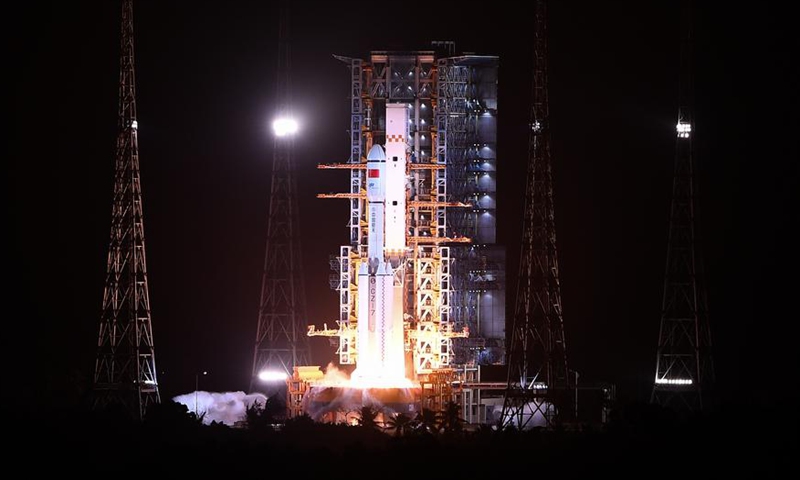
The Tianzhou-7 cargo craft, tasked with carrying supplies for China's space station, separated from the station combination at 4:30 p.m. Sunday (Beijing Time) and switched to independent flight, according to the China Manned Space Agency (CMSA).
The cargo craft will re-enter the Earth's atmosphere in a controlled manner soon. Most of its components will burn up and be destroyed during the process, while a small amount of debris will fall into designated safe waters in the South Pacific, the CMSA said.
The CMSA has planned a total of two cargo supply missions in 2024, including Tianzhou-7 and Tianzhou-8.
Tianzhou-7 was launched on Jan. 17 from the Wenchang Spacecraft Launch Site in the southern island province of Hainan. Tianzhou-8 has been rescheduled for mid-November due to the impact of Super Typhoon Yagi on Wenchang.
The Chinese Foreign Ministry has summoned the Philippine Ambassador to China to make solemn representations over the introduction of the so-called Philippine Maritime Zones Act and Philippine Archipelagic Sea Lanes Act, Chinese Foreign Ministry spokesperson Mao Ning said on Friday.
A Chinese expert said China will take targeted countermeasures against the Philippines’ latest move.
The Philippine President Ferdinand Marcos Jr on Friday signed two laws – Philippine Maritime Zones (PMZ) Act and the Philippine Archipelagic Sea Lanes (PASL) Act, attempting to solidify the illegal ruling of the 2016 arbitration case through domestic legislation, illegally including China's Huangyan Dao (also known as Huangyan Island) and most of the islands and reefs in the Nansha Islands and their related waters in its maritime zones.
The so-called Philippine Maritime Zones Act illegally includes China's Huangyan Dao, most of Nansha Islands and related waters into the maritime zone of the Philippines, and seeks to solidify the illegal award of the South China Sea Arbitration in the form of domestic legislation. The move seriously infringes on China's territorial sovereignty and maritime rights in the South China Sea, which China strongly condemns and resolutely opposes, Mao said.
China urges the Philippines to earnestly respect China's territorial sovereignty and maritime rights and interests, immediately stop taking any unilateral actions that may escalate disputes and complicate the situation, and earnestly safeguard peace and stability in the South China Sea, said Mao, noting China reserves the rights to take necessary measures.
China will not sit idly by the Philippines' escalating provocative measures and will definitely take targeted countermeasures, in order to safeguard peace and stability in the South China Sea, Yang Xiao, deputy director of Institute of Maritime Strategy Studies at China Institutes of Contemporary International Relations, told the Global Times.
Lei Xiaolu, a professor of law with the China Institute of Boundary and Ocean Studies, Wuhan University, told the Global Times that certain provisions of these laws are inconsistent with the United Nations Convention on the Law of the Sea (UNCLOS) and other international legal frameworks.
This reveals the Philippine government's strategy to "expand its powers" through domestic legislation. As such laws exceed the authority granted by international law, consequently, they unlawfully restrict the legal rights of other countries, including China, and are not binding on them, according to Yang.
This move undermines regional peace and stability, escalates tensions, and harms the Philippines' own interests, said Yang.
Lei said UNCLOS only grants coastal states sovereign rights and jurisdiction over the construction, use, and authorization of artificial islands within their exclusive economic zones, without specifying ownership of these artificial islands. The third reading of the PMZ draft clearly contradicts the relevant provisions of UNCLOS.
Ironically, the third reading of two laws' draft does not even fully comply with the Philippines-worshiped ruling of the so-called South China Sea Arbitration in 2016, as it exceeds the content of the ruling, which does not classify all low-tide elevations within 200 nautical miles of the baselines of the so-called Philippine archipelago as part of the exclusive economic zone of the Philippines, said the scholar.
Lei further noted that PASL excludes some important routes for international navigation in its archipelagic waters, which is not consistent with Article 53 of the Convention. It also relates the passage rights to a "reciprocal measure" against the so-called activities "in violation of the sovereignty, sovereign rights or jurisdiction," clearly ignores the territorial dispute in the South China Sea.
Notably, the PMZ seeks to extend Philippine jurisdiction over vast expanses of sea, encroaching on the rights of other nations and intensifying existing conflicts and disputes. The designated sea lanes established by the PASL are situated in close proximity to US military bases in the Philippines, raising concerns about potential collusion between the Philippines and foreign powers to monitor passing vessels, thereby jeopardizing the navigational safety of various countries, Yang told the Global Times.
Even so, the Philippines has still jeopardized its own interests in this move. According to calculations by Chinese expert Hu Bo, director of South China Sea Strategic Situation Probing Initiative, the newly passed PMZ has reduced the area of the "Kalayaan Island Group," which is claimed by the Philippines, by approximately 70,000 square kilometers compared to Presidential Decree No.1596 signed by former President Ferdinand Marcos in 1978. Meanwhile, the PASL only stipulates a few designated shipping routes. These moves not only undermine the navigation rights of other coastal countries but also adversely affects the Philippines' own interests, said Yang.
Harry Roque, a former Philippine congressman and former presidential spokesperson to president Rodrigo Duterte, told the Global Times in April when the Philippine Senate passed the PMZ that this legal provision not only violates the Philippine Constitution, but also fundamentally goes against, and even betrays, the interests of the Philippines, with its effect being more like "killing 1,000 enemy soldiers but losing 800 of your own."
Roque, also a well-known international law professor and the former president of the Asian Society of International Law, believes both laws are unconstitutional and run contrary to Article One of the 1987 Constitution of the Philippines.
The “South China Sea arbitration” case represents a dual conspiracy orchestrated by external nations, intended to undermine both China and the Philippines. The Philippines has been misled by foreign entities and, in its eagerness to replicate the so-called South China Sea arbitration, has hastily enacted two laws. This not only jeopardizes its relationship with China but also compromises its national interests, Yang noted.
Yang said the two laws of the Philippines also violate the article of the "Declaration on the Conduct of Parties in the South China Sea," which the Parties to the declaration agree to exercise self-restraint in the conduct of activities that would complicate or escalate disputes and affect peace and stability. “However, these Philippines’ actions are not only unhelpful for resolving disputes but will only further intensify conflicts and exacerbate tensions in the South China Sea,” Yang said.
The eighth Greater Mekong Subregion (GMS) Summit, under the theme "Toward a Better Community Through Innovation-driven Development," is being held from Wednesday to Thursday in Kunming, Southwest China's Yunnan Province, with China focusing on cooperation in key areas including regional connectivity and trade and investment, in a bid to promote sustainable development and economic integration in the region.
Mao Ning, spokesperson from China's Ministry of Foreign Affairs, announced on Monday that leaders of the five Mekong countries of Cambodia, Laos, Myanmar, Thailand and Vietnam, and President of the Asian Development Bank will attend the summit upon China's invitation.
Since its inception over three decades ago, with the concerted efforts of the six GMS member countries, the GMS has vigorously advanced coordinated economic and social development and regional integration, bringing tangible benefits to the people of these countries, Mao said on Monday.
In a world facing a sluggish economic recovery and geopolitical turbulence, it is all the more important to strengthen solidarity and cooperation and focus on development and prosperity. Through this summit, China hopes to have in-depth exchanges with other parties, with an emphasis on openness, innovation, connectivity and coordination, strive for new progress in cooperation in key areas, including regional connectivity, trade and investment, agriculture and poverty alleviation, and make greater contributions to promoting sustainable development and economic integration in the region, the spokesperson noted.
Experts noted that the achievements that China and the Mekong countries have gained demonstrate the practicality and efficiency of cooperation, and the ongoing summit will point the way for the six GMS countries to deepen collaboration in areas including environmental protection, infrastructure construction and emerging sectors such as new energy collaboration.
Cooperation between China and the Mekong countries, which is based on mutual respect and win-win development, will continue to promote the stable development of the regional economy, setting a good example for regional connectivity, especially in a world where the unilateralism is on the rise, analysts noted.
Thriving regional devt
Chen Xiangmiao, director of the World Navy Research Center at the National Institute for South China Sea Studies said that new energy cooperation, joint law enforcement and disaster prevention will be the new emphasis during the summit.
Southeast Asian countries are speeding up their pace in developing new energy, and this sector is the highlight of China's cooperation with regional countries. Moreover, in recent years, China has conducted intensive joint law enforcement operations with Lancang-Mekong regional countries to crack down on telecom fraud, Chen told the Global Times on Wednesday.
Chen said that action on joint disaster prevention is expected to be discussed during the summit, noting that China could share its technology on forecasting and share meteorological data and its experience on how to prevent flooding.
In addition, water resource management of the Mekong River, infrastructure connectivity and the construction of cross-border economic cooperation zones could be in the spotlight, Xu Liping, director of the Center for Southeast Asian Studies at the Chinese Academy of Social Sciences, told the Global Times.
In the first half of this year, total trade volume between China and Mekong countries exceeded $200 billion, a 12 percent increase year-on-year.
Connectivity between China and the five Mekong countries has also continuously improved. The opening of the China-invested Phnom Penh-Sihanoukville Expressway marks a leap forward in the national highway transportation of Cambodia, the China-Laos railway is helping Laos move toward the goal of becoming a "land-linked country," and the construction of the China-Laos-Thailand railway is being accelerated.
This year, nearly 900,000 personal trips from member countries of the GMS have been cleared at Mohan Port in Yunnan Province, on China's border with Laos, up 116.3 percent year-on-year, China Media Group reported on Wednesday.
The daily average number of inbound and outbound trips from the GMS at the port increased from over 1,300 in 2023 to more than 2,800 this year, and cross-region people-to-people exchanges and economic and trade cooperation have been active, read the report.
Xu noted that among the many regional cooperation mechanisms, China's cooperation with Mekong countries has seen remarkable achievements, which demonstrates the practicality and efficiency of collaboration between China and these countries, and this will further release investment and trade vitality in the region.
"With pragmatic projects advancing, China, which has contributed to bridging the development gaps of these countries, will continue to be an engine to share development opportunities with the region," Zhou Shixin, a research fellow at the Shanghai Institutes for International Studies, told the Global Times on Wednesday.
In response to some US media outlets' smears on China-built dams on the Mekong River, which alleged that the projects caused "negative hydrological impacts" in downstream areas, Zhou said that these claims are untrue.
"Many of the self-proclaimed US researchers did not even conduct field work in the Mekong basin before drawing their 'conclusions,'" Bi Shihong, a professor on China's Neighbor Diplomacy Studies at Yunnan University, told the Global Times previously. "Their reports are less scientifically valuable."
Instead, China is also doing what it can to help Mekong countries improve their water environment and river operations.
Zhou noted that improving infrastructure construction and enhancing trade and economic ties will further promote regional connectivity and boost the global economy.