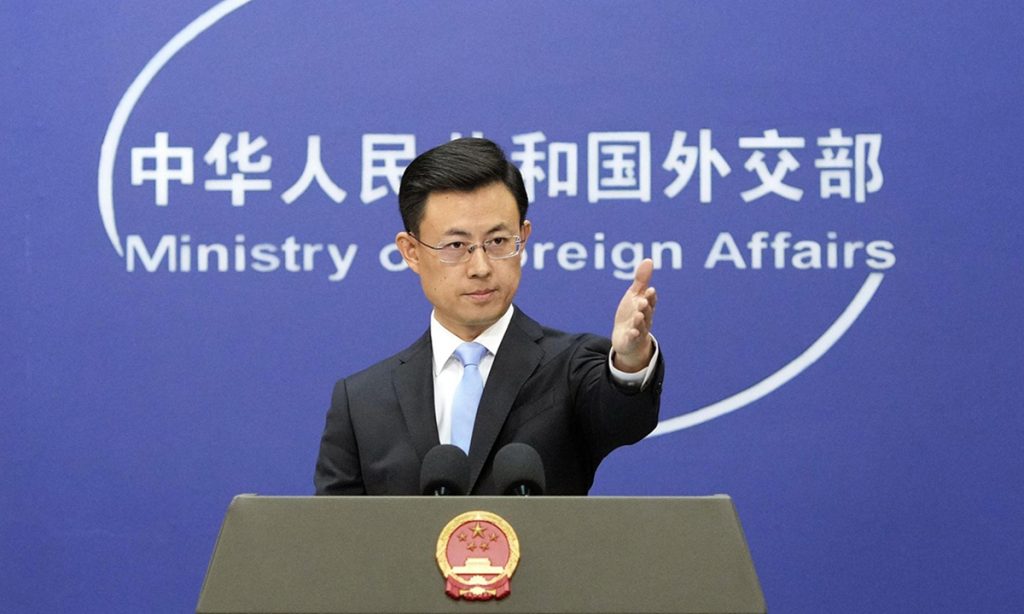
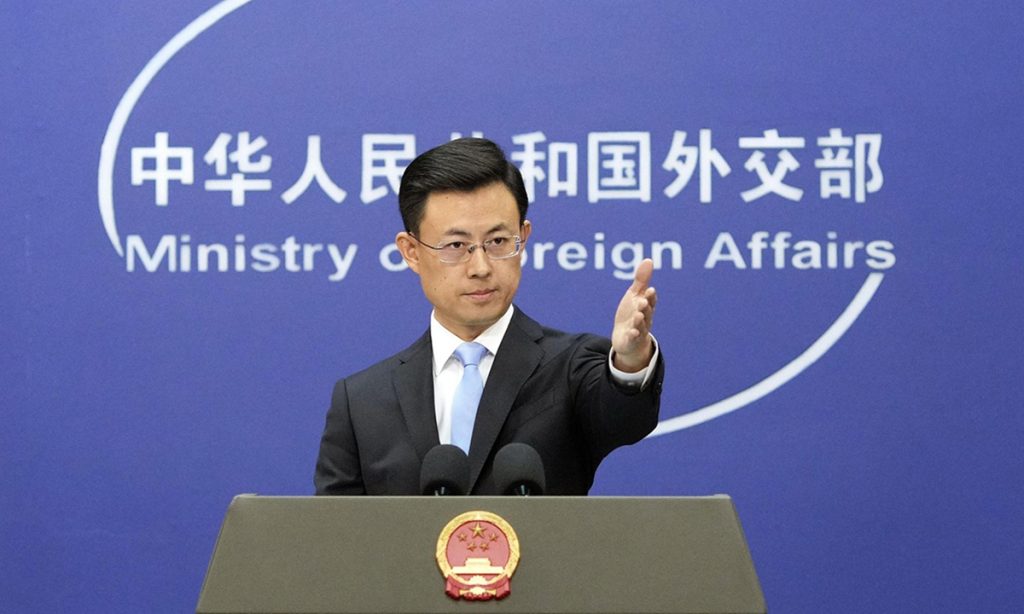
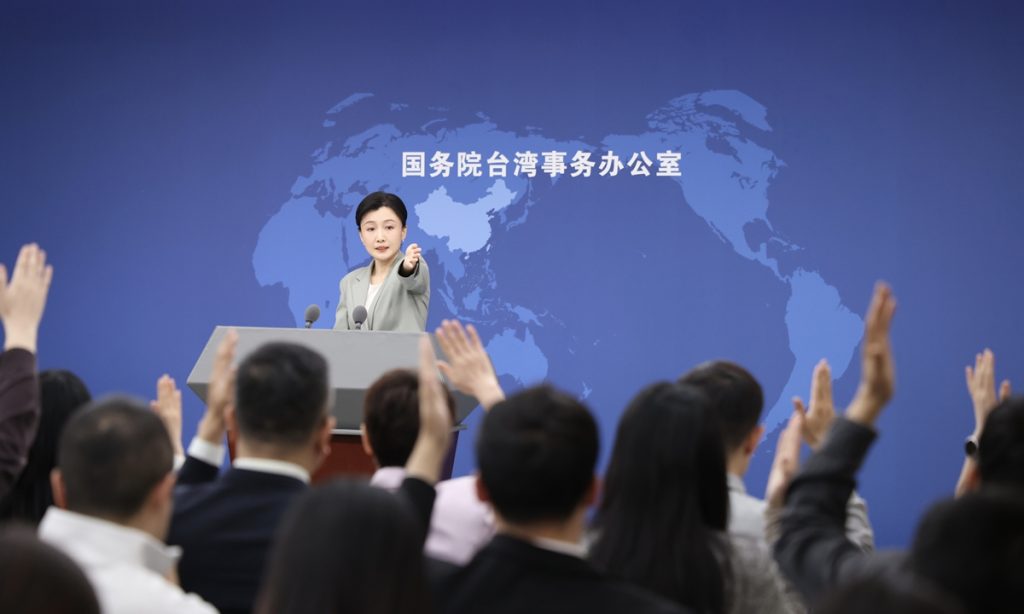
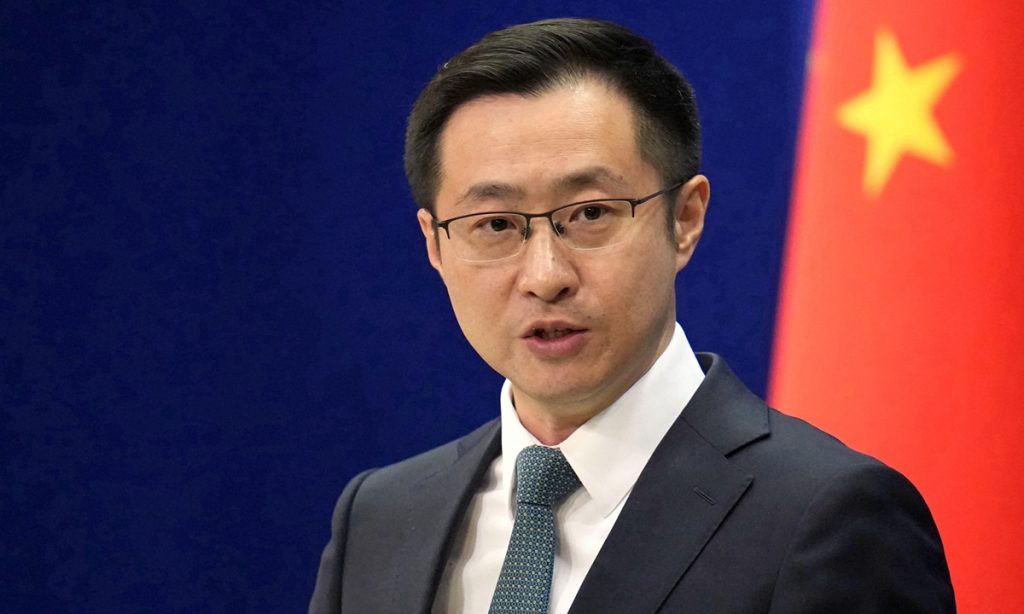
Several individual New Zealand lawmakers visited China's Taiwan region in disregard of the grave concern and firm opposition of the Chinese side. Their action violates the one-China principle and interferes in China's internal affairs. In accordance with relevant laws of the People's Republic of China, the Chinese side has decided to take measures including an entry ban, Chinese Foreign Ministry spokesperson Mao Ning said on Thursday in response to a question about China banned four New Zealand lawmakers from traveling for one year and demanded an apology after they traveled to Taiwan.
"I need to stress that the one-China principle, a prevailing international consensus and a basic norm in international relations, is also the political cornerstone of China-New Zealand relations. We urge the individuals concerned to earnestly respect China's sovereignty and territorial integrity and strictly abide by the one-China principle. Anyone who tramples on the red line and oversteps on the Taiwan question must pay the price," Mao noted.
The comments were made shortly after the Chinese Embassy in New Zealand said on Thursday that the Chinese side has decided to impose measures, including entry bans, on certain New Zealand lawmakers who insisted on visiting China's Taiwan region despite China's serious concerns, firm opposition and repeated prior warnings.
Recently, a small number of New Zealand lawmakers, despite China's serious concerns, firm opposition, and repeated prior warnings, insisted on visiting China's Taiwan region in their capacity as members of parliament, the embassy said.
During the visit, they met with a number of local political figures. Their actions and remarks were subsequently reported by local media, creating a negative political impact and sending erroneous signals to the Taiwan Democratic Progressive Party (DPP) authorities and "Taiwan independence" forces, the embassy noted.
Following reports from Chinese nationals about harsh detention conditions in Philippine prisons and the tragic death of a Chinese national in custody, the Chinese Embassy in the Philippines said on Friday evening via its official WeChat account that it has lodged solemn representations with the Philippine side, urging a comprehensive investigation into the death of the Chinese national.
The Embassy's statement came after recent revelations by unnamed Chinese nationals on social media over poor sanitation and medical services in Philippine jails, lengthy and costly repatriation procedures for detainees, and the death of a Chinese national while in custody.
According to the Philippine side, a Chinese national detained in connection with Philippine Offshore Gaming Operator died suddenly on Thursday at the Philippine Bureau of Immigration detention facility. The cause of the death remains to be investigated.
The Embassy said that it has taken the matter very seriously and promptly conducted verification to identify the relevant prison. The statement also said that the Embassy has lodged solemn representations with the Philippine side, urging a comprehensive investigation into the death of the Chinese national and demanded that any managerial responsibility or negligence be seriously pursued.
At the same time, the Embassy has contacted the deceased's family and is assisting with follow-up arrangements, read the statement.
The Embassy said it has always attached great importance to protecting the safety and legitimate rights and interests of Chinese nationals in the Philippines. Whenever a Chinese national is detained in the Philippines, the Embassy always requests that the Philippine side promptly notify the details of the case, arrange consular access as soon as possible, improve detention conditions, and do its utmost to help detained Chinese nationals resolve practical difficulties.
The Embassy also said it would urge the Philippine side to handle cases fairly and in accordance with the law, and continue to press the Philippine side on matters such as expediting the repatriation process for detained Chinese nationals and lowering related costs, sparing no effort to protect the safety and legitimate rights and interests of Chinese nationals in the Philippines.
The Chinese national soccer team suffered a bitter second consecutive defeat in the World Cup Asian qualifiers as they were defeated by 10-man Saudi Arabia 2-1 on Tuesday in Dalian, Liaoning Province.
The defeat means China now stay at the bottom of the six-team group after they conceded seven goals in the first match against Japan. Chinese players have yet to score a single goal in the series.
An own goal from the Saudi defender Ali Lajami in the 14th minute got the home Chinese fans cheering, followed by a red card to Saudi player Mohammed Kanno in the 19th minute, giving Chinese players a one-man advantage.
But it was Saudi player Hassan Kadish who pulled an equalizer in the 39th minute before adding another goal shortly before the final whistle, denying China's hopes for a point in the qualifiers.
"It's really a pity that our team conceded two goals in set pieces. Our players did their best," said Branko Ivankovic, head coach of the Chinese team, through an interpreter at the post-match press conference.
The Croatian rejected the idea of resigning. He said it is not up to him and the Chinese team still has chance to finish in fourth place in the group.
Disappointed Chinese fans were bemoaning the performance of the team after the match, but some were also voicing their support for the Chinese team as they chanted "Fight till the end."
Due to the Chinese national team's previous 7:0 defeat to Japan last week, many were concerned about the turnout for the home match against Saudi Arabia. But the venue attendance surpassed 48,000 in the 63,000-capacity Suoyuwan Stadium.
Fans in the southern stands even displayed a massive red tifo that stretched from the top of the stands to the front row closest to the field with the words "Fight for the Country" before the game.
SOURCE / PRESS RELEASE State Grid Taizhou Electric Power Supply Company's 'Vision-Intelligent Obstacle Avoidance Inspection Pioneer' System Put into Use to Enhance Work Efficiency Published: Sep 16, 2024 07:28 PM
On September 9, staff from the Smart Operation and Inspection Center of State Grid Taizhou Electric Power Supply Company utilized the "Vision-Intelligent Obstacle Avoidance Inspection Pioneer" system mode mounted on drones to conduct inspection work on distribution network lines. Previously, from July 4 to 7, this project was exhibited at the 2024 World Artificial Intelligence Conference. This conference, jointly hosted by the Ministry of Foreign Affairs, National Development and Reform Commission, Ministry of Education, and others, had the theme of "Promoting Sharing through Joint Consultation, Promoting Good Intelligence through Good Governance," and attracted over 1,500 exhibits from more than 500 enterprises in fields such as large models, computing power, robotics, and autonomous driving. In recent years, addressing the complex nature of distribution network inspection environments, State Grid Taizhou Electric Power Supply Company has researched a drone-mounted autonomous obstacle avoidance solution based on millimeter-wave radar and visual autonomous obstacle avoidance. This solution enables the identification of obstacles in distribution line corridors and the autonomous planning of obstacle avoidance routes, thereby avoiding situations where drones might collide with obstacles while flying outside the lines. Through deep learning and lightweight model technology, drones can detect trees and obstacles ahead in real-time during flight, and achieve optimal obstacle avoidance path planning through dynamic trajectory adjustment.
The "Vision-Intelligent Obstacle Avoidance Inspection Pioneer" system is equipped with purely domestically produced chips and ultra-strong computing power of up to 6T. Based on frontend recognition and autonomous obstacle avoidance technology, it can provide data support for the autonomous flight of drones conducting distribution network inspections. The system integrates three-phase orthogonal radar, enabling precise identification of details such as the main body of electrical equipment and transmission channels, and continuous identification of wires with a diameter of 1 centimeter within a 15-meter range, as well as potential hazards in the surrounding environment of the distribution network. By accumulating a database of defects and potential hazards, the system achieves iterative updates in algorithm types and depth, further enhancing the intelligence level and work efficiency of distribution line inspections.
Currently, this system mode has been used to conduct inspection work on 17 distribution network lines in the Taizhou region of Jiangsu province. After implementation, it has achieved good results, significantly improving the autonomy and intelligence level of distribution network inspection operations. This makes drone inspection operations safer and more efficient, reduces the labor intensity of operation and inspection personnel, and greatly lowers operation and maintenance costs.
A power supply company in Northwest China’s Ningxia Hui Autonomous Region has revolutionized the approach to power grid security with the integration of remote intelligent patrol technology. This advancement marks a significant leap in the surveillance and maintenance of substations, ensuring the reliability and safety of the power grid.
On August 12, Yang Mei, a maintenance worker at the Yuequan 110kV substation under the State Grid Ningdong Electric Power Supply Company, reported the successful operation of the intelligent inspection system, highlighting its seamless functionality. "The system is a testament to our commitment to innovation and safety," Yang Mei said.
At the core of this smart transformation is the intelligent inspection system, which employs high-definition cameras to monitor critical substation equipment. These cameras, positioned around circuit breakers, disconnectors, and other vital components, are programmed with preset points for equipment monitoring. This setup enables real-time surveillance, allowing operation and maintenance staff to issue inspection commands remotely, transforming the traditional inspection process.
The remote intelligent inspection technology has transitioned substation monitoring from reliance on human observation to an automated "electric eye" system. This shift has significantly increased the efficiency of risk identification and assessment, ensuring the equipment operates safely and stably, particularly during peak demand periods like summer.
Moreover, the system conducts frequent daily inspections of the substation's surroundings and internal environment, including the detection of floating debris, thereby enhancing the overall perception and security of the substation.
Looking ahead, the State Grid Ningdong Electric Power Supply Company is committed to expanding the use of remote intelligent patrols. This strategic move aims to elevate the quality and efficiency of power grid maintenance, solidifying the defense of power grid equipment and contributing to the continuous and stable delivery of electricity.
The integration of such technology not only fortifies the power grid against potential threats but also underscores the company's dedication to upholding the highest standards of safety and operational excellence in the energy sector.
In recent years, some Western politicians have intensified their rhetoric regarding "China's overcapacity." Meanwhile, some Western nations have embraced trade protectionism, imposing high tariffs on China's burgeoning green industries, such as new-energy vehicles (NEVs), photovoltaics and lithium batteries.
However, the strength of China's green industries stems from technological advancements, the clustering of industrial chains as well as robust domestic competition. As a matter of fact, the unfounded claim of "overcapacity" serves as a means to politicize and weaponize economic matters.
The development of China's green industries plays a crucial role in the global effort to combat climate change. China's industrial policies for green sectors adhere to the principle of competitive neutrality. In recent years, the policies have significantly driven the growth of the new-energy sector in China, while facilitating the development of new-energy industries in other countries too.
China was the key driver of the global decline in production cost for photovoltaics and wind turbines in 2022, with other markets experiencing a much more heterogeneous set of outcomes that saw costs increase, according to the report on Renewable Power Generation Costs in 2022, issued by the International Renewable Energy Agency.
From the perspective of sustainable development goals, global renewables production capacity still falls far short of market demand. In this context, China deserves recognition rather than criticism. The advancement of China's new-energy sectors has accelerated the global response to climate change, making it more efficient and less costly.
The issue of production capacity is a problem that arises amid the operation of the market. "Decoupling" and protectionist policies are not beneficial for resolving the issue. The US directly subsidizes domestic manufacturers through legislation such as the Inflation Reduction Act (IRA), while discriminating against foreign manufacturers.
The green industry evolution in China is characterized by free and fair competition, and the Chinese market is steadily transitioning toward a more mature development phase now.
According to data from the China Association of Automobile Manufacturers, from January to July 2024, China produced 5.9 million NEVs, a year-on-year increase of 28.8 percent. During the same period, sales reached 5.9 million units, up 31.1 percent year-on-year.
The academic community has long pointed out that in promoting the use of clean energy, subsidies are needed to reduce the costs of new technologies and decrease market reliance on old technologies.
Researches by some countries have found that developed countries tend to use industrial policies more intensively. Goldman Sachs estimates that fiscal spending related to the US IRA will amount to $1.2 trillion, a figure three times more than what supporters initially claimed, according to media reports.
China emphasizes the importance of addressing the capacity issue and actively takes measures to promote global coordination on this matter. China adheres to a cooperative approach, continuously optimizing macroeconomic policies and achieving global policy coordination to enhance global macroeconomic governance. This approach aims to achieve better interaction between China's economic development and global economic growth.
The dependencies formed by trade relations are mutual, as the world relies on the Chinese market, and China equally relies on the world market. A healthy international division of labor and economic cooperation provide the foundation for the global economy to achieve faster recovery.
Protectionist policies will only increase economic costs and decrease economic efficiency for all economies, which cannot promote the balance of supply and demand on the market.
The development of China's manufacturing sector provides opportunities for cooperative development for more developing countries. Countries should strengthen cooperation and enhance mutual trust to jointly tackle global challenges, rather than exaggerating "threats" and adding instability.
As the 33rd Summer Olympics in Paris draws to a close, the popular youth business reality show Chinese Restaurant 8 returns to France. Its mission is to showcase Chinese cuisine and culture while also promoting the spirit of Chinese sports.
Chinese Restaurant 8 features the theme "Olympic Boost Week" and introduces a series of innovative dishes. The restaurant also hosts an Olympic-themed "Pride of China Knowledge Quiz," offering viewers both entertaining and culturally engaging activities.
The program has specially invited two Olympic athletes, Deng Yaping and Su Bingtian, who display their relaxed and confident demeanor. Through their personal stories, they highlight the legacy of Chinese sports, helping to create a harmonious blend of food and culture.
Chinese track and field athlete Su Bingtian brings hundreds of Chinese Dragon T-shirts to Paris, distributing them to local Chinese restaurant owners and friends who love Chinese culture. These shirts symbolize the wisdom and strength of the Chinese Dragon spirit.
A newly added "Takeaway Food Truck" offers Chinese snacks such as sour plum soup and colorful jelly on the streets of a small town, giving international visitors a unique taste of Chinese cuisine.
The "Cross-City Takeaway Team," consisting of Zhai Xiaowen, Dai Guangtan, Yu Shuxin, and Huang Xiaoming, delivers "spicy hot pot" to the town of Ault in the Somme department of Hauts-de-France.
The interior design of Chinese Restaurant 8 fully embraces Chinese aesthetics, featuring a majestic red dragon wall, porcelain dragon-scale decorations, and a "Panda Corner" photo spot, allowing diners to experience the diverse charm of Chinese culture.
The show also presents gifts such as Sichuan opera face-changing dolls, panda headbands, Chinese fans, dragon beard candy, and Jingdezhen porcelain cups, symbolizing the warm hospitality of the Chinese people and promoting continued friendly exchanges between China and France. The surprise visit of French artist Alain also injects fresh vitality into the China-France friendship.
The 23rd "Chinese Bridge" global finals for university students officially commenced in Nanping, East China's Fujian Province, on Friday. Featuring contests and immersive cultural experiences, the competition will span 21 days.
A total of 147 contestants from 130 countries and regions are participating in the competition, which has three phases: the Bridge Round, the Advancement Round, and the Grand Final.
The Grand Final will take place in early September in Pingtan, where the global champion, continental champions, and winners of the first, second, and third prizes will be selected. Individual awards will also be presented.
The first Bridge Round featured a written exam consisting of 40 multiple-choice questions covering topics such as China's national conditions, geography, history, economy, and culture.
Preliminary rounds were held earlier this year, from February to June. Winners of these rounds, vetted by the organizing committee, have traveled to China to represent their respective regions in the global finals.
Since its inception in 2002, the "Chinese Bridge" competition has attracted over 1.6 million participants from more than 160 countries and regions, with over 7,000 foreign students invited to China for the global finals, drawing a global viewership of hundreds of millions each year.
It aims to provide a platform for Chinese language learners from around the world to showcase their proficiency, exchange learning experiences, and assess their progress, while building bridges of friendship among participants.
After a concert Monday night at Shanghai Cultural Square theater, renowned Welsh musical theater actor and singer John Owen-Jones met his Chinese fans at the “More than Music” event hosted by the British Consulate-General in Shanghai on Tuesday to share his career experience, and celebrate the rich cultural exchanges between the UK and China.
John Owen-Jones, also known as JOJ, is most famous for his portrayals of Jean Valjean in Alain Boublil & Claude-Michel Schönberg's Les Misérables and the Phantom in Andrew Lloyd Webber's The Phantom of the Opera.
Shanghai is the second leg of his China tour covering Beijing, Shanghai, Nanjing and Changsha after a four-year hiatus. Tickets for the one-night Shanghai show sold out in less than seven minutes.
The Global Times reporter witnessed about 2,000 Shanghai audience members actively interacted with JOJ throughout the entire performance, immersing themselves in more than 25 classic musical theater scenes, including Nature Boy, Thunderball, Kiss of the Spiderwoman, This Is the Moment, Proud Lady and Love Changes Everything.
Besides his long-time partner John Quirk, special guest Chinese soprano Pan Hangwei also performed on stage with JOJ.
“This year I was very much concentrating on using local musicians and local talents, so whenever I travel to a new country, I much prefer to work with local artists because it brings a different dimension to my performance… And I thought it would be a great idea to put together Chinese instruments into the recording, and in that way, we celebrate the two musical cultures and the differences and combine them and make one unique thing,” JOJ told the Global Times on Tuesday.
Speaking of blending Western and Chinese instruments and making a very unique version of the Phantom of the Opera, which they performed during the China tour, JOJ said, “It's always one of the most exciting parts of the show for me because I get to see how the audience reacts to that, because cultural exchange is such a rich tapestry of different things all over the world that we can all learn from each other and make better art and make better music. And that's what's so exciting about being here in China. I think I'd like to explore more, so I definitely would like to integrate, explore more cultural opportunities between where I'm from, where you are from.”
JOJ’s remarks were echoed by the British Consul General in Shanghai Matt Burney. The consul general told the session that “Regardless of where we come from, music is this universal language, and it reminds us of that shared humanity and the things that bind us together emotionally and spiritually. Music really does have the ability to transcend all of the challenges that life presents us. It can take us back to the past, and it can also give us optimism.”
The consul general went on to introduce the “More than Music” campaign. “We wanted to use the media of music and through this project to bring people closer to the UK. We're bringing you a really exciting, UK music campaign that I really do hope that you will engage in and hope that through this campaign you can understand more about British music and British musicians.”
Global financial markets experienced a significant surge on Friday, as stocks, gold, and oil all rallied following US Federal Reserve Chair Jerome Powell's clear indication that lower interest rates in the US are imminent.
A long-awaited rate cut by the Fed is expected to reduce the interest rate gap between China and the US, and China's central bank will have greater flexibility in implementing monetary policy, giving more opportunities for Chinese economy, according to experts.
"The time has come for policy to adjust," Powell said in a keynote speech at an annual gathering of central bankers and economists in Jackson Hole, Wyoming. "We will do everything we can to support a strong labor market as we make further progress toward price stability."
This was seen as his firmest declaration yet that the Fed has finally seen enough reasons to change its stance by cutting rates at their September 17 to 18 meeting.
Investors cheered on the messaging. The Dow Jones Industrial Average rose 462.3 points on Friday, an increase of 1.14 percent; the Nasdaq Composite Index jumped 1.47 percent; and the S&P 500 Index rose 1.15 percent.
In addition, international oil prices also climbed up collectively, with the October contract for WTI crude oil gaining 2.69 percent to $74.97 per barrel, and the October contract for Brent crude oil rising 2.20 percent to $78.24 per barrel.
The prices of precious metals also increased on Friday as appetite for safe-haven assets strengthened. On COMEX, December gold climbed $32.58, or 1.29 percent, to $2,549.28 an ounce.
As inflation fell fast and US job market added fewer jobs than expected, market expectation for a rate cut has been rising. The US economy created 818,000 fewer jobs than originally reported in the 12-month period through March 2024, the Labor Department reported Wednesday. The revision to the nonfarm payroll numbers is the largest since 2009, indicating that the US labor market may not be as strong as expected.
As a result, the probability of a 25 basis-point cut is now 76 percent, while the probability of a 50 basis-point cut is 24 percent, according to the CME FedWatch tool.
The Federal Reserve's monetary policy often determines the direction of global monetary policy, however, this time, the US has clearly shifted from being a leader in global monetary policy to a follower, a securities analyst with the surname Chen told the Global Times on Saturday.
In June, the European Central Bank cut interest rates for the first time since 2019. The Bank of Canada announced two consecutive rate cuts in June and July. The People's Bank of China, the country's central bank, also made a rate cut in July. In August, the Bank of England delivered its first interest rate cut in more than four years.
"The Fed has been cautious in signaling a rate cut not only because of the robust performance of US economic data, but also because it hopes to delay capital outflows as much as possible," Chen said, noting that the US economy is grappling with challenges in the manufacturing and industrial sectors, with even the adjustments in the US capital market being influenced by these issues.
But the increasingly strong expectation of rate cuts is already an irreversible trend, as evidenced by the general appreciation of non-dollar currencies, Chen said.
In foreign exchange market, the offshore yuan further appreciated against the US dollar on Friday, up 311 points to 7.1149 yuan per dollar.
Xi Junyang, a professor at the Shanghai University of Finance and Economics, suggested that the Fed's expected interest rate cut may offer China economic opportunities beyond just currency appreciation.
For instance, once US rates come down, China's central bank will have more flexibility in monetary policy adjustments, when it comes to bank reserve requirement ratio cut and more interest rate cuts, Xi said.
The Fed's rate cutting typically weakens the US dollar, increasing the possibility of capital inflows into yuan-denominated assets. With the relatively weak growth in consumer price index in China, more capital inflows have the potential to drive assets prices and help counter the risks of deflation, he noted.