Rebirth of Guancheng River tells story of protecting ecology, fostering correct view of governance performance in Guiyang
Over the past 30 years, 89-year-old Lei Yueqin has created seven hand-drawn maps documenting the revival of the Guancheng River in Guiyang, Southwest China's Guizhou Province. Her oldest faded colored drawings still bring a sparkle to her eyes whenever she flips through them.

A national role model for ecological progress and an exemplary volunteer, Lei has spent decades patrolling the river on her own initiative. On her first map, drawn in 1994, she marked the Guancheng River in red to indicate pollution. In a 2004 drawing, the waterway was shaded gray and labeled as a "dead river." Between 2008 and 2015, she produced four more drafts, again depicting it as "dead river," with no sign of flowing water in the remaining stretches.

Her lifelong wish was simple: access to clean drinking water.

Stretching 7.5 kilometers, Guancheng River cuts 3.3 kilometers across old downtown Guiyang before feeding Nanming River. The Nanming winds 160 kilometers into Wujiang River, which travels another 540 kilometers to join the Yangtze River. Yet starting in the 1990s, rapid urban expansion and competing demands for land polluted the river, gradually burying it out of locals' sight. Authorities capped roughly 2,400 meters of its main channel with thick concrete slabs to build parking lots and food stalls, leaving merely 592 meters of open river.

In 2018, extra slabs were laid over tributary ditches amid central environmental inspections, turning most open water into a covered underground drain.

Officials faced a critical test of sound performance mindset: was this 7.5-kilometer tributary trivial or vital to Yangtze conservation? Would local governments keep hiding pollution under concrete or tear up covers for thorough restoration?

Xi Jinping, general secretary of the Communist Party of China (CPC) Central Committee, Chinese president and chairman of the Central Military Commission, laid out clear guidance for promoting the development of Yangtze River Economic Belt: Ecological priority, green development, joint protection and no excessive development. No economic activities should cause any damage to the environment.

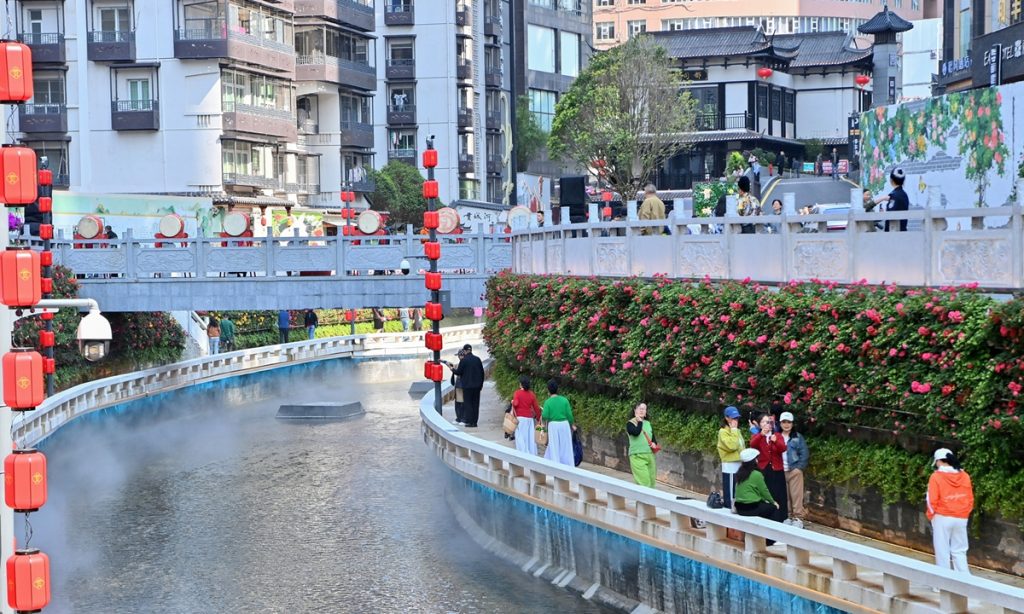
Guiyang kicked off river dredging in May 2019. The all black, odorous water along the basin was eliminated by November 2020. In September 2021, the city resolved to remove concrete caps over the main channel, and in January 2024, the long-lost Guancheng River flowed in open air again.

In 2025, Lei finished her seventh map, painting clear sparkling waters across the page.

Fixing flawed development ideas

Liu Zhu, a veteran urban planning official, recalled reckless urban expansion left insufficient sewage infrastructure. Guiyang built its first wastewater treatment plant only in 2003. Its karst terrain holds little surface water, mixing rainwater and raw sewage directly into rivers. Foul odors triggered heavy public complaints, prompting hasty capping as a quick fix around 2000.

The Guancheng River's main channel has limited flow capacity. To ease flood pressure, engineers built a diversion tunnel upstream, effectively shifting the problem downstream by channeling mixed sewage directly into the lower Nanming. The flood bypass became an open sewage outlet.

In 2017, a central environmental inspection found that 400,000 tons of untreated domestic wastewater drained into Nanming River daily. A 2018 national pollution audit listed Guancheng and five feeder trenches as severely contaminated, mandating urgent rectification.

"We looked into a complete fix - citywide sewer separation - but we were concerned about the massive infrastructure backlog and the high costs," admitted Zhong Tayong, then vice mayor of Guiyang in charge of environmental protection.

"At the time, the Guancheng River's main channel had essentially become a sewage conduit; many people didn't even think of it as a river anymore. Some proposed simply integrating it into the municipal pipeline network, covering it all up - that would have been the fastest way to meet compliance targets…" recalled an official involved in drafting the remediation plan.

In 2019, Guiyang's capped, diversion-based cleanup plan failed to get approval from the central government, making it the only provincial capital missing its national pollution remediation task.

Quick-fix capping and water diversion stemmed from formalism and misplaced performance mindset.

The priority was to root out a wrong mindset. With course correction made at the leadership level, remediation of the Guancheng River and its side channels was restarted.

Guiyang revised its renovation blueprint with expert reviews and third-party oversight. Workers cleared nearly 20,000 cubic meters of accumulated sludge upstream, inspected hundreds of drainage outlets, cut off pollution sources and separated rainwater from sewage. National inspectors confirmed full removal of black odorous water by late 2020.

Uncovering the buried channel

2021 marked the centenary of the CPC, when the CPC Central Committee launched a campaign on Party history learning and education among all of its members.

Ahead of that year's Spring Festival, President Xi visited the Liuchong section of the Wujiang River in Guizhou. Xi asked Guizhou to adhere to the two bottom lines of ensuring development and ecological progress, and strive to forge a new path of giving priority to ecological conservation and pursuing green development.

That September, Guiyang officially put the Guancheng River concrete-slab removal project on the agenda.

City officials, specialists and citizen representatives held dozens of workshops to solve core hurdles. Where does the treated water go? With scarce land available in the mountainous city, conventional wastewater treatment plants were not an option. Instead, Guiyang opted for a tailor-made solution: retrofitting the city center with an underground, compact water reclamation plant.

When does the money come from? The project pooled central special funds, eco-grants, bank loans and private investment.

In July 2022, the city adopted a comprehensive plan for the full "uncovering the river."

Construction started on the first 182-meter uncovered stretch on Taiping Road. The concrete slabs were a full meter thick. Regular saws bounced off; crews had to use high-pressure water jets laced with industrial diamond grit, chewing forward inch by inch.
On January 26, 2024, Taiping Road was thronged with local residents and tourists standing in dense layers of crowds. As the golden curtain covering the river was pulled aside, clean running water began to flow.

Standing amid the onlookers, 68-year-old Jiang Yu wiped away his tears quietly.

Jiang grew up right by the river. He still remembers the old days when long lines of villagers queued up on Longjing Bridge to fetch and carry river water. His 34-year-old son Jiang Jinwen lives at No.80 Guanchenghe Road. For a long time, though he crosses the river's route every single day, he had never laid eyes on an open river channel before.

As a resident representative, Jiang Jinwen took part in the unveiling ceremony. Once the event wrapped up, the father and son wandered back and forth along the restored riverbank.

Watching the running water, they felt as though a fresh spring was flowing through their hearts.

Refining urban development paths

The block upgrading was designed and advanced alongside the uncovering project of Taiping Road.

Full-scale large demolition and reconstruction, or refined micro-renovation?

"The initial proposal was impressive: full river navigability allowing boat cruises through the old town downstream past 24 riverside scenic spots," said Guo Jiesi, former head of the special working group for "One River, One Corridor and Two Historic Districts" in Yunyan District.

However, the proposal was rejected upon submission.

A mountainous city, Guiyang features sharp water level fluctuations; at least three ship locks would be required for waterborne traffic. To optimize sightseeing, the river channel had to be widened by an extra 200 meters. Docks, locks and scenic sites plus land acquisition would push total investment above 10 billion yuan.

"The plan far exceeded local fiscal capacity and ran counter to national regulations restricting large-scale demolition and construction," Guo said.

Authorities at Guiyang municipal and Yunyan district levels drew practical solutions from theoretical learning.

"President Xi's remarks enlightened us," said Liu Renhao, district head of Yunyan. The renovation along Guancheng River would avoid citywide large-scale investment and blaze a new trail of cultural empowerment and featured development.

Drawing wisdom from heritage to enrich modern life, local authorities finalized the blueprint: ecological foundation plus cultural empowerment via targeted micro-renovation, to carry forward urban heritage, upgrade block functions and elevate living standards.

Renovation of the river kick-started the district's urban renewal drive. Stretching 7.9 kilometers, the riverside footpath links Wenchang Pavilion and Cuiwei Garden historic quarters. The 37-project cluster of "One River, One Corridor and Two Districts" has forged a distinctive urban cultural precinct.

On weekends, open-air roadside concerts unfold beside the over-400-year-old Wenchang Pavilion.

Professional troupes interact closely with locals and tourists amid a blend of traditional charm and modern vibes. Over 600 performances have drawn more than five million visitors, birthing Guiyang's new cultural IP as a City of Music.

Unique local signature drinks - prickly pear coffee, houttuynia cordata beer and pitaya milk tea - have made Taiping Road a trendy landmark for out-of-town visitors and a testing ground for local youth to boost cultural confidence via national chic.

Having resided riverside for 69 years, Zhou Jinhua once endured messy surroundings. At community open-air forums, he voiced his wish for downstairs leisure green space; soon a pocket garden was built nearby. Micro-renovation covering 244,100 square meters of existing buildings benefited 628 households.

In March last year, the project was listed as a national exemplary urban renewal case. The Ministry of Housing and Urban-Rural Development commented: "Through innovative practice, the project has pioneered a sustainable urban regeneration path balancing livelihood improvement, cultural inheritance, economic revitalization and governance upgrade."

Anchoring sound performance in practical results
What lessons has Guancheng River's restoration brought?

"It's an eye-opening masterclass: genuine governance accomplishments are delivered for the people through down-to-earth work," said Wang Hong, Mayor of Guiyang.

Construction of Liuguangmen Underground Water Reclamation Plant required excavation of a 30-plus-meter pit; to spare nearby residents from blasting disturbance, crews relied on round-the-clock crusher work amid tough construction bottlenecks.

From a macro perspective, the plant constitutes a core component of comprehensive Guancheng River remediation, a concrete action to upgrade ecological protection and fulfill Guizhou's obligation to shield the upper reaches of the Yangtze and Pearl Rivers.

"We re-mobilized the team, kept daily site inspections and pressed full steam ahead," Li Wenyu said.

Dedicated onsite delivery spawned dozens of technical innovations, turning Liuguangmen into China's deepest fully underground reclamation plant and a national benchmark for green low-carbon development.

"The Party spirit serves as the decisive underpinning for fostering a correct view of governance performance. Since the 18th CPC National Congress, all rounds of centralized Party education have highlighted pragmatic delivery as core guidance," said Huang Chaochun, Party Chief of Guizhou Academy of Social Sciences. "Guancheng River's spectacular rebirth stands as vivid proof."

Once plagued by acid rain, Guiyang now ranks among China's top-performing 168 key cities for ambient air quality; 100 percent of provincial and national monitored surface water sections meet high-quality standards.

Lei Yueqin is a familiar sight by the revitalized river. The 85-year-old joined the CPC in July 2022.

"I joined the Party witnessing tremendous new-era progress, especially in ecological civilization. My lifelong wish of access to clean drinking water has come true," she explained.

Though initially burdened with grievance and pressure, Guancheng River's transformation has changed her perspective. Lei always bears Xi's words in mind as enlightening theories illuminate reality and guide forward-looking development.
China's first cruise-to-nowhere voyage sets sail from Shanghai

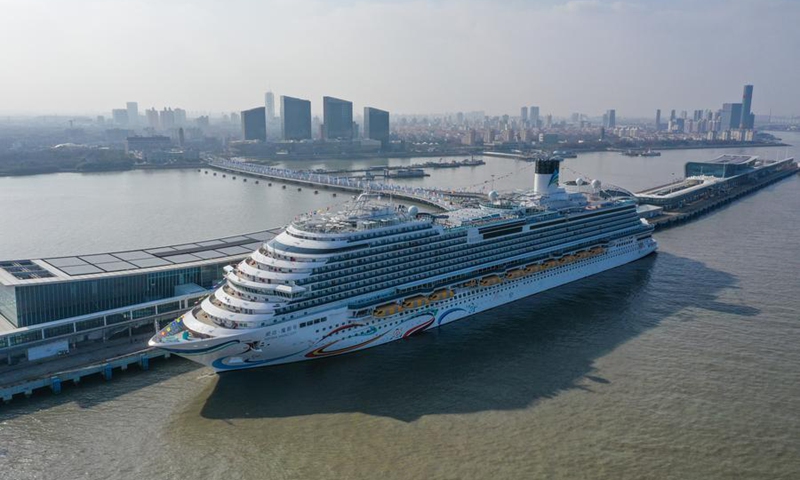
The Adora Magic City, China's first homegrown large cruise ship, departed from Shanghai on Saturday, marking the launch of the country's first-ever cruise-to-nowhere voyage.

Unlike traditional cruises, the new itinerary involves the ship leaving from and returning to its home port, Shanghai Wusongkou International Cruise Terminal, without making any stops, cruising solely on the high seas.

The three-day, two-night voyage from Saturday to early Monday offers passengers a relaxed, immersive experience without the need to rush from one port to another.

"It feels very relaxing, and I don't have to take extra days off work. I am really looking forward to experiencing the homegrown large cruise ship," said a tourist surnamed Hu, a white-collar worker from Shanghai, as she stepped on board.

The operator has enhanced onboard entertainment, including a stand-up comedy show, magic performances, theme parties and late-night dining. To ensure comfort, the passenger load was capped at 80 percent, with an average age of 47, lower than the usual 55 on regular routes.

On Friday, Shanghai issued China's first entry-exit permit for such cruises. The following day, streamlined customs and border inspection services were in place for travelers.

Tong Danying, an official with the Shanghai Municipal Transportation Commission, said cruises to nowhere are not a simplified version of traditional cruises, but a brand-new product that turns the ship into the destination itself, creating a new consumption scenario.

Figures show that China has seen booming cruise tourism, with total cruise passenger throughput in 2025 surging 25.3 percent year on year.

Deepen media cooperation between China and Kyrgyzstan to jointly create a bright future for SCO

Chinese President Xi Jinping has pointed out that interactions between civilizations provide the most solid foundation for the Shanghai Cooperation Organisation's (SCO) development, and people-to-people exchanges provide the strongest driving force for the organization. Kyrgyzstan will host this year's summit, which marks the 25th anniversary of the founding of the SCO.

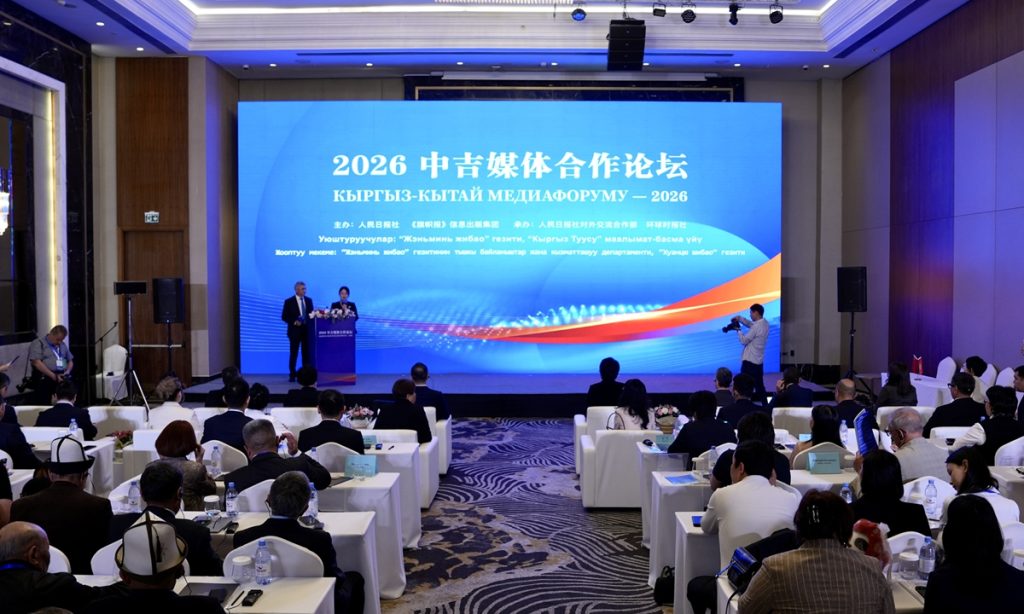
On May 27, the 2026 China-Kyrgyzstan Media Cooperation Forum, themed "Deepening China-Kyrgyzstan Media Cooperation for a Brighter SCO Future," was held in Bishkek, the capital of Kyrgyzstan. Nearly 100 media representatives, officials from relevant departments, experts, scholars and business representatives from China and Kyrgyzstan attended the forum, engaging in in-depth exchanges and discussions on topics including economic and trade development, cultural exchange and media cooperation. The forum was jointly hosted by the People's Daily and Kyrgyz Tuusu Publishing House.

Media in unity, building consensus for development

"Amity and good-neighborliness are invaluable to a country." Linked by mountains and rivers, China and Kyrgyzstan are good neighbors, good friends and good partners enjoying close people-to-people ties. In recent years, under the strategic guidance of the two heads of state, the China-Kyrgyzstan comprehensive strategic partnership for a new era has maintained a strong momentum of development. Media outlets from both countries have played an active role in promoting the building of a closer SCO community with a shared future and a China-Kyrgyzstan community with a shared future.

Cui Shixin, Deputy Editor-in-Chief of the People's Daily, said that holding the China-Kyrgyzstan Media Cooperation Forum is both an implementation of the important consensus reached by the two heads of state on deepening the China-Kyrgyzstan comprehensive strategic partnership for a new era, and a concrete action to create a favorable public opinion environment and lay a solid public foundation for the upcoming Bishkek SCO Summit. China and Kyrgyzstan are companions on the path to modernization. Media of both countries should build consensus on development to anchor mutual trust, boost mutually beneficial cooperation to pave the way for prosperity, deepen cultural exchanges to nurture the tree of friendship and consolidate institutional foundations to amplify the voice of the SCO. With a constructive attitude, they should build bridges of understanding, present a true, multidimensional and comprehensive picture of China-Kyrgyzstan cooperation, and tell vivid stories of mutually beneficial cooperation between the two countries.

Salkyn Sarnogoeva, Deputy Minister of Culture, Information, Sports and Youth Policy of the Kyrgyz Republic, said that the friendship between China and Kyrgyzstan has a long history, and the spirit of the Silk Road has firmly bound the two peoples together. In the digital era, media are a bridge connecting the peoples of the two countries, and it is very important for the two sides to strengthen media exchanges and cooperation. At present, the SCO is in a period of vigorous development, and the media of both countries should jointly respond to the challenges posed by fake news and information disorder, learn from each other in areas such as artificial intelligence applications, creative industry development, and media platform building, and support the growth and development of young journalists.

Since its founding, the SCO has always upheld the Shanghai Spirit of mutual trust, mutual benefit, equality, consultation, respect for diverse civilizations and pursuit of common development. It has become the world's largest regional cooperation organization in terms of population, geographic area and development potential.

Galina Baitekerek, head of Kyrgyz Tuusu Publishing House in Kyrgyzstan, said that the SCO is becoming an important platform for different civilizations to strengthen dialogue and mutual respect. Strengthening cooperation between Chinese and Kyrgyz media in various fields will help establish an objective image of SCO member states internationally and is of great significance for promoting the development of the SCO. The two sides have broad prospects for cooperation in many areas, including promoting exchanges of experience between journalists and experts, creating joint media projects, advancing digital platforms and new media development, and increasing support for young journalists.

Sun Dapeng, counselor of the Chinese Embassy in Kyrgyzstan, said that media play an irreplaceable role in deepening mutually beneficial cooperation and promoting people-to-people affinity. Media cooperation is also a key direction of SCO cooperation and China-Kyrgyzstan cooperation. This forum is another important achievement of China-Kyrgyzstan media cooperation. He hopes that media from both countries will continue to deepen cooperation, firmly promote the Shanghai Spirit, introduce successful experiences in SCO development, show the bright prospects of cooperation among countries and tell the "SCO story" well.

Mutual benefit and win-win outcomes, broadening path of cooperation

Civilizations become colorful through exchange, and cooperation becomes profound through pragmatism. At the forum, guests from the tourism, aviation, logistics, automotive and technology sectors of both countries shared cooperation achievements and discussed future visions, painting a vivid picture of coordinated development and mutual benefit across multiple fields between China and Kyrgyzstan.

Eduard Kubatov, Director of the State Agency for Tourism Development of Kyrgyzstan, said that China-Kyrgyzstan relations are currently at their best in history, with political mutual trust, economic and trade investment, and cultural exchanges continuing to deepen. Tourism cooperation is an important part of the bilateral friendship. The two sides have already opened direct flights and are actively 8ancient city of Suyab), and will also work with Uzbekistan to build an international tourism hub. He said Kyrgyzstan is willing to take this forum as an opportunity to work with China to advance tourism and cultural cooperation and jointly promote the continued development of bilateral relations.

A representative from Air China's Bishkek office said that Air China will officially enter the Kyrgyzstan market. Earlier media reports indicated that Air China will launch a direct flight between Beijing and Bishkek starting July 17. The opening of this route will pave a smoother "air Silk Road" for personnel exchanges and economic and trade cooperation between the two countries, and the bilateral passenger flow is expected to exceed 200,000 for the first time this year.

Deputy General Director of "Kyrgyz Post" JSC, Uulzhan Masiyanova, said that Kyrgyzstan and China are engaged in close cooperation in political, economic, logistics, digital technology, information and communications, and cultural fields. In particular, cooperation in cross-border e-commerce and logistics has become one of the vivid examples of practical cooperation between the two countries. Their cooperation is reflected not only in the extension of roads and the growth of trade, but also in the integration of information spaces, mutual understanding in the media sector, and deeper awareness and understanding between the peoples of the two countries.

In his remarks, Lu Yunran, CEO of 212 Off-Road Vehicle Co., Ltd., shared the story of how 212 became a flagship independent Chinese off-road model. He said that China's complete industrial and supply chain system, the creativity of millions of engineers and the breakthroughs made by Chinese automobiles in the new energy and intelligent era have provided a solid technological foundation and a broad stage for Chinese brands to go global. At present, 212's global sales network covers more than 80 countries and regions. In the future, the company will deepen cooperation with partners in Central Asian countries and work together with all parties under a "Chinese technology + local market" model.

Ulanbek Satiev, General Director of the National Television and Radio Broadcasting Corporation of the Kyrgyz Republic (NTRK), said that while NTRK has been deeply cultivating traditional television media, it has also built a strong influence on new media platforms. At present, NTRK is also actively embracing cutting-edge technology and has officially introduced artificial intelligence to broadcast daytime news.

Li Dahai, CEO of Beijing MODELBEST Technology CO., LTD, said that artificial intelligence is not only a new round of technological revolution, but also a new development channel, and should become an inclusive infrastructure for common development among countries. Relying on key laboratories and an open-source ecosystem, ModelBest AI has already established the technical chain for "sovereign large models" and created a sample of an intelligent foundation. He looks forward to working with partners in Kyrgyzstan and other Central Asian countries to make AI better understand local languages, be closer to local industries and better serve local people.

People-to-people exchanges, painting picture of future together
Ideas collide to gather wisdom, and dialogue deepens friendship. In the roundtable discussion session of the forum, guests engaged in in-depth exchanges on the topic of "Media building bridges of people-to-people exchanges and empowering cooperation and development between the two countries," sharing experiences, building consensus and offering suggestions to improve the quality and effectiveness of China-Kyrgyzstan media cooperation.

Guan Kejiang, President and Editor-In-Chief of the Global Times, said that language is a bridge for communication, and media can use each other's languages to better tell the stories of their own development, China-Kyrgyzstan cooperation, SCO cooperation and the Global South. This is the proper mission of the media.

Du Hua, Director of the Confucius Institute on the Chinese side at Bishkek State University, has worked in Bishkek for seven years. She said that Chinese brands can be seen everywhere in Bishkek, and the idea of mutual benefit and win-win cooperation has taken root in people's hearts. The media are witnesses and communicators of friendly cooperation, and young students can deepen their understanding of each other's cultures through the media.

Kurmanbek Mambetov, a commentator for Kyrgyz newspaper Kyrgyz Tuusu, said he hopes the media will focus more on practical cooperation projects between Kyrgyzstan and China, such as Chinese investment in Kyrgyzstan, technological cooperation and tourism exchanges, so as to enhance mutual trust and promote cooperation. At the same time, the media need to embrace new technologies to better meet the information needs of local audiences.

Ismail Dairov, an international commentator for Slovo Kyrgyzstana, has long promoted environmental protection ideas through the media. He said China has made great achievements in the field of new energy, and the prospects for cooperation between Kyrgyzstan and China are broad. The Kyrgyz side hopes to learn from China's technological experience to support local green development.

At the end of the forum, Kubat Chekirov, head of the "Kut Bilim" media center, told the Global Times that "as journalists, when we convey new knowledge, new trends and new developments from the other country to our own people, cooperation between the two countries will become closer, and mutual understanding will be further deepened."

As the tide rises over the Tianshan Mountains and the wind fills the sails, hearts and hands joined together move toward the future. Standing at the new starting point of the 25th anniversary of the founding of the SCO, the media of China and Kyrgyzstan will continue to carry forward the Shanghai Spirit, fulfill their media mission, and use the pen as a medium and the camera as a bridge to tell the story of China-Kyrgyzstan friendship and spread the voice of the SCO.

China to impose measures including entry bans on certain New Zealand lawmakers who visited China’s Taiwan region: embassy

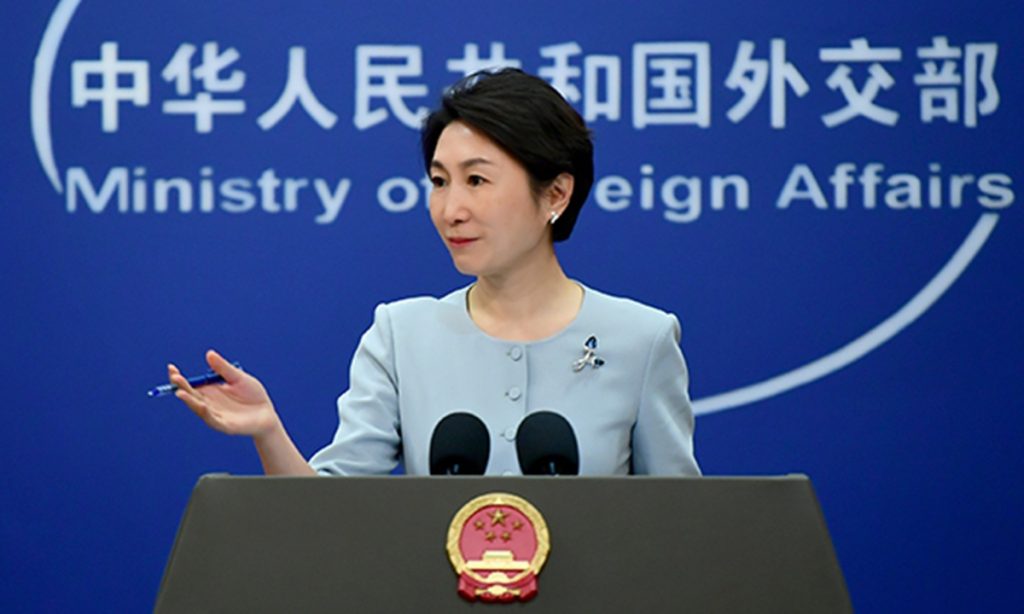
Several individual New Zealand lawmakers visited China's Taiwan region in disregard of the grave concern and firm opposition of the Chinese side. Their action violates the one-China principle and interferes in China's internal affairs. In accordance with relevant laws of the People's Republic of China, the Chinese side has decided to take measures including an entry ban, Chinese Foreign Ministry spokesperson Mao Ning said on Thursday in response to a question about China banned four New Zealand lawmakers from traveling for one year and demanded an apology after they traveled to Taiwan.

"I need to stress that the one-China principle, a prevailing international consensus and a basic norm in international relations, is also the political cornerstone of China-New Zealand relations. We urge the individuals concerned to earnestly respect China's sovereignty and territorial integrity and strictly abide by the one-China principle. Anyone who tramples on the red line and oversteps on the Taiwan question must pay the price," Mao noted. 

The comments were made shortly after the Chinese Embassy in New Zealand said on Thursday that the Chinese side has decided to impose measures, including entry bans, on certain New Zealand lawmakers who insisted on visiting China's Taiwan region despite China's serious concerns, firm opposition and repeated prior warnings.

Recently, a small number of New Zealand lawmakers, despite China's serious concerns, firm opposition, and repeated prior warnings, insisted on visiting China's Taiwan region in their capacity as members of parliament, the embassy said. 

During the visit, they met with a number of local political figures. Their actions and remarks were subsequently reported by local media, creating a negative political impact and sending erroneous signals to the Taiwan Democratic Progressive Party (DPP) authorities and "Taiwan independence" forces, the embassy noted.  

China can become an important supporter of Global South development: Chinese scholar

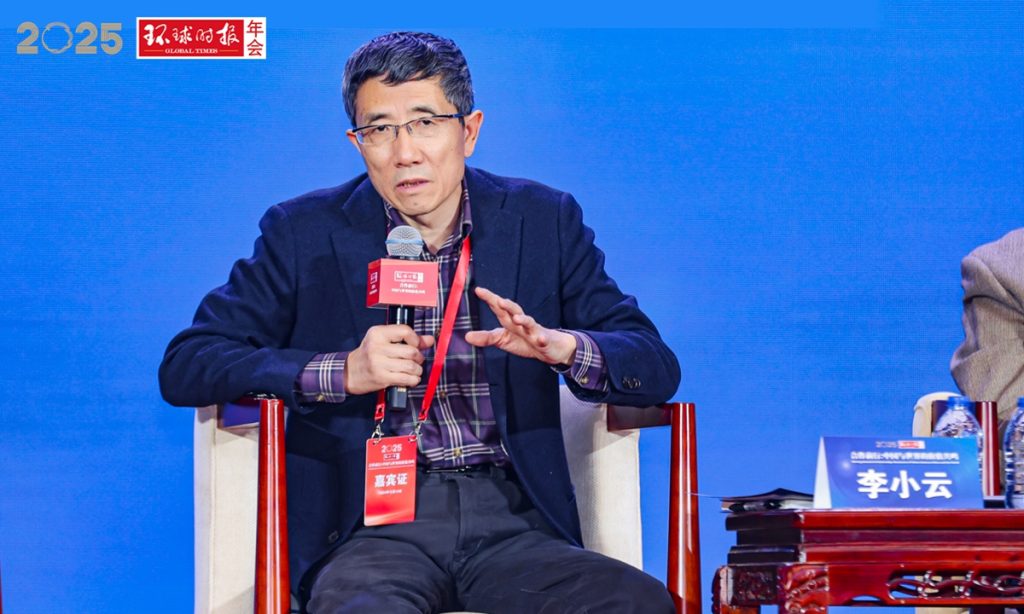
China should and also have the capability to become an important supporter, torchbearer, and promoter of the continued development of Global South countries, Li Xiaoyun, a professor at China Agricultural University, said at the Global Times Annual Conference 2025, themed "Moving forward in Partnership: Resonance of Values between China and the World," which took place in Beijing on Saturday.

During the session on "The Resurgence of the Awakening of the Global South: Mutual Learning and Resonance," Li emphasized the need to recognize the complexity of national conditions of Global South countries, stating that their development must take into account geopolitical changes and various other factors, instead of original imagination. 

He noted that China is a member of the Global South while also having some differences from other Global South countries.
Li pointed out that without a core driving force, the Global South would be fragmented. In his view, this core driving force should have the capacity to provide economic support, development experience, and to establish organizations that serve the interests of Global South countries. From this perspective, he believes that China currently meets the requirements.

Li made further remarks: first, China is the only country within the Global South that has the capacity to engage in substantial South-South cooperation; second, China possesses unique development experiences; and third, China actively promotes organizations focused on the development of Global South countries, such as the BRICS New Development Bank and the Asian Infrastructure Investment Bank.

China's positioning among Global South countries should be as an important resource supporter, experience provider, and a true force for unity, Li said. 

China launches internet satellite group

China successfully sent the first group of low Earth orbit satellites for a satellite internet constellation from the Wenchang Space Launch Site in southern Hainan Province on Monday.

At 6:00 p.m. (Beijing Time), this group of satellites was launched by a Long March-5B carrier rocket with a Yuanzheng-2 (Expedition-2) upper stage atop the rocket. The satellites have entered the preset orbits.

The launch marked the 552nd mission of the Long March series carrier rockets.

China's first fully electric single-seater flying 'go-kart' set for production in March 2025

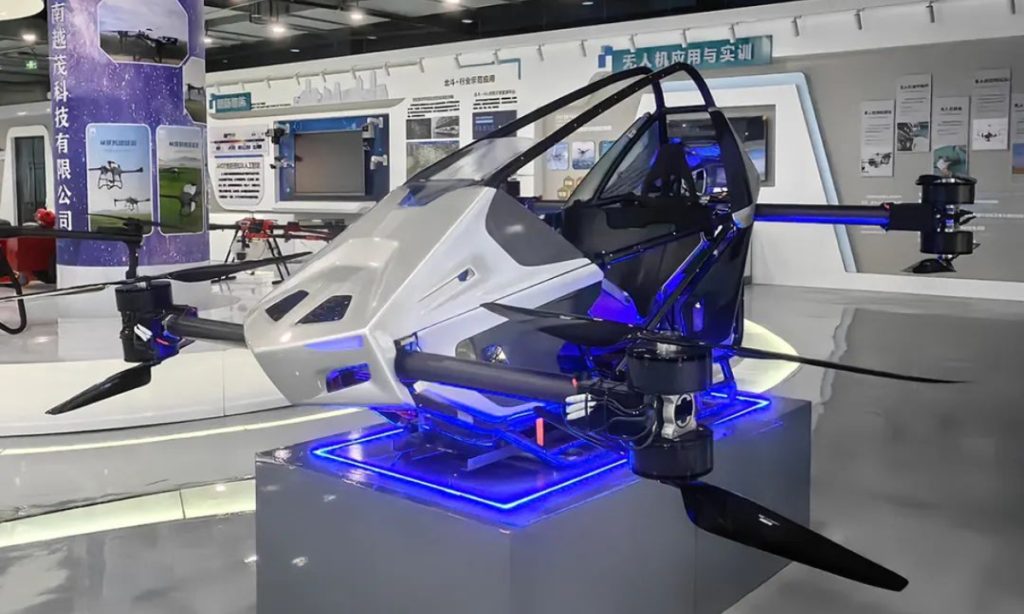
China's first fully electric single-seater flying "go-kart," the AnTGOne, is about to enter production. Impressively, it takes only three minutes for beginners to experience the fun of flying, the Science and Technology Daily reported on Friday.

As a manned aircraft, the AnTGOne is equipped with a self-developed flight control system, crafted from aviation aluminum and carbon fiber materials. With a maximum payload capacity exceeding 200 kilograms, this remarkable vehicle prioritizes a lightweight and foldable design, making it perfectly suited to meet the diverse demands of the market, according to Science and Technology Daily.

This product is designed to deliver an exhilarating flying experience, with a focus on ultra-low altitude flight. It allows users to freely switch between three flight modes: experience mode, player mode, and automatic mode, and even complete beginners can experience the joy of flying after just three minutes of learning, according to the report.

The person in charge of the company that produced the go-kart, Feng Guangwei, said that hundreds of hours of simulated manned flights, conducted at a weight of 75 kilograms, have already been carried out. Manned flight tests will be carried out according to the established timeline, and the product will undergo additional testing and finalization, with formal production expected to commence in March 2025, Feng added.

At present, the company has received nearly 500 orders, and the first batch of products has been designated for export, according to the report.

China intl supply chain expo kicks off; Nation committed to enhance and upgrade global supply chain

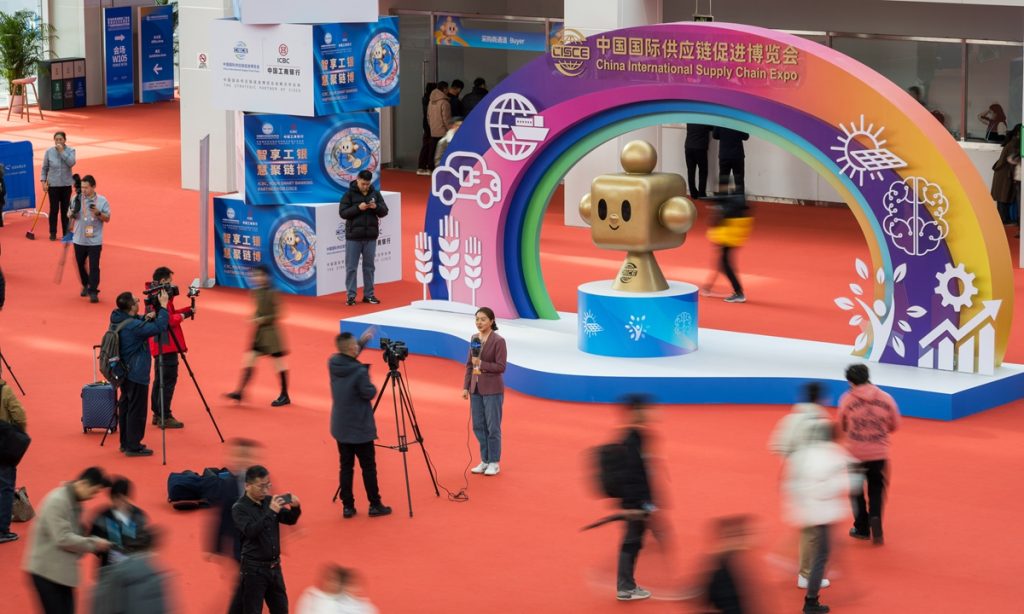
As over 1,300 participants from over 100 countries and regions as well as international organizations attended the opening ceremony of the second China International Supply Chain Expo (CISCE), which kicked off on Tuesday in Beijing, Chinese Vice President Han Zheng called for promoting win-win cooperation, optimization and upgrading as well as green transition of global industrial and supply chains.

China will adhere to the right course of economic globalization and enhance business and industrial capacity cooperation with other countries for a positive interplay among industries and shared benefits, Han said, the Xinhua News Agency reported.

At the opening ceremony on Tuesday, a Beijing initiative for stable and smooth global industrial and supply chains was unveiled.

On Monday, Chinese Premier Li Qiang, while attending a symposium with representatives of enterprises and organizations participating in the second CISCE, said China will continue to take concrete action to ensure stable and unimpeded global industrial and supply chains.

Join hands, no arm wrestling

Government officials and representatives from the global business community and institutions from more than 100 countries and regions attending the second CISCE opening ceremony on Tuesday took to the stage to express their support for globalization, and voiced their concerns about decoupling and attempts to undermine global industrial and supply chain cooperation.

Observers noted that the global economic stage should be one where partners seek common growth and a shared future by joining hands, rather than by engaging in arm wrestling. They urged governments around the world to work toward ensuring the smooth flow of the global industrial and supply chain.

Chinese analysts said that in face of the sluggish global economic recovery, collaboration and seeking win-win benefits is the only path to ensure the prosperity of global trade, which is the foundation of well-being for the peoples of the world.

Anti-globalization and the fragmentation of the global supply chain will only add costs and incur losses, they noted.

"In Europe, a great meeting of the Eastern and Western economies has been created in Hungary. If you want to see big German factories and big Chinese factories built on neighboring plots next door to each other, please come to Hungary. Our strategy of economic neutrality will make 2025 a fantastic year for the Hungarian economy through the enhanced cooperation between China and Hungary," Hungarian Minister of Foreign Affairs and Trade Peter Szijjarto said in his speech at the opening ceremony of the second CISCE.

"Hungary is honored to be the country of honor here," Szijjarto said. "We will take the best profit out of our presence here."

In face of an increasingly complex global economic landscape and rising protectionist headwinds, guests including global business leaders and top executives expounded the benefit of connectivity, as well as the cost of fragmentation.

"A single tree does not make a forest, and a single string does not make music. We can achieve more when we work together, and the bigger the challenge, the more essential cooperation becomes," Dominic Barton, chair of Rio Tinto, said during his speech at the opening ceremony.

"It is important that we speak up and come out of the shadows to defend and promote supply chain coordination and free trade. It is essential for all of our prosperity," Barton said.

As the World Bank estimates, a 1 percent increase in participation in the international supply chain is associated with a more than 1 percent increase in per capita income to see the direct link between trade and prosperity, the chair of the mining giant said.

Another example, according to Barton, is that in a scenario where countries block made-in-China products in clean energy, such as solar panels, wind turbines and lithium batteries, Wood Mackenzie estimated that global energy transition costs would rise by 20 percent, or at least the equivalent of $6 trillion.

Confidence booster

Bolstered by the country's recent slew of incremental policies aimed at injecting vitality into growth momentum, there is rising confidence from the global business community.

On Monday, Premier Li Qiang said that China has achieved generally steady economic growth and made further progress this year, saying that more efforts will be made to step up counter-cyclical adjustment and promote sound economic development.

"At CP Group, we are very confident in the Chinese economy. The package [of incremental policies] is thorough and considerate. As entrepreneurs, we are heartened. The overseas Chinese business community is also heartened," Dhanin Chearavanont, senior chairman of Thailand's Charoen Pokphand Group and dubbed the "001 foreign investor to China (among the first foreign investors when China launched the reform and opening-up)," told the Global Times on the sidelines of the event.

Compared with the first edition of the expo held in 2023, this year's event has seen a growing attendance from global and domestic companies, many of them giants in their sector.

China Council for the Promotion of International Trade Chairman Ren Hongbin said the world is seeing the CISCE, the world's first and only one of its kind devoted to supply chain cooperation, with growing recognition both in China and globally.

"A platform to foster unity and enhance collaboration is what the world sorely needs at this moment of rising anti-globalization, unilateralism and protectionism," Ren said.

Huo Jianguo, a vice chairman of the China Society for World Trade Organization Studies in Beijing, told the Global Times on Tuesday that the world's second-largest economy is consolidating its growth momentum with improved quality and constant efforts to optimize its business environment. The attractiveness of the China market and Chinese supply chain will grow stronger and more multinational companies will place their bets on China, Huo noted.

US relaxing travel advisory for China is beneficial for normal exchanges: Chinese FM

In response to the US State Department relaxing its travel advisory for China and removing the notation that indicates a risk of wrongful detention, Chinese Foreign Ministry spokesperson Mao Ning said that China has taken note of the US adjustment and believes that this move is beneficial for normal exchanges between the two countries. 
 
China has always opposed artificially creating a "chilling effect" and hopes that the US will continue to create more conveniences to promote people-to-people exchanges between the two countries, said Mao. 
 
The State Department downgraded its travel advisory for China from level three "reconsider travel" to a level two "exercise increased caution" on Wednesday, according to a Politico report.