China’s carmaker SAIC joins global ‘100-million-unit club’

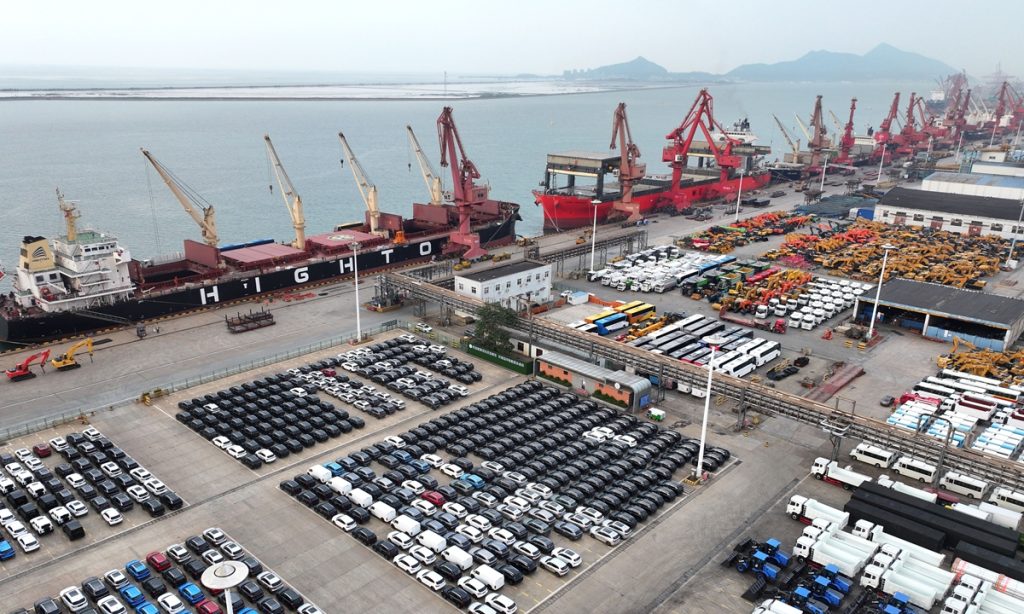
Domestic carmaker SAIC Motor delivered its 100 millionth vehicle in Shanghai on the afternoon of Thursday, becoming the first Chinese automaker to surpass 100 million units in cumulative production and sales, according to the Xinhua News Agency.

Industry insiders pointed out that the landmark achievement filled the gap for Chinese automakers in the "100-million-unit club." According to Xinhua, previously, only automakers from countries like the US, Japan, Germany and the South Korea had reached the 100-million-vehicle milestone.

Industry experts believe that SAIC Motor's achievement is underpinned by the systemic advantages accumulated by China's automotive industry over decades. These include a vast domestic market, a complete and independent industrial chain, highly clustered industrial ecosystems, mature supporting capabilities, and the advantages of opening-up and cooperation, per the experts.

SAIC Motor's achievement as China's first "100-million-unit carmaker" symbolized the remarkable transformation of the country's automotive sector over more than 70 years - from starting from scratch to becoming a global powerhouse, according to the Xinhua report.

This landmark also represented a significant milestone for "Made in China," said Xinhua.

Profound transformation

Industry insiders said SAIC Motor's success showcases the profound transformation of China's automotive industry.

In 1955, its predecessor, the Shanghai Internal Combustion Engine Parts Manufacturing Company, was established. In 1958, the first Phoenix-brand sedan was successfully produced, marking Shanghai's breakthrough in passenger vehicle manufacturing, according to SAIC Motor's website.

Over the decades, SAIC evolved from a small workshop-style factory to a modern intelligent manufacturing giant, Zhang Xiang, secretary-general of the International Intelligent Vehicle Engineering Association, told the Global Times on Thursday.

"From complete reliance on imported technology to mastering core technologies; from a domestic focus to building a global ecosystem. SAIC's growth over more than 70 years is a microcosm of Chinese manufacturing's remarkable rise and breakthrough," said Zhang.

What contributed to SAIC Motor's success is China's complete industrial ecosystem built over the past decades.

China has built the world's most comprehensive automotive supply chain, covering everything from raw materials and power batteries to electric motors, controllers, chips, vehicle assembly, and after-sales services. This system offers unmatched efficiency, cost control, and iteration speed, Hu Qimu, a professor at the Maritime Silk Road Institute of Huaqiao University, told the Global Times on Thursday.

For example, Ningde-based CATL leads the global battery market. Tesla's Shanghai Gigafactory is also an example of the resilience of China's supply chain, as it has achieved a production pace of one vehicle every 30 seconds, according to the company's statement sent to the Global Times.

In terms of the speed of research and development (R&D), major automotive clusters in Shanghai, the Guangdong-Hong Kong-Macao Greater Bay Area, and Beijing-Tianjin-Hebei region have compressed new vehicle development cycles dramatically - from the global average of 36 months to under 20 months, according to industry insiders and relevant media reports.

While traditional giants like SAIC, FAW, Dongfeng, and GAC continue to transform, new carmakers such as BYD, NIO, XPeng, Li Auto, Zeekr, and Xiaomi are emerging as powerful innovation engines.

BYD became the first domestic automaker to fully transition to electrification, halting fuel vehicle sales in 2022. New forces such as Nio and Xpeng have created differentiated advantages in battery technology, battery swapping, high-level intelligent driving, and smart cabins, observers noted.

"Innovation is also a crucial factor of China's current automobile industry," said Hu.

As BBC reported on Thursday, Chinese tech giants like Xiaomi, Huawei and Alibaba are now making EVs, bringing consumer technology into the car industry. As cars increasingly rely on software, from driver assistance to entertainment systems, these companies are giving Chinese carmakers yet another edge. "They're not racing the West anymore. They are racing each other," per BBC report citing an analyst.

Following Nio's launched of its new SUV model on Wednesday, major Chinese EV makers including BYD, XPeng, and Leapmotor are also expected to unveil major products and technology updates during the upcoming Shenzhen Auto Show, Yahoo Finance reported on Thursday, which showcased the fast innovative iteration of China's automobile industry.

Industry insiders have said that the automotive industry is experiencing transformative changes. Technologies such as artificial intelligence (AI) and big data are deeply integrating with vehicle manufacturing, fundamentally reshaping the competitive landscape and the entire value chain.

Notably, SAIC's 100 millionth vehicle - an IM LS9 Hyper - was delivered to Momenta CEO Cao Xudong, the company told the Global Times on Thursday.

Momenta, a Chinese technology provider of intelligent driving, has been providing autonomous driving software for SAIC's premium IM brand since 2021, exemplifying deepening collaboration between traditional automakers and technology companies.

"Since our founding in 2016, Momenta has been committed to leveraging groundbreaking AI technology to create a better life," said Cao.

New-era cooperation

Momenta is also a partner for many foreign carmakers operating in China. For example, in February, Mercedes-Benz Group and Momenta signed an updated strategic cooperation memorandum of understanding in Beijing and jointly announced that they will further deepen their collaboration in the field of future mobility, according to corporate statements sent to the Global Times.

This was one of the examples showcasing how China's cooperation model with foreign automakers has evolved.

For SAIC, in November 2024, it signed an extension for the joint venture contract with Volkswagen Group until 2040, further strengthening their long-term partnership, both companies said in their statements.

Foreign brands are now actively seeking partnerships with Chinese companies in new energy and intelligent technologies. Volkswagen is also collaborating with XPeng to jointly develop new-energy vehicles, while Audi is partnering with SAIC and Huawei to advance high-level intelligent driving technologies. Mercedes-Benz has upgraded its Shanghai R&D center into a global core innovation hub. Foreign automakers are now increasingly embracing China's intelligent electric vehicle (EV) technologies, achieving mutual benefit and win-win outcomes.

This shift from "learning through joint ventures" to "joint innovation and leadership" reflects the growing technological confidence of Chinese automakers, said Hu.

Foreign automakers have also deeply integrated into China's automotive production and supply chains. For example, Taicang, a small city in East China's Jiangsu Province, has developed a comprehensive industrial cluster encompassing more than 700 upstream and downstream automotive parts enterprises, including over 200 foreign-funded companies, according to Xinhua.

Thanks to its well-established industrial and supply chain system, 70 percent of automotive components can be sourced locally within Taicang, which is also an epitome of the industrial chain in the Yangtze River Delta.

"China's advantages in the complete industrial chain, cost optimization, and its leadership in the intelligent EV sector have enabled domestic brands to accelerate their globalization efforts," said Hu.

Industry insiders said that SAIC Motor's milestone is not only a celebration of past achievements but also a new starting point. As China's auto industry continues to advance in intelligence, electrification, and globalization, Chinese brands will play an even more influential role in the global automotive landscape.

Large dinosaur footprint site discovered in Zhangjiakou reveals slowest-known carnivorous dinosaur walking speed

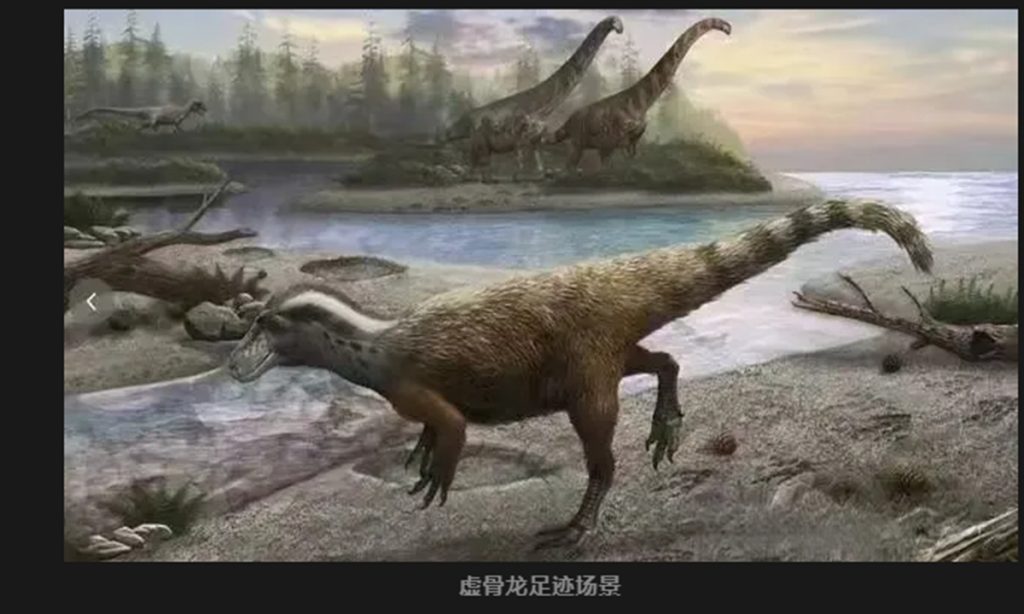
A Chinese research team has recently confirmed the discovery of a large-scale dinosaur footprint site in Xuanhua of Zhangjiakou, North China's Hebei Province. Researchers also identified traces of a carnivorous dinosaur moving at just 1 kilometer per hour for the first time at the site, the finding sets a new record for the slowest dinosaur walking speed identified in comparable strata, local media Zhangjiakou Daily reported on Sunday.

The new discoveries help complete the picture of the ancient dinosaur ecosystem, according to the report. For the first time, traces of a carnivorous dinosaur moving at merely one kilometer per hour have been found, providing vivid evidence for reconstructing the ecosystem dating back over 100 million years.

After years of surveys and research, experts have gained a preliminary understanding of the site's overall scale. It covers an exposed area of about 30,000 square meters with over 5,000 preserved dinosaur footprints, further enriching China's dinosaur footprint fossil record.

Sites yielding thousands of dinosaur footprints at one time are rare nationwide, said Gu Zhenfei, a senior engineer from the third geological brigade of Hebei Bureau of Geology and Mineral Resources Exploration. With more than 5,000 well-preserved footprints uncovered here, the Xuanhua site ranks among China's largest discoveries of its kind. Among them, Site I was found earlier, famous for mixed tracks of sauropod brontosaurs, medium-sized theropod Asian dinosaurs tracks and small graciliraptors.

Further research uncovered Site II and Site III, 1.5 kilometers and 2.25 kilometers southeast of Site I. Twenty-seven intact three-toed grallator footprints were found here, ranging from 10.1 centimeters to 26.7 centimeters in length, preserving traces of dinosaurs of various sizes. The new findings lift the number of theropod-dominated footprint sites to at least 17, depicting a fuller profile of the ancient dinosaur community.

Carnivorous dinosaurs are commonly perceived as agile and swift, yet the Xuanhua discovery challenges this perception.

Xing Lida of the China University of Geosciences (Beijing), whose research team took part in the study, conducted precise measurements on five well-preserved footprints at Site III. The surprising results show these grallators had a stride length of 32 to 46 centimeters and a walking speed of merely one kilometer per hour, comparable to the pace of an ordinary tortoise. 

This marks the slowest theropod trackway speed recorded in comparable strata and an extremely rare slow-speed dinosaur record worldwide. By comparison, most small dinosaurs living in the same area and period could run at 9 to 14 kilometers per hour.

Such huge speed differences have been explained by researchers. These slow-moving dinosaurs were capable of moving much faster. Instead, they likely slowed down to search for small prey and monitor their surroundings for potential danger, reflecting their actual survival behaviors in ancient times.

Brazilian president calls China-developed surgical robot ‘incredible’; device set world record for longest-distance remote surgery in March, company rep tells GT

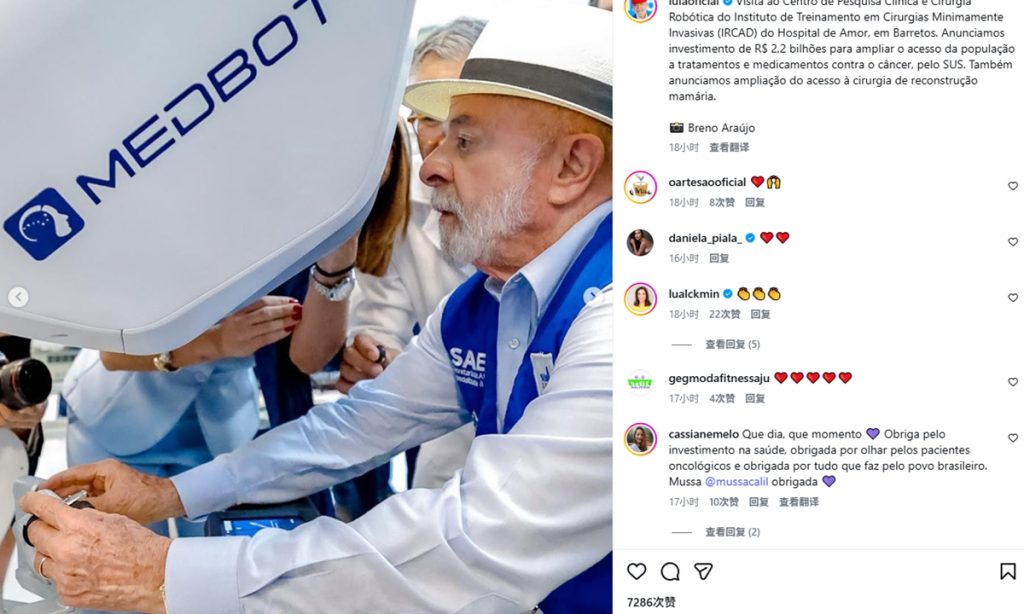
"It is incredible to see up close how innovation can expand access, save lives, and further strengthen Brazil's Unified Health System," Brazilian President Luiz Inacio Lula da Silva said on social media after conducting a simulated remote surgery using a China-developed Toumai MT-1000 surgical robot from 1,400 kilometers away. 

The device praised by Lula was developed by Shanghai MicroPort MedBot. A company representative confirmed to the Global Times that the China-developed multi-port laparoscopic surgical robot supports complex procedures in urology, general surgery, thoracic surgery and gynecology, and is capable of remote operation via 5G and fiber-optic networks.

The system is equipped with an advanced imaging platform capable of delivering a high-definition surgical view with 10x optical magnification and naked-eye 3D imaging, the representative said. 

Its robotic arm system features seven degrees of freedom and can effectively filter out surgeons' physiological hand tremors during operations. The robot's wristed surgical instruments provide flexibility, precision and stability beyond that of the human hand, enabling doctors to perform a wide range of highly complex procedures within narrow body cavities.

The representative said the Toumai robot is currently the world's only commercial remote robotic surgery system capable of supporting all major departments and surgical procedures. Before being incorporated into Brazil's Unified Health System, the company worked closely with Brazilian medical institutions on a series of remote surgery trials and technical verification programs that have achieved the expected results.

According to the official website of Shanghai MicroPort MedBot, citing Brazil's Health Ministry, Hospital de Amor — the hospital visited by Lula — has become one of the country's leading benchmark institutions in robotic surgery. Since introducing its first robotic surgical system in 2014, the hospital has carried out nearly 4,000 procedures across specialties. With the introduction of the Toumai surgical robot, the number of patients treated each year has risen from around 400 to 680. 

Clinical applications of the remote surgery system have already expanded to urology, general surgery, thoracic surgery, gynecology, pediatric surgery and cardiac surgery, supporting procedures ranging from routine operations to highly complex Class IV surgeries, the representative noted. 

"The system has secured regulatory approval in 13 countries, including China, Brazil, India and Thailand. It has also obtained a US FDA Investigational Device Exemption (FDA-IDE), making it the only system in the world currently authorized to conduct human clinical surgical research in the US, and has entered the stage of real-world commercial clinical application."

Among the representative high-difficulty procedures enabled by the system are ultra-long-distance pancreaticoduodenectomy surgeries — regarded as among the most challenging abdominal operations — radical prostatectomy procedures widely considered the "gold standard" in robotic surgery, and remote atrial septal defect repair combined with tricuspid valvuloplasty, a highly sophisticated cardiac procedure requiring extreme precision, he said.

To meet the demands of remote robotic surgery, Shanghai MicroPort MedBot has developed a comprehensive technological framework that includes ultra-low-latency image compression, multidimensional data encryption, dynamic communication network optimization strategies and surgical safety assurance mechanisms for complex network environments, the representative said. 

The company has also pioneered integrated multi-network communication technology, enabling compatibility with 5G, broadband, dedicated lines and satellite communications while supporting hybrid communication across different carriers and transmission media. The technologies provide strong technical support for the transition of remote surgery from exploratory applications to large-scale and sustainable clinical practice, the representative added.

President Lula has repeatedly praised China in recent months and highlighted the strength of bilateral ties. Speaking at the industrial park of Brazil's CAOA automotive conglomerate in March, he expressed confidence that Brazil's partnership with China will "go from strength to strength," describing China as Brazil's "best partner."

Chinese official data shows that two-way trade between Brazil and China reached roughly $188 billion in 2024, reaffirming China as Brazil's largest trading partner.

Drones on display

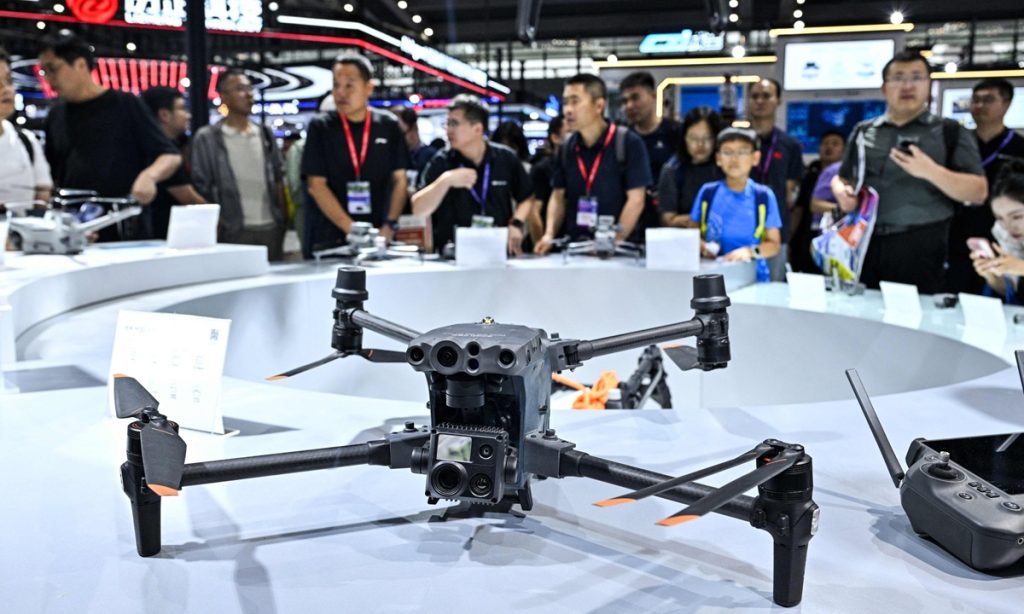
Visitors tour the DJI exhibition booth during the World Drone Congress (DWC) in Shenzhen, South China's Guangdong Province, on Thursday, May 21, 2026. Photo:VCG

Xi calls for higher-quality China-Russia comprehensive strategic coordination to boost respective development

Chinese President Xi Jinping on Wednesday called for driving the development and revitalization of China and Russia through their comprehensive strategic coordination of even higher quality.

Xi made the remarks while holding talks with visiting Russian President Vladimir Putin at the Great Hall of the People in Beijing.

Xi said the international situation is fluid and turbulent. "Unilateralism and hegemonism are resurging, yet peace, development and cooperation remain the aspiration of the people and the prevailing trend of our times," he noted.

"As permanent members of the UN Security Council and important major countries in the world, China and Russia should take a strategic and long-term perspective, drive the development and revitalization of our respective countries through comprehensive strategic coordination of even higher quality, and work to make the global governance system more just and reasonable," Xi said.

Xi, Trump hold talks, agree on new vision for bilateral ties

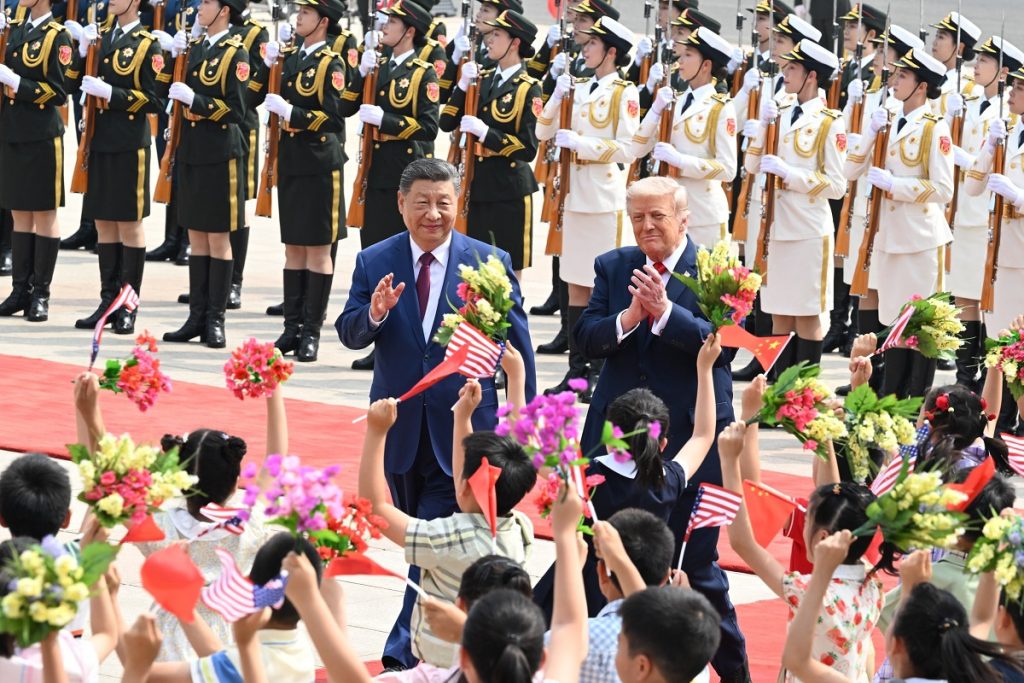
As Chinese President Xi Jinping and US President Donald Trump posed for a photo before the Hall of Prayer for Good Harvests at the Temple of Heaven, a new historic footnote to China-US relations was written on Thursday.

Trump's state visit—the first by a sitting US president in nearly nine years—unfolded at a rapid pace. Tucked between a meeting at the Great Hall of the People and a grand evening banquet, the visit to the 600-year-old Temple of Heaven carried deep symbolic weight. During the tour, Xi explained the site's rich history to Trump, noting that ancient emperors once held state rituals there to pray for national prosperity, social harmony, and favorable weather for good harvests, according to Xinhua.

The Chinese leader said it reflects the traditional Chinese concept that the people are the foundation of a state, adding that the Communist Party of China has inherited and carried forward this people-centered philosophy rooted in the Chinese civilization.

Trump is visiting China from Wednesday to Friday. This is Trump's second visit to China since November 2017.

Chinese analysts noted that the visit and the historic meeting between the two leaders underscored renewed prospects for China-US ties. They added that such progress is widely regarded internationally as a constructive force for safeguarding peace, enhancing security, and supporting global economic growth.

New vision

President Xi held talks with visiting President Trump at the Great Hall of the People in Beijing on Thursday, Xinhua reported.

"Can China and the US overcome the Thucydides Trap and create a new paradigm of major-country relations? Can we meet global challenges together and provide greater stability for the world? Can we build a bright future together for our bilateral relations in the interest of the well-being of the two peoples and the future of humanity? These are the questions vital to history, to the world and to the people," said Xi, per Xinhua.

"I look forward to working together with you to set the course and steer the giant ship of China-US relations, so as to make 2026 a historic, landmark year that opens up a new chapter in China-US relations," he said.

"I have agreed with President Trump on a new vision of building a constructive China-US relationship of strategic stability," Xi said.

The new vision will provide strategic guidance for bilateral relations over the next three years and beyond, and should be welcomed by the people of both countries as well as the international community, he noted, according to Xinhua.

Some US media outlets also noticed the mentioning of this new positioning in the bilateral relationship.

AP said the Chinese side called for stability in its relationship with the US. CNBC, citing an economist at Economist Intelligence Unit, said that it signals a period of "managed stability" that will hold for some time.

"I believe this new positioning will, on the one hand, help enhance the stability of China-US relations, and on the other hand, set forth positive expectations for the future direction of bilateral ties," Wu Xinbo, Dean of the Institute of International Studies of Fudan University, told the Global Times on Thursday.

The idea of enhancing the stability of China-US relations refers to the fact that since the meeting between the two heads of state last October, the relationship has in fact entered a phase of what could be described as "tactical stability." However, because it lacks strategic consensus on major issues and is not supported by substantive cooperation in key areas, it is inherently fragile, Wu continued.

The newly proposed constructive China-US relationship of strategic stability is intended to elevate China-US relations from the level of "tactical stability" to that of "strategic stability." This means that China and the US need to build greater consensus on major issues and engage in active cooperation across many important fields, thereby providing more durable and long-term support for bilateral relations, Wu said.

Taiwan question

Another topic in focus that was addressed during the meeting is the Taiwan question.

When holding talks with Trump on Thursday in Beijing, Xi said that safeguarding peace and stability across the Taiwan Straits is the biggest common denominator between China and the US, per Xinhua.

Noting that the Taiwan question is the most important issue in China-US relations, Xi told Trump that if it is handled properly, the bilateral relationship will enjoy overall stability.

Otherwise, the two countries will have clashes and even conflicts, putting the entire relationship in great jeopardy, Xi said, emphasizing that "Taiwan independence" and cross-Straits peace are as irreconcilable as fire and water, according to Xinhua.

China's position is very clear: the Taiwan question lies at the very core of China's core interests, constitutes the foundation of the political foundation of China-US relations, and represents the first red line that must not be crossed, Diao Daming, a professor at the Renmin University of China in Beijing, told the Global Times on Thursday.

From the US perspective, the Trump administration's national security strategy unveiled in November 2025 outlined preventing conflict over Taiwan as a top priority, which reflects Washington's desire to avoid a crisis in the Taiwan Straits that could draw the US into conflict against its will, Diao noted.

Therefore, peace and stability across the Taiwan Straits are in fact also regarded by the US side as being in America's own interests. This, in turn, forms the "biggest common denominator" that both sides hope to achieve, the expert said.

Constructive engagement

During the meeting, Trump repeatedly called Xi a great leader, Xinhua said.

Trump also highlighted the high-level American business delegation accompanying him, describing their presence as a gesture of respect toward China and its leader. "They look forward to trade and doing business," Trump said, according to Xinhua.

"It's an honor to be your friend and the relationship between China and the USA is going to be better than ever before," Trump said, Xinhua reported.

During the visit to the Temple of Heaven, Trump said the US and China are both great countries, and that both peoples are wise and great. He added that the two countries should deepen mutual understanding and strengthen friendship between their people, per Xinhua.

During remarks at a state banquet Thursday evening, Trump called the day's discussions "extremely positive and productive" and thanked the Chinese leader for the "great honor" of what he described as a "magnificent welcome" ceremony earlier in the day.

Trump drew parallels between the two countries throughout history, calling it "one of the most consequential relationships in world history." He referenced US merchant Samuel Shaw's trade with China 250 years ago, Benjamin Franklin's citations of Confucius in his newspaper, President Theodore Roosevelt's efforts to help establish Tsinghua University, along with more modern examples, CNN reported.

"As allies in World War II, President Franklin Roosevelt's mentions of the brave people of China — that's what they were — drew loud cheers and his speeches in the United States," Trump said, according to a video clip released by China Central Television News (CCTV News).

When speaking with the Chinese media following the meeting, US Secretary of State Marco Rubio commented on the future of China-US relations, describing the bilateral relationship as "constructive" with "continued engagement," noting that "obviously, it's in everyone's interest to see stability in the world."

US Treasury Secretary Scott Bessent also called the relationship "very constructive", according to a report from CCTV News.

Mainstream media such as CNN, New York Times, NBC News and Fox News also updated the meeting on live coverage. Global Times noticed that those media outlets also put the relevant stories on their home page as of press time on Thursday.

CNN described this high-stakes meeting as historic, and the New York Times said that Trump's visit to China is taking him to some of China's most politically and historically significant places, including the Temple of Heaven and the Great Hall of the People.

Several reports also highlighted that former US secretary of state Henry Kissinger visited the Temple of Heaven as many as 15 times, underscoring its enduring symbolic resonance in China-US exchanges.

As China News Service reflected, the Temple of Heaven stands not only as a witness to history, but also as a custodian of the future—an idea reflected in Kissinger's inscription in its guestbook, "A country with such a great past will have an even greater future."

Caracals viral for plump appearance; zoo staff say molting season makes fur appear extra‑fluffy

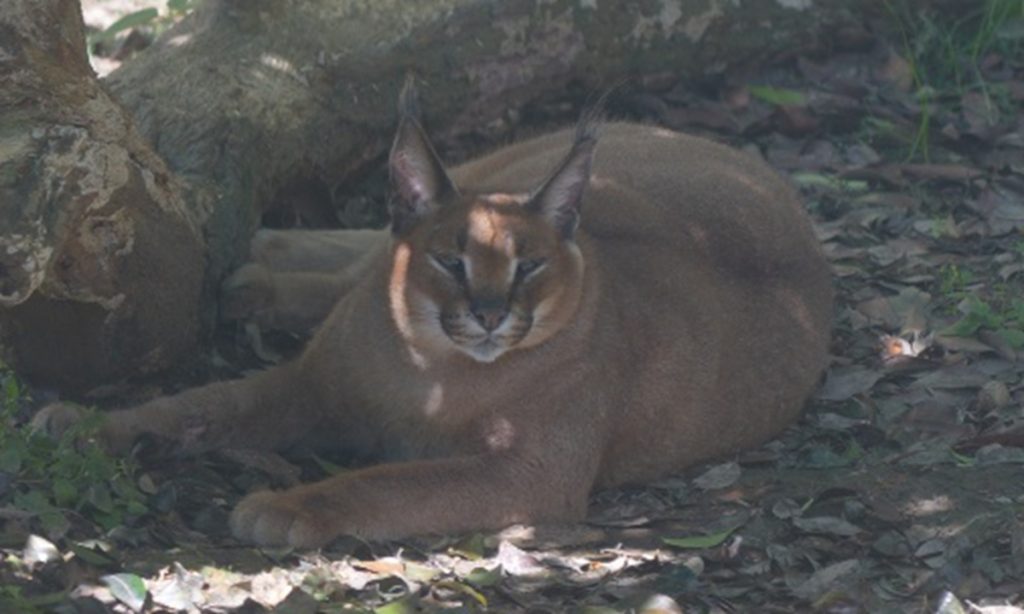
Over the past 10 days, a video clip of caracals, a kind of carnivore that typically preys upon birds, rodents, and other small mammals, taken by a tourist at the Wannan Wildlife Park in East China's Anhui Province has gone viral online. Posted by a netizen nicknamed "Vicenteshushu" on May 4 on Douyin, the video shows footage of a caracal exhibit board states the featured animal is supposed to be with "slender limbs." In contrast, the next shot shows two caracals are found to be round and chubby, with fluffy fur and plump bodies, appearing very different to the agile image of caracals in the wild. An employee told the Global Times that this is a shared problem among zoos, as the wild animals are not hunting their own food in a limited space. 

"They've been overfed so much that they now look like missiles," a comment to the video by a netizen who is based in North China's Hebei Province was favored by at least 297,000 Douyin users as of Friday. 

"Seems to me, these animals are so well fed that they look way overweight," another netizen echoed. 

Due to their unusually plump appearance, netizens have been making fun of the two caracals. As of press time, the video has garnered nearly a million likes and 694,000 shares in Douyin. 

Wang Daoyun, a staff member at the Wannan Wildlife Park, told the Global Times on Friday that the park has also noticed the video online. The two caracals are named "Wan Ning" and "Wan Meng."

Caracal is a medium-sized wild cat, belonging to the carnivorous class along with tigers and lions. Wang said that the routine diet of these two caracals can be described as "top-notch." They eat meat-based meals three times a day, mainly beef and chicken. "Although caracals are not large animals, they still eat about a pound of meat per meal," Wang said.

Wang explained that the two caracals are not actually overweight or obese. During their spring molting season, which runs from March through May their fur becomes exceptionally fluffy, making them appear rounder. "Each year, during the two-molting seasons in spring and autumn, like other animals, they need more nutrition," he said. 
Meanwhile, caracals are nocturnal animals and spend much of their daytime sleeping and resting under trees, resulting in low activity levels and a relaxed posture which makes them appear bulkier, he added. 

Compared to their wild counterparts who have irregular meals and hunt everywhere, the caracals in the zoo have plenty of food and are in better physical condition.

To solve the problem, and in response to the concerns of enthusiastic netizens, the zoo has developed a plan to help the caracals lose some weight. Wang said that the park has assigned a veterinarian to conduct daily checks to examine the caracals, and their vital signs are normal; it has not yet reached the point where they need to lose weight. "It is being monitored daily by dedicated professionals," he said.

As for the diet scheme proposed by netizens, the park has a feeding management plan in place. Wang said that the park always prioritizes ensuring the animals' nutrition, which is why many animals appear plump. However, if an animal shows signs of being overweight, loss of appetite, or health problems, the feeding plan will be adjusted immediately.

"When a caracal needs to lose weight, we will control its calorie intake by feeding it smaller, more frequent meals. We will also change the feeding method, using feeding enrichment facilities to encourage the caracals to exercise and forage independently, increasing their activity levels and preventing obesity from causing high blood pressure, high cholesterol, and high blood sugar," he added. 

Wannan Wildlife Park sits in Jingxian county in Anhui Province. Located within a large primitive forest ecological zone, the park is home to more than 8,000 rare animals from more than 200 species around the world.

Even though it is a zoo located in a county, Wannan Wildlife Park has been in the limelight on social media platforms in China. During this this year's May Day holidays for example, the park has received approximately 50,000 visits over five days.

Xi expects 2026 to be "historic, landmark year" for China-US relations

Chinese President Xi Jinping said on Thursday that he expects 2026 to be a "historic, landmark year" that opens up a new chapter in China-US relations.

China and the United States have more common interests than differences, Xi said when holding talks with visiting US President Donald Trump in Beijing.

Success in one is an opportunity for the other, and a stable bilateral relationship is good for the world, he added.

Noting that China and the United States should be partners instead of rivals, Xi said the two countries should help each other succeed and prosper together, and find the right way for major countries to get along well with each other in the new era.

"I look forward to our discussions on major issues important to our two countries and the world, and working together with you to set the course and steer the giant ship of China-US relations, so as to make 2026 a historic, landmark year that opens up a new chapter in China-US relations," Xi said.

China lodges serious protests with UK over conviction of two Chinese men on charges of ‘spying for China’

After several mainstream UK media outlets claimed that two men in the UK have been found guilty on charges of "spying for China," China's Ministry of Foreign Affairs and the Chinese Embassy in the UK have refuted the claims one after another.

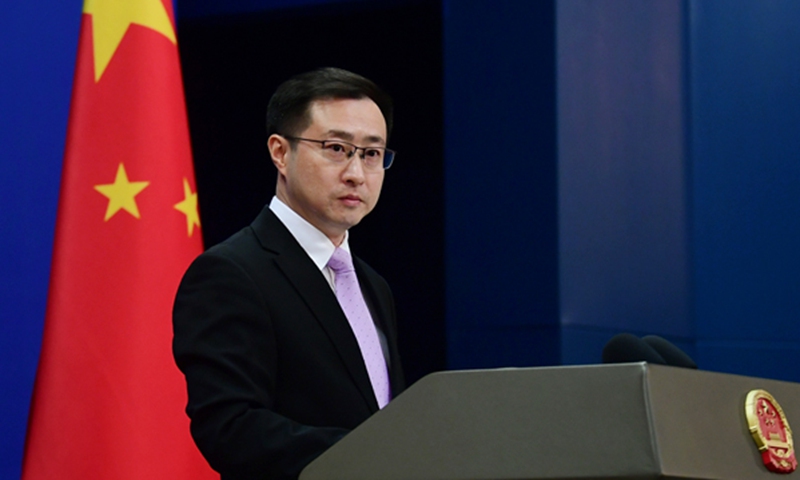
By arresting and suing Chinese nationals in the UK without any factual basis, and securing the conviction by abusing the law and judicial process, the UK is blatantly endorsing those seeking to destabilize Hong Kong. Such groundless accusations and smears against China are nothing but a typical political stunt, Chinese Foreign Ministry spokesperson Lin Jian said on Friday in response to a question on the conviction of two men in the UK on charges of conducting espionage activities for China.

A Chinese expert noted that some UK agencies involved in intelligence and security affairs still display a noticeable "Cold War mentality." Against the backdrop of improving momentum in China-UK relations, how to properly handle and respond to such alleged "Chinese spy" cases has become a test of the governance wisdom of the administration of British Prime Minister Keir Starmer.

Some British media including the Guardian, Sky News and Reuters reported on Thursday local time that Chi Leung "Peter" Wai, 38, and Chung Biu Yuen, 65, also known as Bill, were found guilty by the jury at London's Old Bailey court of assisting a foreign intelligence service.

The Guardian claimed that the conviction makes them the first people in British history to be convicted of spying for China.

China strongly deplores and firmly opposes it, and has lodged serious protests against the UK, Lin said. "We urge the UK to rectify its wrongdoings, stop its political manipulation against China, stop emboldening the anti-China, destabilizing forces, and preserve the hard-won positive momentum in China-UK relations," the spokesperson said.

A spokesperson for the Chinese Embassy in the UK said on Thursday local time that the Chinese side has made clear its principled position on the relevant case many times. The facts of this case clearly show that this is nothing but a political move of abusing the law and manipulating the judicial process by the UK side.

During the Cold War, a very typical political pattern between the UK, the Soviet Union, and Eastern European countries was the constant arrest of "spies", the search for "suspicious individuals" and the construction of related accusations. Today in the UK, from some members of Parliament to certain government departments, this "Cold War mentality" remains quite evident, Cui Hongjian, professor at the Academy of Regional and Global Governance at Beijing Foreign Studies University, told the Global Times on Friday.

The UK security and intelligence agencies have been hyping so-called "spying activities" from China in the last several years.

But some cases have been dropped because the British government failed to provide evidence. For instance, charges against two men accused of spying for China were suddenly dropped in September 2025 because prosecutors could not obtain critical evidence from the government that Beijing represented a "threat to the national security of the UK", the Guardian reported in October 2025.

Meanwhile, despite some spying allegations, the UK government approved the plan for China's new embassy in London in January.

The actions of certain departments in the UK will undermine the current momentum of China-UK relations, which had been moving from easing tensions toward more positive development, Cui noted. "Against such a backdrop, how the Starmer administration handles and responds to similar so-called 'Chinese spy' cases is a test of its governing wisdom," the expert said.

Despite such challenges arising in China-UK relations, Reuters reported on Friday that a cross-party delegation of British lawmakers will visit China this month for the first time since 2019, citing two sources familiar with the preparations. The report said this is a sign of warming ties since a visit in January by Starmer.

"In such a complex environment, the key is strengthening the ability of both sides to resist interference, because with every step forward in China-UK relations, their capacity to withstand and balance negative factors will become stronger," the expert said.

Chinese FM, embassy and consulates in the US issue reminder over unreasonable questioning targeting Chinese scholars by US CBP officers

Around 20 Chinese scholars holding valid legal visas were recently subjected to unreasonable questioning by the US Customs and Border Protection (CBP) officers at Seattle-Tacoma International Airport and were denied entry while traveling to the US for an academic conference. Given the successive incidents of malicious questioning and harassment targeting Chinese scholars at Seattle-Tacoma International Airport, China’s Ministry of Foreign Affairs, Chinese embassy and consulates in the US issued a reminder on Thursday to Chinese citizens intending to travel to the US recently to be aware of safety risks, and avoid entry from this airport.

According to a statement released by the Department of Consular Affairs in its WeChat account, in view of repeated incidents of malicious questioning and harassment of Chinese scholars at Seattle-Tacoma International Airport, China’s Ministry of Foreign Affairs and Chinese embassy and consulates in the US also urged Chinese travelers to review US entry rules in advance and prepare accordingly. Meanwhile, travelers are advised to remain calm and respond rationally if questioned by the US law enforcement officers.