Deepen media cooperation between China and Kyrgyzstan to jointly create a bright future for SCO
Chinese President Xi Jinping has pointed out that interactions between civilizations provide the most solid foundation for the Shanghai Cooperation Organisation's (SCO) development, and people-to-people exchanges provide the strongest driving force for the organization. Kyrgyzstan will host this year's summit, which marks the 25th anniversary of the founding of the SCO.

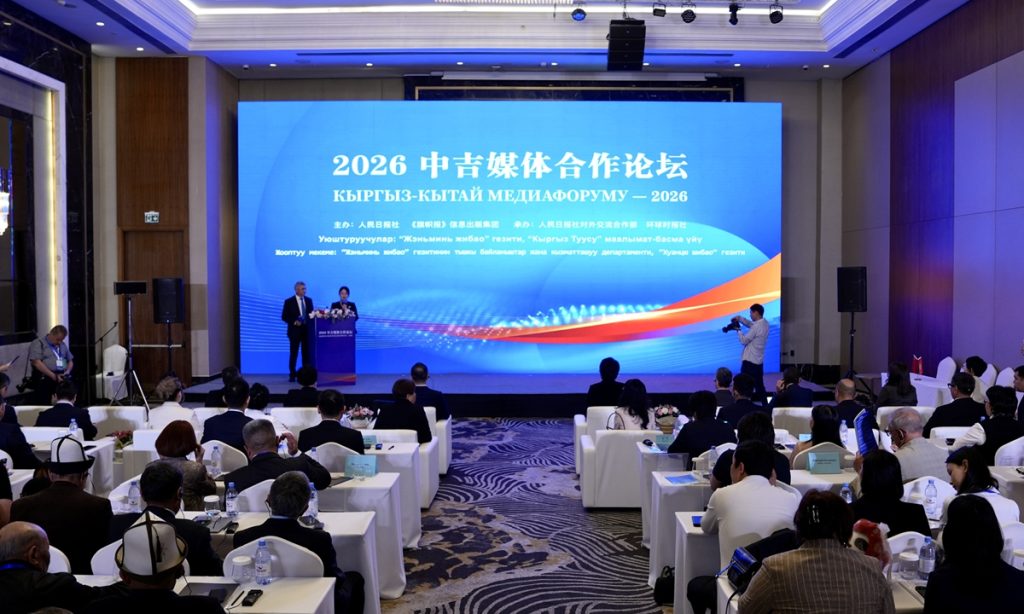
On May 27, the 2026 China-Kyrgyzstan Media Cooperation Forum, themed "Deepening China-Kyrgyzstan Media Cooperation for a Brighter SCO Future," was held in Bishkek, the capital of Kyrgyzstan. Nearly 100 media representatives, officials from relevant departments, experts, scholars and business representatives from China and Kyrgyzstan attended the forum, engaging in in-depth exchanges and discussions on topics including economic and trade development, cultural exchange and media cooperation. The forum was jointly hosted by the People's Daily and Kyrgyz Tuusu Publishing House.

Media in unity, building consensus for development

"Amity and good-neighborliness are invaluable to a country." Linked by mountains and rivers, China and Kyrgyzstan are good neighbors, good friends and good partners enjoying close people-to-people ties. In recent years, under the strategic guidance of the two heads of state, the China-Kyrgyzstan comprehensive strategic partnership for a new era has maintained a strong momentum of development. Media outlets from both countries have played an active role in promoting the building of a closer SCO community with a shared future and a China-Kyrgyzstan community with a shared future.

Cui Shixin, Deputy Editor-in-Chief of the People's Daily, said that holding the China-Kyrgyzstan Media Cooperation Forum is both an implementation of the important consensus reached by the two heads of state on deepening the China-Kyrgyzstan comprehensive strategic partnership for a new era, and a concrete action to create a favorable public opinion environment and lay a solid public foundation for the upcoming Bishkek SCO Summit. China and Kyrgyzstan are companions on the path to modernization. Media of both countries should build consensus on development to anchor mutual trust, boost mutually beneficial cooperation to pave the way for prosperity, deepen cultural exchanges to nurture the tree of friendship and consolidate institutional foundations to amplify the voice of the SCO. With a constructive attitude, they should build bridges of understanding, present a true, multidimensional and comprehensive picture of China-Kyrgyzstan cooperation, and tell vivid stories of mutually beneficial cooperation between the two countries.

Salkyn Sarnogoeva, Deputy Minister of Culture, Information, Sports and Youth Policy of the Kyrgyz Republic, said that the friendship between China and Kyrgyzstan has a long history, and the spirit of the Silk Road has firmly bound the two peoples together. In the digital era, media are a bridge connecting the peoples of the two countries, and it is very important for the two sides to strengthen media exchanges and cooperation. At present, the SCO is in a period of vigorous development, and the media of both countries should jointly respond to the challenges posed by fake news and information disorder, learn from each other in areas such as artificial intelligence applications, creative industry development, and media platform building, and support the growth and development of young journalists.

Since its founding, the SCO has always upheld the Shanghai Spirit of mutual trust, mutual benefit, equality, consultation, respect for diverse civilizations and pursuit of common development. It has become the world's largest regional cooperation organization in terms of population, geographic area and development potential.

Galina Baitekerek, head of Kyrgyz Tuusu Publishing House in Kyrgyzstan, said that the SCO is becoming an important platform for different civilizations to strengthen dialogue and mutual respect. Strengthening cooperation between Chinese and Kyrgyz media in various fields will help establish an objective image of SCO member states internationally and is of great significance for promoting the development of the SCO. The two sides have broad prospects for cooperation in many areas, including promoting exchanges of experience between journalists and experts, creating joint media projects, advancing digital platforms and new media development, and increasing support for young journalists.

Sun Dapeng, counselor of the Chinese Embassy in Kyrgyzstan, said that media play an irreplaceable role in deepening mutually beneficial cooperation and promoting people-to-people affinity. Media cooperation is also a key direction of SCO cooperation and China-Kyrgyzstan cooperation. This forum is another important achievement of China-Kyrgyzstan media cooperation. He hopes that media from both countries will continue to deepen cooperation, firmly promote the Shanghai Spirit, introduce successful experiences in SCO development, show the bright prospects of cooperation among countries and tell the "SCO story" well.

Mutual benefit and win-win outcomes, broadening path of cooperation

Civilizations become colorful through exchange, and cooperation becomes profound through pragmatism. At the forum, guests from the tourism, aviation, logistics, automotive and technology sectors of both countries shared cooperation achievements and discussed future visions, painting a vivid picture of coordinated development and mutual benefit across multiple fields between China and Kyrgyzstan.

Eduard Kubatov, Director of the State Agency for Tourism Development of Kyrgyzstan, said that China-Kyrgyzstan relations are currently at their best in history, with political mutual trust, economic and trade investment, and cultural exchanges continuing to deepen. Tourism cooperation is an important part of the bilateral friendship. The two sides have already opened direct flights and are actively 8ancient city of Suyab), and will also work with Uzbekistan to build an international tourism hub. He said Kyrgyzstan is willing to take this forum as an opportunity to work with China to advance tourism and cultural cooperation and jointly promote the continued development of bilateral relations.

A representative from Air China's Bishkek office said that Air China will officially enter the Kyrgyzstan market. Earlier media reports indicated that Air China will launch a direct flight between Beijing and Bishkek starting July 17. The opening of this route will pave a smoother "air Silk Road" for personnel exchanges and economic and trade cooperation between the two countries, and the bilateral passenger flow is expected to exceed 200,000 for the first time this year.

Deputy General Director of "Kyrgyz Post" JSC, Uulzhan Masiyanova, said that Kyrgyzstan and China are engaged in close cooperation in political, economic, logistics, digital technology, information and communications, and cultural fields. In particular, cooperation in cross-border e-commerce and logistics has become one of the vivid examples of practical cooperation between the two countries. Their cooperation is reflected not only in the extension of roads and the growth of trade, but also in the integration of information spaces, mutual understanding in the media sector, and deeper awareness and understanding between the peoples of the two countries.

In his remarks, Lu Yunran, CEO of 212 Off-Road Vehicle Co., Ltd., shared the story of how 212 became a flagship independent Chinese off-road model. He said that China's complete industrial and supply chain system, the creativity of millions of engineers and the breakthroughs made by Chinese automobiles in the new energy and intelligent era have provided a solid technological foundation and a broad stage for Chinese brands to go global. At present, 212's global sales network covers more than 80 countries and regions. In the future, the company will deepen cooperation with partners in Central Asian countries and work together with all parties under a "Chinese technology + local market" model.

Ulanbek Satiev, General Director of the National Television and Radio Broadcasting Corporation of the Kyrgyz Republic (NTRK), said that while NTRK has been deeply cultivating traditional television media, it has also built a strong influence on new media platforms. At present, NTRK is also actively embracing cutting-edge technology and has officially introduced artificial intelligence to broadcast daytime news.

Li Dahai, CEO of Beijing MODELBEST Technology CO., LTD, said that artificial intelligence is not only a new round of technological revolution, but also a new development channel, and should become an inclusive infrastructure for common development among countries. Relying on key laboratories and an open-source ecosystem, ModelBest AI has already established the technical chain for "sovereign large models" and created a sample of an intelligent foundation. He looks forward to working with partners in Kyrgyzstan and other Central Asian countries to make AI better understand local languages, be closer to local industries and better serve local people.

People-to-people exchanges, painting picture of future together
Ideas collide to gather wisdom, and dialogue deepens friendship. In the roundtable discussion session of the forum, guests engaged in in-depth exchanges on the topic of "Media building bridges of people-to-people exchanges and empowering cooperation and development between the two countries," sharing experiences, building consensus and offering suggestions to improve the quality and effectiveness of China-Kyrgyzstan media cooperation.

Guan Kejiang, President and Editor-In-Chief of the Global Times, said that language is a bridge for communication, and media can use each other's languages to better tell the stories of their own development, China-Kyrgyzstan cooperation, SCO cooperation and the Global South. This is the proper mission of the media.

Du Hua, Director of the Confucius Institute on the Chinese side at Bishkek State University, has worked in Bishkek for seven years. She said that Chinese brands can be seen everywhere in Bishkek, and the idea of mutual benefit and win-win cooperation has taken root in people's hearts. The media are witnesses and communicators of friendly cooperation, and young students can deepen their understanding of each other's cultures through the media.

Kurmanbek Mambetov, a commentator for Kyrgyz newspaper Kyrgyz Tuusu, said he hopes the media will focus more on practical cooperation projects between Kyrgyzstan and China, such as Chinese investment in Kyrgyzstan, technological cooperation and tourism exchanges, so as to enhance mutual trust and promote cooperation. At the same time, the media need to embrace new technologies to better meet the information needs of local audiences.

Ismail Dairov, an international commentator for Slovo Kyrgyzstana, has long promoted environmental protection ideas through the media. He said China has made great achievements in the field of new energy, and the prospects for cooperation between Kyrgyzstan and China are broad. The Kyrgyz side hopes to learn from China's technological experience to support local green development.

At the end of the forum, Kubat Chekirov, head of the "Kut Bilim" media center, told the Global Times that "as journalists, when we convey new knowledge, new trends and new developments from the other country to our own people, cooperation between the two countries will become closer, and mutual understanding will be further deepened."

As the tide rises over the Tianshan Mountains and the wind fills the sails, hearts and hands joined together move toward the future. Standing at the new starting point of the 25th anniversary of the founding of the SCO, the media of China and Kyrgyzstan will continue to carry forward the Shanghai Spirit, fulfill their media mission, and use the pen as a medium and the camera as a bridge to tell the story of China-Kyrgyzstan friendship and spread the voice of the SCO.

China to impose measures including entry bans on certain New Zealand lawmakers who visited China’s Taiwan region: embassy

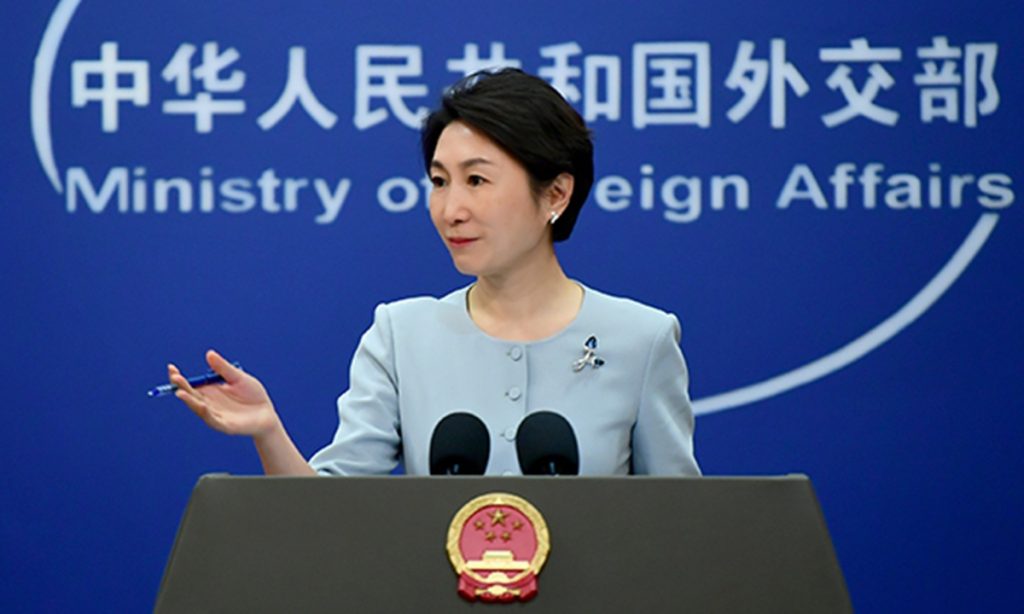
Several individual New Zealand lawmakers visited China's Taiwan region in disregard of the grave concern and firm opposition of the Chinese side. Their action violates the one-China principle and interferes in China's internal affairs. In accordance with relevant laws of the People's Republic of China, the Chinese side has decided to take measures including an entry ban, Chinese Foreign Ministry spokesperson Mao Ning said on Thursday in response to a question about China banned four New Zealand lawmakers from traveling for one year and demanded an apology after they traveled to Taiwan.

"I need to stress that the one-China principle, a prevailing international consensus and a basic norm in international relations, is also the political cornerstone of China-New Zealand relations. We urge the individuals concerned to earnestly respect China's sovereignty and territorial integrity and strictly abide by the one-China principle. Anyone who tramples on the red line and oversteps on the Taiwan question must pay the price," Mao noted. 

The comments were made shortly after the Chinese Embassy in New Zealand said on Thursday that the Chinese side has decided to impose measures, including entry bans, on certain New Zealand lawmakers who insisted on visiting China's Taiwan region despite China's serious concerns, firm opposition and repeated prior warnings.

Recently, a small number of New Zealand lawmakers, despite China's serious concerns, firm opposition, and repeated prior warnings, insisted on visiting China's Taiwan region in their capacity as members of parliament, the embassy said. 

During the visit, they met with a number of local political figures. Their actions and remarks were subsequently reported by local media, creating a negative political impact and sending erroneous signals to the Taiwan Democratic Progressive Party (DPP) authorities and "Taiwan independence" forces, the embassy noted.  

China can become an important supporter of Global South development: Chinese scholar

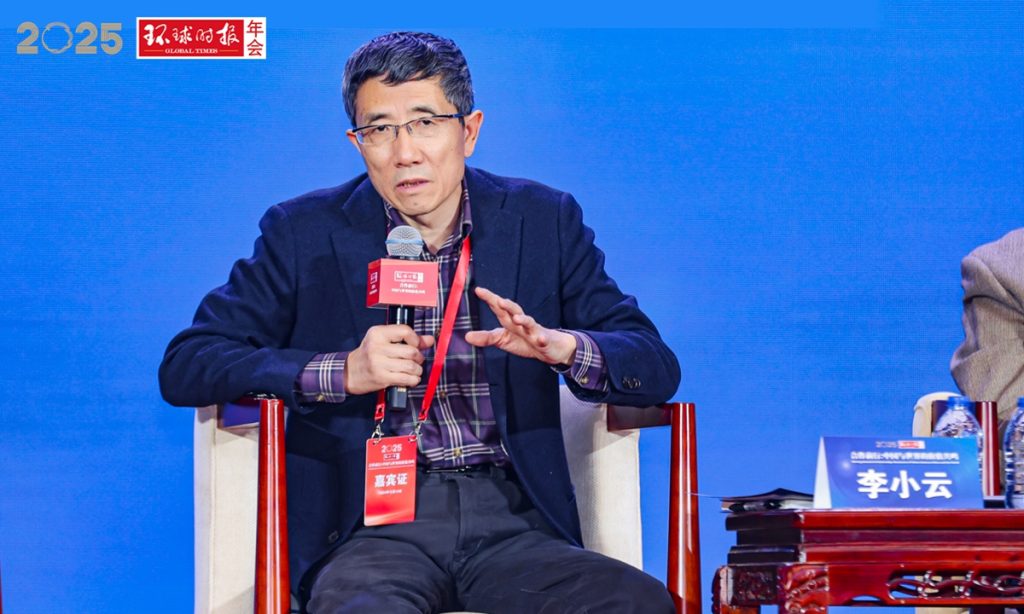
China should and also have the capability to become an important supporter, torchbearer, and promoter of the continued development of Global South countries, Li Xiaoyun, a professor at China Agricultural University, said at the Global Times Annual Conference 2025, themed "Moving forward in Partnership: Resonance of Values between China and the World," which took place in Beijing on Saturday.

During the session on "The Resurgence of the Awakening of the Global South: Mutual Learning and Resonance," Li emphasized the need to recognize the complexity of national conditions of Global South countries, stating that their development must take into account geopolitical changes and various other factors, instead of original imagination. 

He noted that China is a member of the Global South while also having some differences from other Global South countries.
Li pointed out that without a core driving force, the Global South would be fragmented. In his view, this core driving force should have the capacity to provide economic support, development experience, and to establish organizations that serve the interests of Global South countries. From this perspective, he believes that China currently meets the requirements.

Li made further remarks: first, China is the only country within the Global South that has the capacity to engage in substantial South-South cooperation; second, China possesses unique development experiences; and third, China actively promotes organizations focused on the development of Global South countries, such as the BRICS New Development Bank and the Asian Infrastructure Investment Bank.

China's positioning among Global South countries should be as an important resource supporter, experience provider, and a true force for unity, Li said. 

China launches internet satellite group

China successfully sent the first group of low Earth orbit satellites for a satellite internet constellation from the Wenchang Space Launch Site in southern Hainan Province on Monday.

At 6:00 p.m. (Beijing Time), this group of satellites was launched by a Long March-5B carrier rocket with a Yuanzheng-2 (Expedition-2) upper stage atop the rocket. The satellites have entered the preset orbits.

The launch marked the 552nd mission of the Long March series carrier rockets.

China's first fully electric single-seater flying 'go-kart' set for production in March 2025

China's first fully electric single-seater flying "go-kart," the AnTGOne, is about to enter production. Impressively, it takes only three minutes for beginners to experience the fun of flying, the Science and Technology Daily reported on Friday.

As a manned aircraft, the AnTGOne is equipped with a self-developed flight control system, crafted from aviation aluminum and carbon fiber materials. With a maximum payload capacity exceeding 200 kilograms, this remarkable vehicle prioritizes a lightweight and foldable design, making it perfectly suited to meet the diverse demands of the market, according to Science and Technology Daily.

This product is designed to deliver an exhilarating flying experience, with a focus on ultra-low altitude flight. It allows users to freely switch between three flight modes: experience mode, player mode, and automatic mode, and even complete beginners can experience the joy of flying after just three minutes of learning, according to the report.

The person in charge of the company that produced the go-kart, Feng Guangwei, said that hundreds of hours of simulated manned flights, conducted at a weight of 75 kilograms, have already been carried out. Manned flight tests will be carried out according to the established timeline, and the product will undergo additional testing and finalization, with formal production expected to commence in March 2025, Feng added.

At present, the company has received nearly 500 orders, and the first batch of products has been designated for export, according to the report.

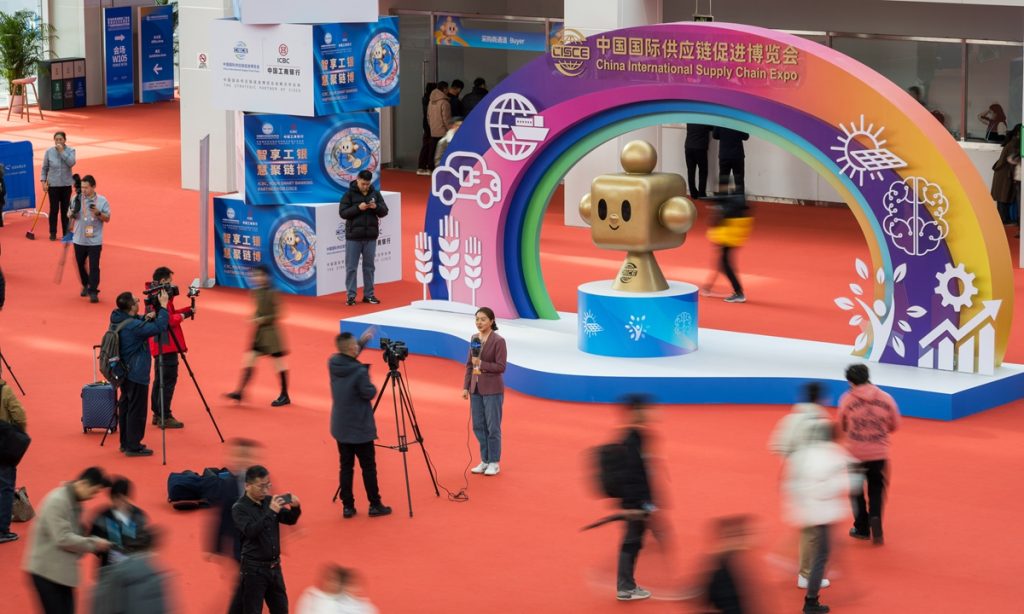
China intl supply chain expo kicks off; Nation committed to enhance and upgrade global supply chain

As over 1,300 participants from over 100 countries and regions as well as international organizations attended the opening ceremony of the second China International Supply Chain Expo (CISCE), which kicked off on Tuesday in Beijing, Chinese Vice President Han Zheng called for promoting win-win cooperation, optimization and upgrading as well as green transition of global industrial and supply chains.

China will adhere to the right course of economic globalization and enhance business and industrial capacity cooperation with other countries for a positive interplay among industries and shared benefits, Han said, the Xinhua News Agency reported.

At the opening ceremony on Tuesday, a Beijing initiative for stable and smooth global industrial and supply chains was unveiled.

On Monday, Chinese Premier Li Qiang, while attending a symposium with representatives of enterprises and organizations participating in the second CISCE, said China will continue to take concrete action to ensure stable and unimpeded global industrial and supply chains.

Join hands, no arm wrestling

Government officials and representatives from the global business community and institutions from more than 100 countries and regions attending the second CISCE opening ceremony on Tuesday took to the stage to express their support for globalization, and voiced their concerns about decoupling and attempts to undermine global industrial and supply chain cooperation.

Observers noted that the global economic stage should be one where partners seek common growth and a shared future by joining hands, rather than by engaging in arm wrestling. They urged governments around the world to work toward ensuring the smooth flow of the global industrial and supply chain.

Chinese analysts said that in face of the sluggish global economic recovery, collaboration and seeking win-win benefits is the only path to ensure the prosperity of global trade, which is the foundation of well-being for the peoples of the world.

Anti-globalization and the fragmentation of the global supply chain will only add costs and incur losses, they noted.

"In Europe, a great meeting of the Eastern and Western economies has been created in Hungary. If you want to see big German factories and big Chinese factories built on neighboring plots next door to each other, please come to Hungary. Our strategy of economic neutrality will make 2025 a fantastic year for the Hungarian economy through the enhanced cooperation between China and Hungary," Hungarian Minister of Foreign Affairs and Trade Peter Szijjarto said in his speech at the opening ceremony of the second CISCE.

"Hungary is honored to be the country of honor here," Szijjarto said. "We will take the best profit out of our presence here."

In face of an increasingly complex global economic landscape and rising protectionist headwinds, guests including global business leaders and top executives expounded the benefit of connectivity, as well as the cost of fragmentation.

"A single tree does not make a forest, and a single string does not make music. We can achieve more when we work together, and the bigger the challenge, the more essential cooperation becomes," Dominic Barton, chair of Rio Tinto, said during his speech at the opening ceremony.

"It is important that we speak up and come out of the shadows to defend and promote supply chain coordination and free trade. It is essential for all of our prosperity," Barton said.

As the World Bank estimates, a 1 percent increase in participation in the international supply chain is associated with a more than 1 percent increase in per capita income to see the direct link between trade and prosperity, the chair of the mining giant said.

Another example, according to Barton, is that in a scenario where countries block made-in-China products in clean energy, such as solar panels, wind turbines and lithium batteries, Wood Mackenzie estimated that global energy transition costs would rise by 20 percent, or at least the equivalent of $6 trillion.

Confidence booster

Bolstered by the country's recent slew of incremental policies aimed at injecting vitality into growth momentum, there is rising confidence from the global business community.

On Monday, Premier Li Qiang said that China has achieved generally steady economic growth and made further progress this year, saying that more efforts will be made to step up counter-cyclical adjustment and promote sound economic development.

"At CP Group, we are very confident in the Chinese economy. The package [of incremental policies] is thorough and considerate. As entrepreneurs, we are heartened. The overseas Chinese business community is also heartened," Dhanin Chearavanont, senior chairman of Thailand's Charoen Pokphand Group and dubbed the "001 foreign investor to China (among the first foreign investors when China launched the reform and opening-up)," told the Global Times on the sidelines of the event.

Compared with the first edition of the expo held in 2023, this year's event has seen a growing attendance from global and domestic companies, many of them giants in their sector.

China Council for the Promotion of International Trade Chairman Ren Hongbin said the world is seeing the CISCE, the world's first and only one of its kind devoted to supply chain cooperation, with growing recognition both in China and globally.

"A platform to foster unity and enhance collaboration is what the world sorely needs at this moment of rising anti-globalization, unilateralism and protectionism," Ren said.

Huo Jianguo, a vice chairman of the China Society for World Trade Organization Studies in Beijing, told the Global Times on Tuesday that the world's second-largest economy is consolidating its growth momentum with improved quality and constant efforts to optimize its business environment. The attractiveness of the China market and Chinese supply chain will grow stronger and more multinational companies will place their bets on China, Huo noted.

US relaxing travel advisory for China is beneficial for normal exchanges: Chinese FM

In response to the US State Department relaxing its travel advisory for China and removing the notation that indicates a risk of wrongful detention, Chinese Foreign Ministry spokesperson Mao Ning said that China has taken note of the US adjustment and believes that this move is beneficial for normal exchanges between the two countries. 
 
China has always opposed artificially creating a "chilling effect" and hopes that the US will continue to create more conveniences to promote people-to-people exchanges between the two countries, said Mao. 
 
The State Department downgraded its travel advisory for China from level three "reconsider travel" to a level two "exercise increased caution" on Wednesday, according to a Politico report. 

China makes breakthrough in xenotransplantation with gene-edited pig kidney surviving 184 days in macaque

An organ transplantation research team from Tongji Hospital of Huazhong University of Science and Technology in Wuhan has achieved a major breakthrough, with a gene-edited pig kidney surviving in a macaque for an unprecedented 184 days. This marks the first step toward successful xenotransplantation in China, according to a release sent to the Global Times by the hospital on Friday.

This success was realized in November, bringing China's xenograft pig kidney transplantation research closer to the international advanced level, and laying a strong foundation for future clinical research, the release said.

Gene-editing pigs to provide organs to humans for performing xenotransplantation remains a key focus area in advanced biotechnology.

China's clinical application technology for organ transplantation is on par with global standards, and the research and development capabilities for gene-edited pigs are steadily aligning with international benchmarks, according to the hospital. 

In the trials involving gene-edited pigs and non-human primates, however, the transplantation of pig kidneys into macaques has faced challenges in achieving long-term survival, which has become a major barrier to advancing xenogeneic kidney transplantation to clinical trials in China, the release noted.

Chen Gang, the team's leading researcher, explained that in xenograft animal testing, 180 days of survival is regarded as the benchmark for achieving long-term survival.

Long-term survival after transplantation of gene-edited pig kidneys in macaques has been reported internationally in nearly 20 cases, and the US has pioneered clinical trials involving pig kidney transplants for patients with uremia, Chen said.

For China to initiate similar clinical case studies, achieving long-term survival in animal experiments remains a prerequisite, Chen added.

Chen and his team have dedicated nearly two decades to xenotransplantation research, focusing specifically on over 20 animal experiments involving kidney transplants from novel gene-edited pigs to macaques in the past five years.

Following continuous refinement and improvements, on May 10, after obtaining ethical approval for animal experiments, they used pCMV-negative four-gene edited pigs (GTKO/β4GalNT2KO/hCD55/hTBM) as donors to transplant a single pig kidney into a macaque, while concurrently removing the macaque's own bilateral kidneys. 

By improving the immunosuppressive regimen, the transplanted kidney achieved a survival period of 184 days, the release noted.

Within five months after the transplantation, the transplanted pig kidney in the macaque functioned entirely normally, and various physiological indicators were largely within normal ranges, according to the release.

Although the transplanted macaque later developed worsening proteinuria over time and experienced chronic rejection mediated by newly formed xenogeneic antibodies, Chen said that they will strengthen measures to suppress antibody production and further improve survival outcomes, laying the groundwork for clinical research.

10 years on: President Xi's book on governance has sweeping global impact

On November 15, in Lima, Peru, during the sidelines of the 31st APEC Economic Leaders' Meeting, Chilean President Gabriel Boric presented Chinese President Xi Jinping with the fourth volume of the collection Xi Jinping: The Governance of China, in Spanish language, which he had brought at the Santiago International Book Fair, and asked the Chinese president to sign on the title page, according to state broadcaster CCTV.

Such scenes are familiar in the Chinese president's interactions with foreign leaders. Impressed by the success of the Chinese path, Uzbek President Shavkat Mirziyoyev, in his foreword for the Uzbek edition, said Xi's book offers important inspiration and guidance on governing a country, developing a market economy that fits national features, and protecting public interests, the Xinhua News Agency reported.

This year marks the 10th anniversary of the publication of Xi Jinping: The Governance of China. So far, the four-volume collection, which has been translated into over 40 languages and distributed across more than 180 countries and regions, has been widely regarded as the "golden key" to understand the Chinese miracle and the "revelation" to address global development problems.

Several foreign scholars who have participated in the translation, publication, and in-depth study of the collection shared their stories with the Global Times about why this publication continues to be popular around the world.

An authoritative source for understanding China

Wirun Phichaiwongphakdee, director of the Thailand-China Research Center of the Belt and Road Initiative, regarded the signing of a contract with the China Foreign Languages Publishing Administration to translate and publish the Thai version of the fourth volume of the collection as one of the most notable achievements of the research center this year.

As the translator, Wirun feels that his involvement in this project is profoundly significant. "During reading and translating the fourth volume, I felt as if I were consulting a sage. We are committed to providing an authoritative source for Thailand and the international community to understand the governance strategies of China in the new era through precise and authentic translation," Wirun told the Global Times.

Having studied in China since 1997, Wirun has a deep understanding of China. He believes that the country's development is reflected not only in the increasingly rich material and spiritual lives of its people, but also in the confidence and patriotism of its citizens, as well as the strategic vision of its leaders for the development of human society.

The Thai language edition of the book Xi Jinping: The Governance of China Volume 1 was officially released in Thailand in April 2017, receiving a warm response and significant attention from mainstream Thai society, with then prime minister Prayut Chan-o-cha recommending the book to cabinet members multiple times.

Wirun, who has long engaged in research on China, has carefully studied the first volume of the collection. "The content of this book has greatly inspired me. The path China has taken is precisely the experience that developing countries like us need to learn from. I feel honored to participate in the translation and publication of its Thai version from the second volume," he said.

Many Thai people, or foreigners in general, have long relied on Western media for information about China, which can lead to misunderstandings about China's political system and human rights situation.

The translation of this book enables the international community to gain a systematic understanding of the treasure trove of ideas created by China's leadership. He hopes that more people can better perceive the governance philosophy and global vision of the Chinese top leader through the book.

During the translation process, he and his team meticulously considered how to express the original meaning accurately while ensuring that Thai readers could grasp the essence of the content.

"For instance, in the first topic of Volume II, President Xi quotes the saying from The Book of Rites: The Great Learning, 'Win popular support, and you win the country; lose it, and you will lose the country.' Through our careful study, we understood the meaning of this ancient saying, and then translated it directly into Thai while clearly explaining that President Xi's intention in quoting it is to emphasize that the Communist Party of China (CPC) must adhere to a people-centered approach and stand with the people, which is the fundamental guarantee for overcoming difficulties and risks," Wirun said.

The director believes that the viewpoints, concepts, and experiences articulated in this collection hold significant reference value not only for Thailand, but also for the world today.

"The collection has a profound impact on the countries of the Global South. China, as a member of the Global South, has shown these governments a direction for development and allowed countries around the world to envision their own paths to modernization," he stressed.

An eastern perspective for multilateralism
In Kathmandu, Nepal, the Belt and Road Bookstore has been positioning the collection prominently on its bookshelf.

"The book's performance locally has been outstanding. Readers often express how the insights within the book help them understand China's governance philosophy and the transformative reforms of the last decades," Kiran Gautam, president of Current Publication Pvt Ltd from Nepal, told the Global Times.

Current Publication Pvt Ltd is one of the most influential publishing institutions in Nepal and is the parent company of the Belt and Road Bookstore. Gautam shared with the Global Times his observations about the readers of the collection at the bookstore.

"I met a young entrepreneur, who shared how the book inspired him to explore governance models suitable for Nepal to me. Such personal stories resonate deeply with me, as they reflect the cultural and intellectual bridges we strive to build through our bookstore," Gautam said.

Born in a family dedicated to promoting relations between Nepal and China, Gautam noted that the decision to introduce the collection stemmed from his family's legacy and his personal mission to provide Nepalese readers with authentic insights into modern China.

"Nepalese readers are curious about China's development model, particularly its remarkable achievement in poverty alleviation - a challenge that resonates closely with Nepal's developmental goals." In Gautam's view, the wisdom of the Chinese top leader shown in the book is one of the most valuable public goods that China offers to developing countries.

"For example, the Belt and Road Initiative (BRI) proposed by President Xi has tremendous benefits for developing countries like Nepal. He is not only seeking happiness for the Chinese people, but is also opening his arms to the whole world," Gautam said, noting that this is also one of the reasons why his bookstore is named after the BRI.

Inspired by President Xi's vision for the BRI and the Global Civilization Initiative, which emphasizes mutual exchange among different civilizations, Gautam is committed to promoting collaboration between Nepalese and Chinese publishers, continuing to publish stories that resonate with both countries' readers.

Gautam noted that the book market in Nepal is very small. Although both China and India are neighbors of Nepal, Nepalese literature is more influenced by India. He has been dedicated to promoting Chinese culture in the South Asian region through book publishing.

A star in international book fairs

Driven by a love for China and a desire to participate in the translation and the overseas promotion of the collection, both Wirun and Gautam often find themselves invited to local academic events related to China as "experts on Chinese issues."

"When we actively recommend this collection as 'first readers,' the feedback we receive from readers is that it is always a source of pride and comfort," Wirun noted.

Wirun also pointed out that in recent years, the collection has attracted considerable attention at book fairs abroad, particularly in BRI partner countries.

For example, at the 28th Lima International Book Fair, which concluded in August 2024, the number of readers purchasing the fourth volume increased compared to previous years, with buyers ranging from politicians and scholars to university professors, students, and seniors, Meng Kexin, director of La Voz de la Colonia China, the oldest Chinese newspaper in South America, told the Global Times.

On November 5, during a reader meeting for Xi Jinping: The Governance of China held in Lima, lawyer and legal expert Francisco Tiburcio Uceda remarked that attending this event allowed them to deeply appreciate the thoughts and vision of a world-class leader, while also strengthening knowledge and cultural exchanges between nations, according to Meng.

Meng shared a moment he observed at the Lima International Book Fair with the Global Times: A young man lingered in front of the shelf displaying Xi's book for a very long time, taking photos of specific chapters with his phone.

"Readers around the world are inspired by Xi's thoughts in the collection, and through witnessing the significant changes brought by China like the Chancay Port project and the China-Laos railway, they see a tangible manifestation of Chinese wisdom. Moreover, many of them firmly believe that this Chinese wisdom will provide them with greater benefits in the future," Wirun said.