Deepen media cooperation between China and Kyrgyzstan to jointly create a bright future for SCO
Chinese President Xi Jinping has pointed out that interactions between civilizations provide the most solid foundation for the Shanghai Cooperation Organisation's (SCO) development, and people-to-people exchanges provide the strongest driving force for the organization. Kyrgyzstan will host this year's summit, which marks the 25th anniversary of the founding of the SCO.

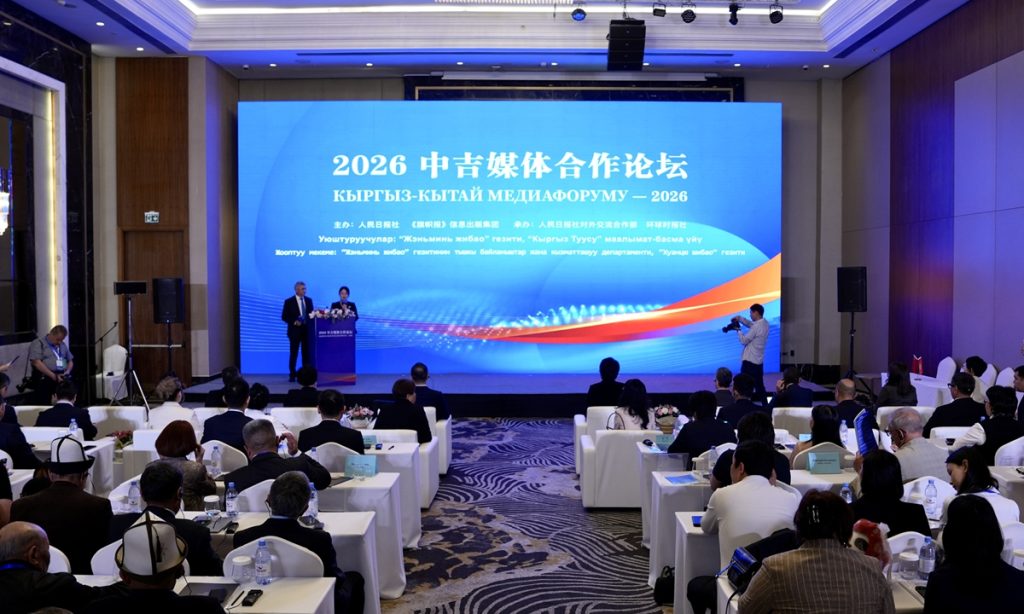
On May 27, the 2026 China-Kyrgyzstan Media Cooperation Forum, themed "Deepening China-Kyrgyzstan Media Cooperation for a Brighter SCO Future," was held in Bishkek, the capital of Kyrgyzstan. Nearly 100 media representatives, officials from relevant departments, experts, scholars and business representatives from China and Kyrgyzstan attended the forum, engaging in in-depth exchanges and discussions on topics including economic and trade development, cultural exchange and media cooperation. The forum was jointly hosted by the People's Daily and Kyrgyz Tuusu Publishing House.

Media in unity, building consensus for development

"Amity and good-neighborliness are invaluable to a country." Linked by mountains and rivers, China and Kyrgyzstan are good neighbors, good friends and good partners enjoying close people-to-people ties. In recent years, under the strategic guidance of the two heads of state, the China-Kyrgyzstan comprehensive strategic partnership for a new era has maintained a strong momentum of development. Media outlets from both countries have played an active role in promoting the building of a closer SCO community with a shared future and a China-Kyrgyzstan community with a shared future.

Cui Shixin, Deputy Editor-in-Chief of the People's Daily, said that holding the China-Kyrgyzstan Media Cooperation Forum is both an implementation of the important consensus reached by the two heads of state on deepening the China-Kyrgyzstan comprehensive strategic partnership for a new era, and a concrete action to create a favorable public opinion environment and lay a solid public foundation for the upcoming Bishkek SCO Summit. China and Kyrgyzstan are companions on the path to modernization. Media of both countries should build consensus on development to anchor mutual trust, boost mutually beneficial cooperation to pave the way for prosperity, deepen cultural exchanges to nurture the tree of friendship and consolidate institutional foundations to amplify the voice of the SCO. With a constructive attitude, they should build bridges of understanding, present a true, multidimensional and comprehensive picture of China-Kyrgyzstan cooperation, and tell vivid stories of mutually beneficial cooperation between the two countries.

Salkyn Sarnogoeva, Deputy Minister of Culture, Information, Sports and Youth Policy of the Kyrgyz Republic, said that the friendship between China and Kyrgyzstan has a long history, and the spirit of the Silk Road has firmly bound the two peoples together. In the digital era, media are a bridge connecting the peoples of the two countries, and it is very important for the two sides to strengthen media exchanges and cooperation. At present, the SCO is in a period of vigorous development, and the media of both countries should jointly respond to the challenges posed by fake news and information disorder, learn from each other in areas such as artificial intelligence applications, creative industry development, and media platform building, and support the growth and development of young journalists.

Since its founding, the SCO has always upheld the Shanghai Spirit of mutual trust, mutual benefit, equality, consultation, respect for diverse civilizations and pursuit of common development. It has become the world's largest regional cooperation organization in terms of population, geographic area and development potential.

Galina Baitekerek, head of Kyrgyz Tuusu Publishing House in Kyrgyzstan, said that the SCO is becoming an important platform for different civilizations to strengthen dialogue and mutual respect. Strengthening cooperation between Chinese and Kyrgyz media in various fields will help establish an objective image of SCO member states internationally and is of great significance for promoting the development of the SCO. The two sides have broad prospects for cooperation in many areas, including promoting exchanges of experience between journalists and experts, creating joint media projects, advancing digital platforms and new media development, and increasing support for young journalists.

Sun Dapeng, counselor of the Chinese Embassy in Kyrgyzstan, said that media play an irreplaceable role in deepening mutually beneficial cooperation and promoting people-to-people affinity. Media cooperation is also a key direction of SCO cooperation and China-Kyrgyzstan cooperation. This forum is another important achievement of China-Kyrgyzstan media cooperation. He hopes that media from both countries will continue to deepen cooperation, firmly promote the Shanghai Spirit, introduce successful experiences in SCO development, show the bright prospects of cooperation among countries and tell the "SCO story" well.

Mutual benefit and win-win outcomes, broadening path of cooperation

Civilizations become colorful through exchange, and cooperation becomes profound through pragmatism. At the forum, guests from the tourism, aviation, logistics, automotive and technology sectors of both countries shared cooperation achievements and discussed future visions, painting a vivid picture of coordinated development and mutual benefit across multiple fields between China and Kyrgyzstan.

Eduard Kubatov, Director of the State Agency for Tourism Development of Kyrgyzstan, said that China-Kyrgyzstan relations are currently at their best in history, with political mutual trust, economic and trade investment, and cultural exchanges continuing to deepen. Tourism cooperation is an important part of the bilateral friendship. The two sides have already opened direct flights and are actively 8ancient city of Suyab), and will also work with Uzbekistan to build an international tourism hub. He said Kyrgyzstan is willing to take this forum as an opportunity to work with China to advance tourism and cultural cooperation and jointly promote the continued development of bilateral relations.

A representative from Air China's Bishkek office said that Air China will officially enter the Kyrgyzstan market. Earlier media reports indicated that Air China will launch a direct flight between Beijing and Bishkek starting July 17. The opening of this route will pave a smoother "air Silk Road" for personnel exchanges and economic and trade cooperation between the two countries, and the bilateral passenger flow is expected to exceed 200,000 for the first time this year.

Deputy General Director of "Kyrgyz Post" JSC, Uulzhan Masiyanova, said that Kyrgyzstan and China are engaged in close cooperation in political, economic, logistics, digital technology, information and communications, and cultural fields. In particular, cooperation in cross-border e-commerce and logistics has become one of the vivid examples of practical cooperation between the two countries. Their cooperation is reflected not only in the extension of roads and the growth of trade, but also in the integration of information spaces, mutual understanding in the media sector, and deeper awareness and understanding between the peoples of the two countries.

In his remarks, Lu Yunran, CEO of 212 Off-Road Vehicle Co., Ltd., shared the story of how 212 became a flagship independent Chinese off-road model. He said that China's complete industrial and supply chain system, the creativity of millions of engineers and the breakthroughs made by Chinese automobiles in the new energy and intelligent era have provided a solid technological foundation and a broad stage for Chinese brands to go global. At present, 212's global sales network covers more than 80 countries and regions. In the future, the company will deepen cooperation with partners in Central Asian countries and work together with all parties under a "Chinese technology + local market" model.

Ulanbek Satiev, General Director of the National Television and Radio Broadcasting Corporation of the Kyrgyz Republic (NTRK), said that while NTRK has been deeply cultivating traditional television media, it has also built a strong influence on new media platforms. At present, NTRK is also actively embracing cutting-edge technology and has officially introduced artificial intelligence to broadcast daytime news.

Li Dahai, CEO of Beijing MODELBEST Technology CO., LTD, said that artificial intelligence is not only a new round of technological revolution, but also a new development channel, and should become an inclusive infrastructure for common development among countries. Relying on key laboratories and an open-source ecosystem, ModelBest AI has already established the technical chain for "sovereign large models" and created a sample of an intelligent foundation. He looks forward to working with partners in Kyrgyzstan and other Central Asian countries to make AI better understand local languages, be closer to local industries and better serve local people.

People-to-people exchanges, painting picture of future together
Ideas collide to gather wisdom, and dialogue deepens friendship. In the roundtable discussion session of the forum, guests engaged in in-depth exchanges on the topic of "Media building bridges of people-to-people exchanges and empowering cooperation and development between the two countries," sharing experiences, building consensus and offering suggestions to improve the quality and effectiveness of China-Kyrgyzstan media cooperation.

Guan Kejiang, President and Editor-In-Chief of the Global Times, said that language is a bridge for communication, and media can use each other's languages to better tell the stories of their own development, China-Kyrgyzstan cooperation, SCO cooperation and the Global South. This is the proper mission of the media.

Du Hua, Director of the Confucius Institute on the Chinese side at Bishkek State University, has worked in Bishkek for seven years. She said that Chinese brands can be seen everywhere in Bishkek, and the idea of mutual benefit and win-win cooperation has taken root in people's hearts. The media are witnesses and communicators of friendly cooperation, and young students can deepen their understanding of each other's cultures through the media.

Kurmanbek Mambetov, a commentator for Kyrgyz newspaper Kyrgyz Tuusu, said he hopes the media will focus more on practical cooperation projects between Kyrgyzstan and China, such as Chinese investment in Kyrgyzstan, technological cooperation and tourism exchanges, so as to enhance mutual trust and promote cooperation. At the same time, the media need to embrace new technologies to better meet the information needs of local audiences.

Ismail Dairov, an international commentator for Slovo Kyrgyzstana, has long promoted environmental protection ideas through the media. He said China has made great achievements in the field of new energy, and the prospects for cooperation between Kyrgyzstan and China are broad. The Kyrgyz side hopes to learn from China's technological experience to support local green development.

At the end of the forum, Kubat Chekirov, head of the "Kut Bilim" media center, told the Global Times that "as journalists, when we convey new knowledge, new trends and new developments from the other country to our own people, cooperation between the two countries will become closer, and mutual understanding will be further deepened."

As the tide rises over the Tianshan Mountains and the wind fills the sails, hearts and hands joined together move toward the future. Standing at the new starting point of the 25th anniversary of the founding of the SCO, the media of China and Kyrgyzstan will continue to carry forward the Shanghai Spirit, fulfill their media mission, and use the pen as a medium and the camera as a bridge to tell the story of China-Kyrgyzstan friendship and spread the voice of the SCO.


China to impose measures including entry bans on certain New Zealand lawmakers who visited China’s Taiwan region: embassy

Several individual New Zealand lawmakers visited China's Taiwan region in disregard of the grave concern and firm opposition of the Chinese side. Their action violates the one-China principle and interferes in China's internal affairs. In accordance with relevant laws of the People's Republic of China, the Chinese side has decided to take measures including an entry ban, Chinese Foreign Ministry spokesperson Mao Ning said on Thursday in response to a question about China banned four New Zealand lawmakers from traveling for one year and demanded an apology after they traveled to Taiwan.

"I need to stress that the one-China principle, a prevailing international consensus and a basic norm in international relations, is also the political cornerstone of China-New Zealand relations. We urge the individuals concerned to earnestly respect China's sovereignty and territorial integrity and strictly abide by the one-China principle. Anyone who tramples on the red line and oversteps on the Taiwan question must pay the price," Mao noted. 

The comments were made shortly after the Chinese Embassy in New Zealand said on Thursday that the Chinese side has decided to impose measures, including entry bans, on certain New Zealand lawmakers who insisted on visiting China's Taiwan region despite China's serious concerns, firm opposition and repeated prior warnings.

Recently, a small number of New Zealand lawmakers, despite China's serious concerns, firm opposition, and repeated prior warnings, insisted on visiting China's Taiwan region in their capacity as members of parliament, the embassy said. 

During the visit, they met with a number of local political figures. Their actions and remarks were subsequently reported by local media, creating a negative political impact and sending erroneous signals to the Taiwan Democratic Progressive Party (DPP) authorities and "Taiwan independence" forces, the embassy noted.  

Chinese Embassy in the Philippines lodges solemn representations over death of Chinese national in custody, urges full investigation

Following reports from Chinese nationals about harsh detention conditions in Philippine prisons and the tragic death of a Chinese national in custody, the Chinese Embassy in the Philippines said on Friday evening via its official WeChat account that it has lodged solemn representations with the Philippine side, urging a comprehensive investigation into the death of the Chinese national.

The Embassy's statement came after recent revelations by unnamed Chinese nationals on social media over poor sanitation and medical services in Philippine jails, lengthy and costly repatriation procedures for detainees, and the death of a Chinese national while in custody.

According to the Philippine side, a Chinese national detained in connection with Philippine Offshore Gaming Operator died suddenly on Thursday at the Philippine Bureau of Immigration detention facility. The cause of the death remains to be investigated.

The Embassy said that it has taken the matter very seriously and promptly conducted verification to identify the relevant prison. The statement also said that the Embassy has lodged solemn representations with the Philippine side, urging a comprehensive investigation into the death of the Chinese national and demanded that any managerial responsibility or negligence be seriously pursued. 

At the same time, the Embassy has contacted the deceased's family and is assisting with follow-up arrangements, read the statement.

The Embassy said it has always attached great importance to protecting the safety and legitimate rights and interests of Chinese nationals in the Philippines. Whenever a Chinese national is detained in the Philippines, the Embassy always requests that the Philippine side promptly notify the details of the case, arrange consular access as soon as possible, improve detention conditions, and do its utmost to help detained Chinese nationals resolve practical difficulties.

The Embassy also said it would urge the Philippine side to handle cases fairly and in accordance with the law, and continue to press the Philippine side on matters such as expediting the repatriation process for detained Chinese nationals and lowering related costs, sparing no effort to protect the safety and legitimate rights and interests of Chinese nationals in the Philippines.

PLA uses warning electronic jamming against consecutive intrusions of Dutch warship, aircraft in Xisha Islands; expert says move considered restrained

A Dutch frigate, De Ruyter, on Wednesday illegally intruded into China's Xisha Islands waters, and repeatedly launched its shipborne helicopter to violate China's territorial airspace, said Senior Captain Zhai Shichen, spokesperson for the Chinese People's Liberation Army (PLA) Southern Theater Command, according to the WeChat account of the Command on Wednesday. The Southern Theater Command deployed maritime and air forces and took necessary measures including verbal warnings and warning electronic jamming in accordance with laws and regulations to expel the vessel. A military affair expert told the Global Times that the measures taken by the Chinese side are both necessary and justified, and have demonstrated a high degree of restraint.

The Command said that the Dutch side's actions seriously violated China's territorial sovereignty, maritime and air security, contravened international law and basic norms governing international relations, and undermined peace and stability in the South China Sea, which may easily lead to miscalculations. "We express firm opposition to such acts and warn the Dutch side to immediately stop its infringement and provocation. The Theater Command will maintain a high state of alert at all times and resolutely safeguard national sovereignty, security and regional peace and stability," the spokesperson said.

The PLA's timely and public responses to provocative actions by foreign militaries have become routine. However, the information conveyed in this statement by the Southern Theater Command's spokesperson indicates that the Dutch actions were particularly egregious, especially the Dutch vessel's repeated launch of its shipborne helicopter that intruded into China's territorial airspace. Any measures taken by the PLA are lawful and justified, Zhang Junshe, a Chinese military affairs expert, told the Global Times on Wednesday.

Dutch Navy warship HNLMS De Ruyter is in Manila for a three-day goodwill visit as part of the Netherlands’ intensified efforts to “strengthen maritime partnerships with countries in the “Indo-Pacific,” Philippine News Agency claimed on May 22.

The HNLMS De Ruyter is set to participate in various interoperability activities, including communication and maneuvering exercises with the Philippine Navy, claimed the report.

The report also claimed that the Dutch frigate’s visit forms part of the Royal Netherlands Navy’s five-month Pacific Archer deployment mission, which aims to promote freedom of navigation and maritime security in the “Indo-Pacific.” After its Manila port call, HNLMS De Ruyter will join the 2026 Rim of the Pacific Exercise, which will bring together 31 nations, including the Philippines, in and around the Hawaiian Islands from June 24 to July 31.

This makes it abundantly clear that the HNLMS De Ruyter deliberately detoured to China's Xisha Islands on its way from the Philippines to the Hawaiian Islands to carry out provocative actions, brazenly infringing on China's sovereignty. The vessel and its shipborne helicopter illegally intruded into China's territorial waters and airspace with clear reconnaissance and probing intent, seriously violating international law and basic norms governing international relations, and deliberately disturbing the stability of the South China Sea situation, Zhang said.

Unlike previous practices, the PLA Southern Theater Command spokesperson this time explicitly disclosed countermeasures such as verbal warnings and warning electronic jamming, demonstrating the legality and compliance of China's actions.

Zhang said that the Dutch missile frigate HNLMS De Ruyter, along with its shipborne helicopter, intruded into China's Xisha territorial waters and territorial airspace. This action is by no means so-called “freedom of navigation.” Rather, it constitutes a serious violation of China's territorial sovereignty and a deliberate provocation. In response, China adopted measures including verbal warnings and warning electronic jamming, measures that are both necessary and justified, with an overall response that has shown considerable restraint.

The warning electronic jamming deployed by the PLA in this case is generally divided into two types: passive and active. Passive jamming involves deploying chaff and other materials to interfere with radar signals, disrupting the opposition’s reconnaissance and provocative activities. Active jamming uses electronic equipment to emit electromagnetic waves to interfere with and suppress the opposition’s radar reconnaissance systems, Zhang explained.

If the Dutch side continues to escalate its provocative actions, the Chinese military might take even more powerful countermeasures, including warning shots, to resolutely defend national territorial sovereignty and maritime and air security, the expert added.

On Tuesday, the South China Sea Strategic Situation Probing Initiative (SCSPI) released the "Report on the Military Activities of Non-US Extra-Regional Countries in the Western Pacific in 2025." At the press conference, Hu Bo, Director of the SCSPI, noted that extra-regional countries other than the US often lack a clear understanding of the red lines and bottom lines of many sensitive areas and the countries concerned in the Western Pacific, making their behavior more aggressive and thus more likely to trigger miscalculations or even armed clashes.

China’s carmaker SAIC joins global ‘100-million-unit club’

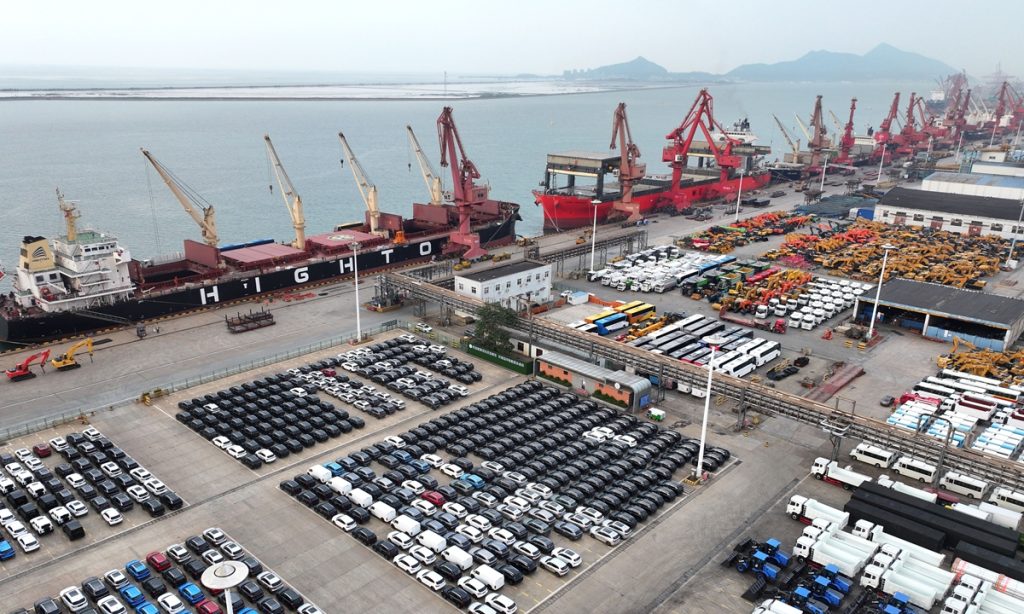
Domestic carmaker SAIC Motor delivered its 100 millionth vehicle in Shanghai on the afternoon of Thursday, becoming the first Chinese automaker to surpass 100 million units in cumulative production and sales, according to the Xinhua News Agency.

Industry insiders pointed out that the landmark achievement filled the gap for Chinese automakers in the "100-million-unit club." According to Xinhua, previously, only automakers from countries like the US, Japan, Germany and the South Korea had reached the 100-million-vehicle milestone.

Industry experts believe that SAIC Motor's achievement is underpinned by the systemic advantages accumulated by China's automotive industry over decades. These include a vast domestic market, a complete and independent industrial chain, highly clustered industrial ecosystems, mature supporting capabilities, and the advantages of opening-up and cooperation, per the experts.

SAIC Motor's achievement as China's first "100-million-unit carmaker" symbolized the remarkable transformation of the country's automotive sector over more than 70 years - from starting from scratch to becoming a global powerhouse, according to the Xinhua report.

This landmark also represented a significant milestone for "Made in China," said Xinhua.

Profound transformation

Industry insiders said SAIC Motor's success showcases the profound transformation of China's automotive industry.

In 1955, its predecessor, the Shanghai Internal Combustion Engine Parts Manufacturing Company, was established. In 1958, the first Phoenix-brand sedan was successfully produced, marking Shanghai's breakthrough in passenger vehicle manufacturing, according to SAIC Motor's website.

Over the decades, SAIC evolved from a small workshop-style factory to a modern intelligent manufacturing giant, Zhang Xiang, secretary-general of the International Intelligent Vehicle Engineering Association, told the Global Times on Thursday.

"From complete reliance on imported technology to mastering core technologies; from a domestic focus to building a global ecosystem. SAIC's growth over more than 70 years is a microcosm of Chinese manufacturing's remarkable rise and breakthrough," said Zhang.

What contributed to SAIC Motor's success is China's complete industrial ecosystem built over the past decades.

China has built the world's most comprehensive automotive supply chain, covering everything from raw materials and power batteries to electric motors, controllers, chips, vehicle assembly, and after-sales services. This system offers unmatched efficiency, cost control, and iteration speed, Hu Qimu, a professor at the Maritime Silk Road Institute of Huaqiao University, told the Global Times on Thursday.

For example, Ningde-based CATL leads the global battery market. Tesla's Shanghai Gigafactory is also an example of the resilience of China's supply chain, as it has achieved a production pace of one vehicle every 30 seconds, according to the company's statement sent to the Global Times.

In terms of the speed of research and development (R&D), major automotive clusters in Shanghai, the Guangdong-Hong Kong-Macao Greater Bay Area, and Beijing-Tianjin-Hebei region have compressed new vehicle development cycles dramatically - from the global average of 36 months to under 20 months, according to industry insiders and relevant media reports.

While traditional giants like SAIC, FAW, Dongfeng, and GAC continue to transform, new carmakers such as BYD, NIO, XPeng, Li Auto, Zeekr, and Xiaomi are emerging as powerful innovation engines.

BYD became the first domestic automaker to fully transition to electrification, halting fuel vehicle sales in 2022. New forces such as Nio and Xpeng have created differentiated advantages in battery technology, battery swapping, high-level intelligent driving, and smart cabins, observers noted.

"Innovation is also a crucial factor of China's current automobile industry," said Hu.

As BBC reported on Thursday, Chinese tech giants like Xiaomi, Huawei and Alibaba are now making EVs, bringing consumer technology into the car industry. As cars increasingly rely on software, from driver assistance to entertainment systems, these companies are giving Chinese carmakers yet another edge. "They're not racing the West anymore. They are racing each other," per BBC report citing an analyst.

Following Nio's launched of its new SUV model on Wednesday, major Chinese EV makers including BYD, XPeng, and Leapmotor are also expected to unveil major products and technology updates during the upcoming Shenzhen Auto Show, Yahoo Finance reported on Thursday, which showcased the fast innovative iteration of China's automobile industry.

Industry insiders have said that the automotive industry is experiencing transformative changes. Technologies such as artificial intelligence (AI) and big data are deeply integrating with vehicle manufacturing, fundamentally reshaping the competitive landscape and the entire value chain.

Notably, SAIC's 100 millionth vehicle - an IM LS9 Hyper - was delivered to Momenta CEO Cao Xudong, the company told the Global Times on Thursday.

Momenta, a Chinese technology provider of intelligent driving, has been providing autonomous driving software for SAIC's premium IM brand since 2021, exemplifying deepening collaboration between traditional automakers and technology companies.

"Since our founding in 2016, Momenta has been committed to leveraging groundbreaking AI technology to create a better life," said Cao.

New-era cooperation

Momenta is also a partner for many foreign carmakers operating in China. For example, in February, Mercedes-Benz Group and Momenta signed an updated strategic cooperation memorandum of understanding in Beijing and jointly announced that they will further deepen their collaboration in the field of future mobility, according to corporate statements sent to the Global Times.

This was one of the examples showcasing how China's cooperation model with foreign automakers has evolved.

For SAIC, in November 2024, it signed an extension for the joint venture contract with Volkswagen Group until 2040, further strengthening their long-term partnership, both companies said in their statements.

Foreign brands are now actively seeking partnerships with Chinese companies in new energy and intelligent technologies. Volkswagen is also collaborating with XPeng to jointly develop new-energy vehicles, while Audi is partnering with SAIC and Huawei to advance high-level intelligent driving technologies. Mercedes-Benz has upgraded its Shanghai R&D center into a global core innovation hub. Foreign automakers are now increasingly embracing China's intelligent electric vehicle (EV) technologies, achieving mutual benefit and win-win outcomes.

This shift from "learning through joint ventures" to "joint innovation and leadership" reflects the growing technological confidence of Chinese automakers, said Hu.

Foreign automakers have also deeply integrated into China's automotive production and supply chains. For example, Taicang, a small city in East China's Jiangsu Province, has developed a comprehensive industrial cluster encompassing more than 700 upstream and downstream automotive parts enterprises, including over 200 foreign-funded companies, according to Xinhua.

Thanks to its well-established industrial and supply chain system, 70 percent of automotive components can be sourced locally within Taicang, which is also an epitome of the industrial chain in the Yangtze River Delta.

"China's advantages in the complete industrial chain, cost optimization, and its leadership in the intelligent EV sector have enabled domestic brands to accelerate their globalization efforts," said Hu.

Industry insiders said that SAIC Motor's milestone is not only a celebration of past achievements but also a new starting point. As China's auto industry continues to advance in intelligence, electrification, and globalization, Chinese brands will play an even more influential role in the global automotive landscape.

Large dinosaur footprint site discovered in Zhangjiakou reveals slowest-known carnivorous dinosaur walking speed

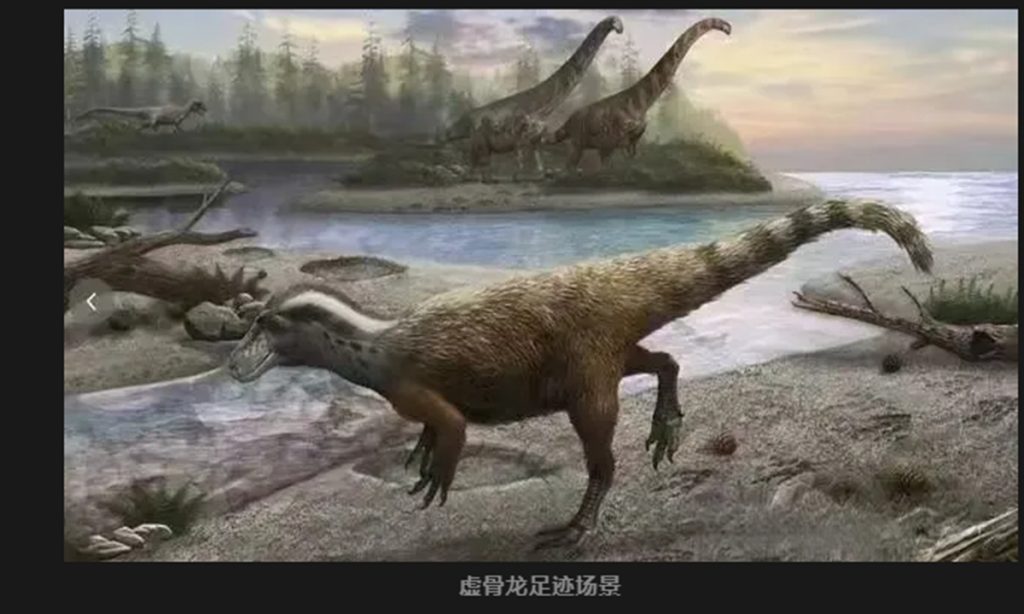
A Chinese research team has recently confirmed the discovery of a large-scale dinosaur footprint site in Xuanhua of Zhangjiakou, North China's Hebei Province. Researchers also identified traces of a carnivorous dinosaur moving at just 1 kilometer per hour for the first time at the site, the finding sets a new record for the slowest dinosaur walking speed identified in comparable strata, local media Zhangjiakou Daily reported on Sunday.

The new discoveries help complete the picture of the ancient dinosaur ecosystem, according to the report. For the first time, traces of a carnivorous dinosaur moving at merely one kilometer per hour have been found, providing vivid evidence for reconstructing the ecosystem dating back over 100 million years.

After years of surveys and research, experts have gained a preliminary understanding of the site's overall scale. It covers an exposed area of about 30,000 square meters with over 5,000 preserved dinosaur footprints, further enriching China's dinosaur footprint fossil record.

Sites yielding thousands of dinosaur footprints at one time are rare nationwide, said Gu Zhenfei, a senior engineer from the third geological brigade of Hebei Bureau of Geology and Mineral Resources Exploration. With more than 5,000 well-preserved footprints uncovered here, the Xuanhua site ranks among China's largest discoveries of its kind. Among them, Site I was found earlier, famous for mixed tracks of sauropod brontosaurs, medium-sized theropod Asian dinosaurs tracks and small graciliraptors.

Further research uncovered Site II and Site III, 1.5 kilometers and 2.25 kilometers southeast of Site I. Twenty-seven intact three-toed grallator footprints were found here, ranging from 10.1 centimeters to 26.7 centimeters in length, preserving traces of dinosaurs of various sizes. The new findings lift the number of theropod-dominated footprint sites to at least 17, depicting a fuller profile of the ancient dinosaur community.

Carnivorous dinosaurs are commonly perceived as agile and swift, yet the Xuanhua discovery challenges this perception.

Xing Lida of the China University of Geosciences (Beijing), whose research team took part in the study, conducted precise measurements on five well-preserved footprints at Site III. The surprising results show these grallators had a stride length of 32 to 46 centimeters and a walking speed of merely one kilometer per hour, comparable to the pace of an ordinary tortoise. 

This marks the slowest theropod trackway speed recorded in comparable strata and an extremely rare slow-speed dinosaur record worldwide. By comparison, most small dinosaurs living in the same area and period could run at 9 to 14 kilometers per hour.

Such huge speed differences have been explained by researchers. These slow-moving dinosaurs were capable of moving much faster. Instead, they likely slowed down to search for small prey and monitor their surroundings for potential danger, reflecting their actual survival behaviors in ancient times.

Brazilian president calls China-developed surgical robot ‘incredible’; device set world record for longest-distance remote surgery in March, company rep tells GT

"It is incredible to see up close how innovation can expand access, save lives, and further strengthen Brazil's Unified Health System," Brazilian President Luiz Inacio Lula da Silva said on social media after conducting a simulated remote surgery using a China-developed Toumai MT-1000 surgical robot from 1,400 kilometers away. 

The device praised by Lula was developed by Shanghai MicroPort MedBot. A company representative confirmed to the Global Times that the China-developed multi-port laparoscopic surgical robot supports complex procedures in urology, general surgery, thoracic surgery and gynecology, and is capable of remote operation via 5G and fiber-optic networks.

The system is equipped with an advanced imaging platform capable of delivering a high-definition surgical view with 10x optical magnification and naked-eye 3D imaging, the representative said. 

Its robotic arm system features seven degrees of freedom and can effectively filter out surgeons' physiological hand tremors during operations. The robot's wristed surgical instruments provide flexibility, precision and stability beyond that of the human hand, enabling doctors to perform a wide range of highly complex procedures within narrow body cavities.

The representative said the Toumai robot is currently the world's only commercial remote robotic surgery system capable of supporting all major departments and surgical procedures. Before being incorporated into Brazil's Unified Health System, the company worked closely with Brazilian medical institutions on a series of remote surgery trials and technical verification programs that have achieved the expected results.

According to the official website of Shanghai MicroPort MedBot, citing Brazil's Health Ministry, Hospital de Amor — the hospital visited by Lula — has become one of the country's leading benchmark institutions in robotic surgery. Since introducing its first robotic surgical system in 2014, the hospital has carried out nearly 4,000 procedures across specialties. With the introduction of the Toumai surgical robot, the number of patients treated each year has risen from around 400 to 680. 

Clinical applications of the remote surgery system have already expanded to urology, general surgery, thoracic surgery, gynecology, pediatric surgery and cardiac surgery, supporting procedures ranging from routine operations to highly complex Class IV surgeries, the representative noted. 

"The system has secured regulatory approval in 13 countries, including China, Brazil, India and Thailand. It has also obtained a US FDA Investigational Device Exemption (FDA-IDE), making it the only system in the world currently authorized to conduct human clinical surgical research in the US, and has entered the stage of real-world commercial clinical application."

Among the representative high-difficulty procedures enabled by the system are ultra-long-distance pancreaticoduodenectomy surgeries — regarded as among the most challenging abdominal operations — radical prostatectomy procedures widely considered the "gold standard" in robotic surgery, and remote atrial septal defect repair combined with tricuspid valvuloplasty, a highly sophisticated cardiac procedure requiring extreme precision, he said.

To meet the demands of remote robotic surgery, Shanghai MicroPort MedBot has developed a comprehensive technological framework that includes ultra-low-latency image compression, multidimensional data encryption, dynamic communication network optimization strategies and surgical safety assurance mechanisms for complex network environments, the representative said. 

The company has also pioneered integrated multi-network communication technology, enabling compatibility with 5G, broadband, dedicated lines and satellite communications while supporting hybrid communication across different carriers and transmission media. The technologies provide strong technical support for the transition of remote surgery from exploratory applications to large-scale and sustainable clinical practice, the representative added.

President Lula has repeatedly praised China in recent months and highlighted the strength of bilateral ties. Speaking at the industrial park of Brazil's CAOA automotive conglomerate in March, he expressed confidence that Brazil's partnership with China will "go from strength to strength," describing China as Brazil's "best partner."

Chinese official data shows that two-way trade between Brazil and China reached roughly $188 billion in 2024, reaffirming China as Brazil's largest trading partner.

Drones on display

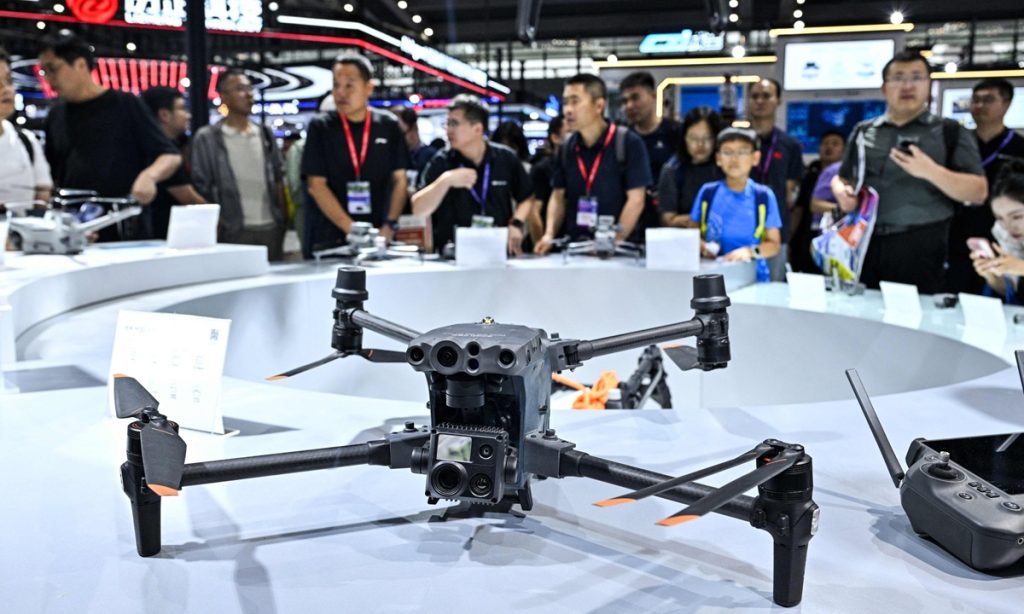
Visitors tour the DJI exhibition booth during the World Drone Congress (DWC) in Shenzhen, South China's Guangdong Province, on Thursday, May 21, 2026. Photo:VCG

Xi calls for higher-quality China-Russia comprehensive strategic coordination to boost respective development

Chinese President Xi Jinping on Wednesday called for driving the development and revitalization of China and Russia through their comprehensive strategic coordination of even higher quality.

Xi made the remarks while holding talks with visiting Russian President Vladimir Putin at the Great Hall of the People in Beijing.

Xi said the international situation is fluid and turbulent. "Unilateralism and hegemonism are resurging, yet peace, development and cooperation remain the aspiration of the people and the prevailing trend of our times," he noted.

"As permanent members of the UN Security Council and important major countries in the world, China and Russia should take a strategic and long-term perspective, drive the development and revitalization of our respective countries through comprehensive strategic coordination of even higher quality, and work to make the global governance system more just and reasonable," Xi said.

Xi, Trump hold talks, agree on new vision for bilateral ties

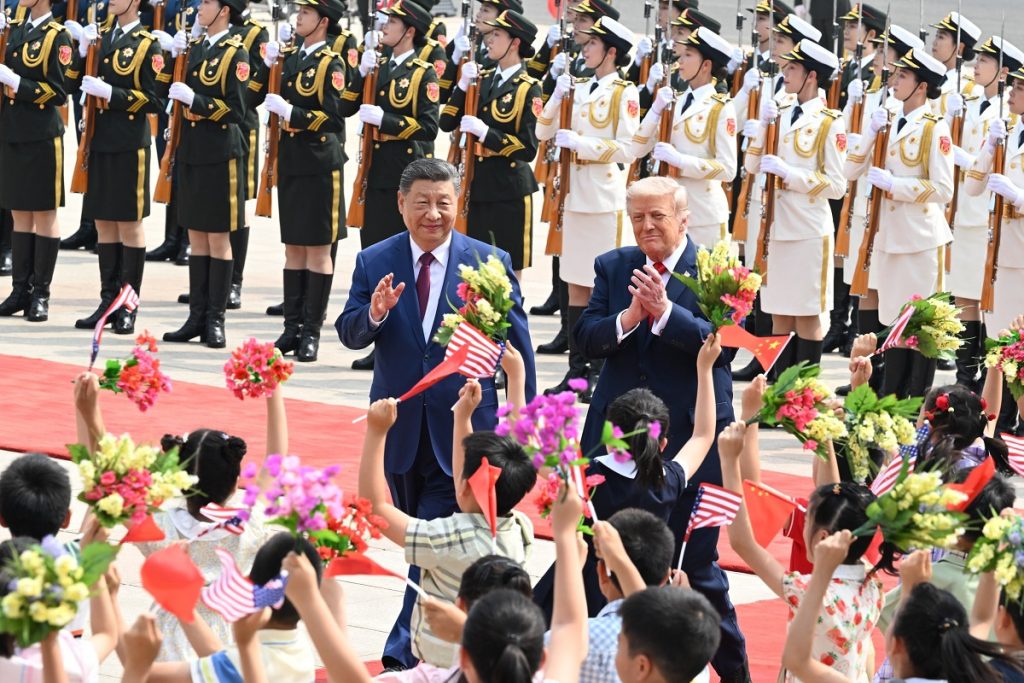
As Chinese President Xi Jinping and US President Donald Trump posed for a photo before the Hall of Prayer for Good Harvests at the Temple of Heaven, a new historic footnote to China-US relations was written on Thursday.

Trump's state visit—the first by a sitting US president in nearly nine years—unfolded at a rapid pace. Tucked between a meeting at the Great Hall of the People and a grand evening banquet, the visit to the 600-year-old Temple of Heaven carried deep symbolic weight. During the tour, Xi explained the site's rich history to Trump, noting that ancient emperors once held state rituals there to pray for national prosperity, social harmony, and favorable weather for good harvests, according to Xinhua.

The Chinese leader said it reflects the traditional Chinese concept that the people are the foundation of a state, adding that the Communist Party of China has inherited and carried forward this people-centered philosophy rooted in the Chinese civilization.

Trump is visiting China from Wednesday to Friday. This is Trump's second visit to China since November 2017.

Chinese analysts noted that the visit and the historic meeting between the two leaders underscored renewed prospects for China-US ties. They added that such progress is widely regarded internationally as a constructive force for safeguarding peace, enhancing security, and supporting global economic growth.

New vision

President Xi held talks with visiting President Trump at the Great Hall of the People in Beijing on Thursday, Xinhua reported.

"Can China and the US overcome the Thucydides Trap and create a new paradigm of major-country relations? Can we meet global challenges together and provide greater stability for the world? Can we build a bright future together for our bilateral relations in the interest of the well-being of the two peoples and the future of humanity? These are the questions vital to history, to the world and to the people," said Xi, per Xinhua.

"I look forward to working together with you to set the course and steer the giant ship of China-US relations, so as to make 2026 a historic, landmark year that opens up a new chapter in China-US relations," he said.

"I have agreed with President Trump on a new vision of building a constructive China-US relationship of strategic stability," Xi said.

The new vision will provide strategic guidance for bilateral relations over the next three years and beyond, and should be welcomed by the people of both countries as well as the international community, he noted, according to Xinhua.

Some US media outlets also noticed the mentioning of this new positioning in the bilateral relationship.

AP said the Chinese side called for stability in its relationship with the US. CNBC, citing an economist at Economist Intelligence Unit, said that it signals a period of "managed stability" that will hold for some time.

"I believe this new positioning will, on the one hand, help enhance the stability of China-US relations, and on the other hand, set forth positive expectations for the future direction of bilateral ties," Wu Xinbo, Dean of the Institute of International Studies of Fudan University, told the Global Times on Thursday.

The idea of enhancing the stability of China-US relations refers to the fact that since the meeting between the two heads of state last October, the relationship has in fact entered a phase of what could be described as "tactical stability." However, because it lacks strategic consensus on major issues and is not supported by substantive cooperation in key areas, it is inherently fragile, Wu continued.

The newly proposed constructive China-US relationship of strategic stability is intended to elevate China-US relations from the level of "tactical stability" to that of "strategic stability." This means that China and the US need to build greater consensus on major issues and engage in active cooperation across many important fields, thereby providing more durable and long-term support for bilateral relations, Wu said.

Taiwan question

Another topic in focus that was addressed during the meeting is the Taiwan question.

When holding talks with Trump on Thursday in Beijing, Xi said that safeguarding peace and stability across the Taiwan Straits is the biggest common denominator between China and the US, per Xinhua.

Noting that the Taiwan question is the most important issue in China-US relations, Xi told Trump that if it is handled properly, the bilateral relationship will enjoy overall stability.

Otherwise, the two countries will have clashes and even conflicts, putting the entire relationship in great jeopardy, Xi said, emphasizing that "Taiwan independence" and cross-Straits peace are as irreconcilable as fire and water, according to Xinhua.

China's position is very clear: the Taiwan question lies at the very core of China's core interests, constitutes the foundation of the political foundation of China-US relations, and represents the first red line that must not be crossed, Diao Daming, a professor at the Renmin University of China in Beijing, told the Global Times on Thursday.

From the US perspective, the Trump administration's national security strategy unveiled in November 2025 outlined preventing conflict over Taiwan as a top priority, which reflects Washington's desire to avoid a crisis in the Taiwan Straits that could draw the US into conflict against its will, Diao noted.

Therefore, peace and stability across the Taiwan Straits are in fact also regarded by the US side as being in America's own interests. This, in turn, forms the "biggest common denominator" that both sides hope to achieve, the expert said.

Constructive engagement

During the meeting, Trump repeatedly called Xi a great leader, Xinhua said.

Trump also highlighted the high-level American business delegation accompanying him, describing their presence as a gesture of respect toward China and its leader. "They look forward to trade and doing business," Trump said, according to Xinhua.

"It's an honor to be your friend and the relationship between China and the USA is going to be better than ever before," Trump said, Xinhua reported.

During the visit to the Temple of Heaven, Trump said the US and China are both great countries, and that both peoples are wise and great. He added that the two countries should deepen mutual understanding and strengthen friendship between their people, per Xinhua.

During remarks at a state banquet Thursday evening, Trump called the day's discussions "extremely positive and productive" and thanked the Chinese leader for the "great honor" of what he described as a "magnificent welcome" ceremony earlier in the day.

Trump drew parallels between the two countries throughout history, calling it "one of the most consequential relationships in world history." He referenced US merchant Samuel Shaw's trade with China 250 years ago, Benjamin Franklin's citations of Confucius in his newspaper, President Theodore Roosevelt's efforts to help establish Tsinghua University, along with more modern examples, CNN reported.

"As allies in World War II, President Franklin Roosevelt's mentions of the brave people of China — that's what they were — drew loud cheers and his speeches in the United States," Trump said, according to a video clip released by China Central Television News (CCTV News).

When speaking with the Chinese media following the meeting, US Secretary of State Marco Rubio commented on the future of China-US relations, describing the bilateral relationship as "constructive" with "continued engagement," noting that "obviously, it's in everyone's interest to see stability in the world."

US Treasury Secretary Scott Bessent also called the relationship "very constructive", according to a report from CCTV News.

Mainstream media such as CNN, New York Times, NBC News and Fox News also updated the meeting on live coverage. Global Times noticed that those media outlets also put the relevant stories on their home page as of press time on Thursday.

CNN described this high-stakes meeting as historic, and the New York Times said that Trump's visit to China is taking him to some of China's most politically and historically significant places, including the Temple of Heaven and the Great Hall of the People.

Several reports also highlighted that former US secretary of state Henry Kissinger visited the Temple of Heaven as many as 15 times, underscoring its enduring symbolic resonance in China-US exchanges.

As China News Service reflected, the Temple of Heaven stands not only as a witness to history, but also as a custodian of the future—an idea reflected in Kissinger's inscription in its guestbook, "A country with such a great past will have an even greater future."