China’s economy gets off to a good start, on track to meet growth target

China's economy has started the year on a strongly recovering trajectory in the first quarter of 2026, with a series of high-frequency indicators highlighting its resilience and potential to achieve the annual growth target of 4.5-5 percent. 

From robust offline consumption and thriving port logistics to vibrant entrepreneurial activity, the latest data shows the giant economy adapting to global uncertainties.

Between January and March, China's offline consumption payment volume rose 3.4 percent year-on-year, with the rate 2.2 percentage points higher than in the fourth quarter of last year. Over the period, the deadweight of cargo ships on departure and arrival at major Chinese ports rose by 9.6 percent and 5.4 percent year-on-year, respectively. Meanwhile, the country's startup activity rose by 8.8 percent year-on-year in the first quarter, according to a report by the Economic Information Daily on Wednesday.

Overall, the economy has started the year positively, with stronger resilience and steady progress. This momentum is rooted in China's structural strengths - including a complete industrial supply chain, a massive consumer market, and a steadfast commitment to opening-up - which underpin its economic stability.

Following years of high-speed growth, China has firmly established itself as the world's second-largest economy. According to the Government Work Report, China targets economic growth of 4.5 percent to 5 percent this year, with room to outperform. This target reflects China's economic fundamentals.

Aiming for a reasonable growth rate will balance growth in economic scale with improvements in quality. This is important for promoting steady social development, elevating public well-being, and supporting the global growth. Bolstered by its strong resilience, the economic growth target is both realistic and pragmatic, which is achievable.

China's technological innovation has emerged as a key driver of innovation. Through large-scale innovation coupled with a "cost revolution," China has transformed clean energy from a niche product into a mainstream solution. The rapid development of photovoltaics, lithium-ion batteries, and new-energy vehicles has significantly lowered the global costs of green power and electric transportation, accelerating global decarbonization.

China's tech innovation is generating significant spillover effects. By significantly reducing global costs, expanding supply, and fostering new market frontiers, China is effectively reshaping global supply chains and accelerating the dual transition toward green and digital development. Furthermore, China's innovative strides are instrumental in bridging the development gap between the North and the South.

In recent years, China's opening-up has evolved from a model focused on the flow of goods and capital to a comprehensive institutional model focused on rules, regulations, management, and standards. The core of this transition lies in streamlining access, expanding opening-up, aligning with international benchmarks, and protecting legitimate rights and interests.

This institutional opening-up is evidenced in multiple aspects. In terms of foreign investment access, China has fully liberalized its manufacturing sector while ramping up opening-up of the service industry. The negative list for foreign investment has been consistently shortened, while increasing the share of products covered by the zero-tariff policy for the least developed countries that maintain diplomatic relations with China from 98 percent to 100 percent.

Notably, the high-quality construction of the Belt and Road Initiative (BRI) has created new opportunities globally.

In the first two months of this year, the China-Europe freight trains operated 3,501 trips and transported 352,000 standard containers of goods, marking year-on-year growths of 32 percent and 25 percent respectively, official data showed. Trade with the BRI partner countries has become an increasingly important driver of China's stable trade growth, which has helped reduce reliance on any single market, foster a more diversified trade structure, and significantly enhance the resilience of the country's foreign trade.

Extending from the BRI, China and Asian countries have significant scope for cooperation in a wide range of sectors, as they share similar development experience and goals.

For example, by staying the course on cooperation and development, China and ASEAN have worked together to advance the building of a closer China-ASEAN community with a shared future. China and ASEAN have remained each other's largest trading partners for consecutive years, making it one of the most dynamic economic regions.

Looking ahead to the 15th Five-Year Plan period (2026-30), China and ASEAN countries are poised to deepen cooperation across five core pillars including institutional opening-up, connectivity, industrial chains, digital-green transition, and financial security. By implementing the China-ASEAN Free Trade Agreement 3.0 and leveraging the benefits of the Regional Comprehensive Economic Partnership (RCEP), the China-ASEAN partnership is creating even more powerful engines for growth.

The article is compiled based on an interview with Li Renliang, deputy dean for Academic Affairs, Graduate School of Social Development and Management Strategy, National Institute of Development Administration, Bangkok, Thailand.

Chinese FM says strategic guidance of top leaders greatest political advantage for developing China-DPRK ties

Chinese Foreign Minister Wang Yi said on Thursday that the strategic guidance of top leaders of the two parties and countries is the greatest political advantage and strongest guarantee for the development of relations between China and the Democratic People's Republic of Korea (DPRK).

Wang, also a member of the Political Bureau of the Communist Party of China Central Committee, made the remarks in talks with DPRK Foreign Minister Choe Son Hui.

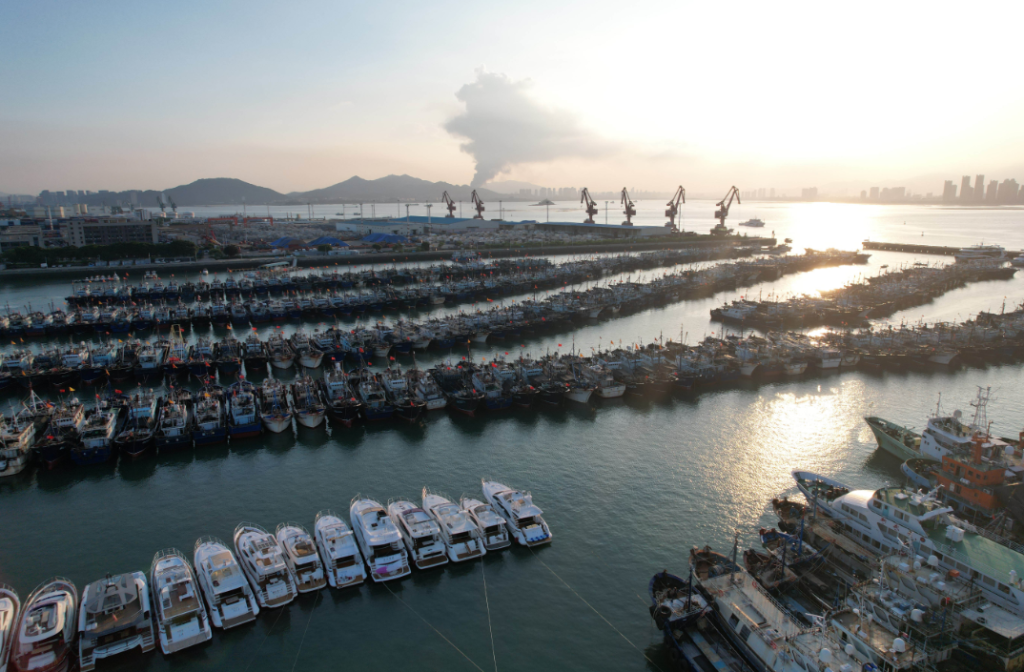
Guangdong, Fujian upgrade emergency response to Level II as Typhoon Podul expected to make 2nd landfall

The flood control authorities in South China’s Guangdong Province and East China’s Fujian Province have upgraded their emergency typhoon response from Level III to Level II, in anticipation of the arrival of Typhoon Podul, according to the local authorities on Wednesday.

In Guangdong Province, the provincial authorities ordered intensified effort to relocate personnel in hazardous areas, and ensure that all be moved to safety by 6 pm on Wednesday. They also called for fully implementing and refining precautionary measures, and effectively ensure the safety of people’s lives and property, according to the Guangdong authorities.

Typhoon Podul, the 11th of the year, made landfall in China’s Taiwan region around 1 pm on Wednesday, the National Meteorological Center (NMC) said. It is forecast to make landfall again along the coastal areas from Xiamen, Fujian to Shantou, Guangdong, during the night of Wednesday to the early morning of Thursday, according to the NMC.

In Chaozhou, Guangdong Province, the city announced Wednesday the suspension of classes for all primary and secondary schools, kindergartens, nurseries, and training institutions due to the typhoon.

Ferry services in parts of Shantou were also suspended on Wednesday due to the typhoon, according to provincial authorities.

It is expected that from Wednesday to August 15, there will be a strong rainfall event in South China and southern Jiangnan. Some small and medium-sized rivers in the heavy rainfall areas may exceed warning levels and experience flooding. The Ministry of Water Resources initiated a Level-IV emergency response for flood control for the provinces of Fujian and Guangdong, South China’s Guangxi Zhuang Autonomous Region, and Central China’s Hunan Province, at 11 am on Wednesday, according to CCTV News.

NBA superstar Stephen Curry invited to experience drone light show, river tour in SW China’s Chongqing in August: official

NBA superstar and Golden State Warriors point guard Stephen Curry has been invited to attend a drone light show in Chongqing, Southwest China, and explore downtown Chongqing this August, according to Guan Hong, a local official, Chongqing Today reported.

During a press event on July 21, Guan announced that Curry will take part in relevant events in Chongqing, with invitations extended for him to enjoy the drone light show and the iconic Chongqing Two Rivers Tour, as seen in the video released by Chongqing Today. 

Curry's Chongqing tour will be livestreamed in an interactive way, the official added. 

From August 18 to 20, 2025, Stephen Curry @StephenCurry30 of the NBA Golden State Warriors, will attend the brand's annual blockbuster event at Chongqing International Expo Center during his Asia tour, according to a post by iChongqing, the city's information run by the Western China International Communication Organization on X. 

Stephen Curry, the NBA's all-time leader in 3-point scoring, is among the most popular NBA players in China, boasting over 5.8 million followers on Sina Weibo, China's X-like platform. 

According to the Golden State Warriors' website, Curry received an enthusiastic welcome upon arriving in China for his 2024 Curry Brand Tour.

Full text: Joint statement on climate change by Chinese and EU leaders

Leaders of China and the European Union issued a joint statement on climate change here on Thursday.

Please see the full text of the statement. 

Joint Statement on Climate Change

China - EU Summit, Beijing, 24 July 2025

The Way Forward After the 10th Anniversary Of the Adoption of the Paris Agreement

On the occasion of the 50th anniversary of the establishment of diplomatic relations between China and the European Union (EU) and the 10th anniversary of the adoption of the Paris Agreement, the Chinese and EU leaders hereby:

Reiterate that in the fluid and turbulent international situation today, it is crucial that all countries, notably the major economies maintain policy continuity and stability and step up efforts to address climate change; 

Recognize that strengthening China-EU cooperation on climate change bears on the well-being of the peoples on both sides and is of great and special significance to upholding multilateralism and advancing global climate governance;

Emphasize that the United Nations Framework Convention on Climate Change (UNFCCC) and the Paris Agreement are the cornerstone of international climate cooperation, and that all parties should adhere to the principle of common but differentiated responsibilities and respective capabilities, in the light of different national circumstances, and implement the UNFCCC and the Paris Agreement in a comprehensive, good-faith and effective manner;

Recognize that the China-EU green partnership is an important part of the China-EU partnership, that green is the defining color of China-EU cooperation, and that the two sides have a solid foundation and broad space for cooperation in the field of green transition.

The two sides agree to demonstrate leadership together to drive a global just transition in the context of sustainable development and poverty eradication and are committed to:

1. Upholding the central role of the UNFCCC and the Paris Agreement and fully and faithfully implementing their goals and their principles;

2. Strengthening results-oriented actions, and turning their respective climate targets into tangible outcomes through systematic policies and concrete actions and measures; 

3. Working with all parties to support Brazil in hosting a successful 30th Conference of the Parties to the UNFCCC (COP30) and promoting ambitious, equitable, balanced and inclusive outcomes of the conference;

4. Accelerating the global renewable energy deployment and facilitating the access to quality green technologies and products, so that they can be available, affordable and beneficial for all countries, including the developing countries;

5. Enhancing adaptation efforts and support, in order to accelerate swift action at scale and at all levels, from local to global; 

6. Submitting before COP30 their respective 2035 NDCs covering all economic sectors and all greenhouse gases and in alignment with the long-term temperature goal of the Paris Agreement; and

7. Enhancing bilateral cooperation in such areas as energy transition, adaptation, methane emissions management and control, carbon markets, and green and low-carbon technologies to drive their respective green and low-carbon transition processes together.

University hails graduate journey from coal mining to doctorate as inspirational

A newly graduated doctoral student recounted in the acknowledgment section of his dissertation his journey from digging coal with his father to becoming a doctor in civil engineering, Xinhua News Agency reported. 
The university where the student studied hailed his experience as a transformative journey paved with perseverance.

Recently, a dissertation acknowledgment describing a journey "from digging coal with my dad to graduating as a doctor" recently gained widespread attention, Xinhua reported.

In the acknowledgement, the author wrote: "At age 12, I began mining coal with my father. At 19, I retook the college entrance examination and enrolled in a junior college. Later, I studied hard to earn a bachelor's degree, majoring in geological engineering, and only after two applications did I get the chance to pursue a doctorate."

“After graduating from high school, I didn't let my parents carry much of the financial burden. All my university winter and summer breaks were spent working," the acknowledgment read. His workplaces included electronics factories, chemical plant construction sites, highways, coal mining operation zones, and campus cafeterias.

Netizens praised the acknowledgment as a genuine portrayal of how education can change one’s destiny, with many admiring how he stayed true to his original aspiration despite the hardships.

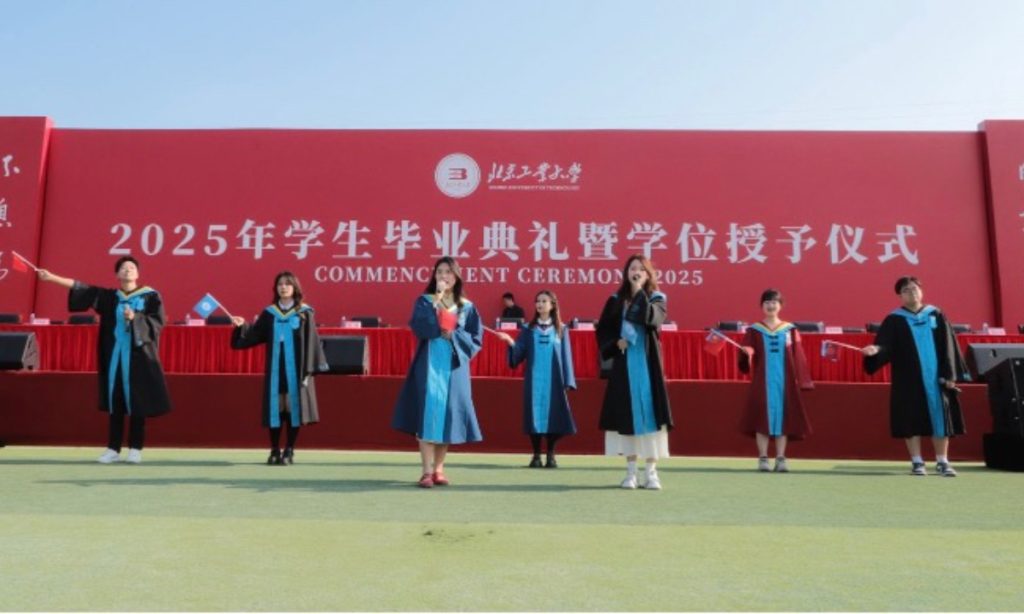
Following the online discussion, Beijing University of Technology confirmed that the author was indeed a student. He studied full-time at the university from September 2020 to June 2025, majoring in civil and architectural engineering, Xinhua reported.

The university honored his journey on its WeChat account, stating "From the coal pits to doctoral graduation – this journey was paved by unwavering persistence." The university emphasized that his story is "not an unattainable legend, but a life's imprint shared by every striver."

Record-breaking rainfall leaves 2 dead, 2 missing in North China

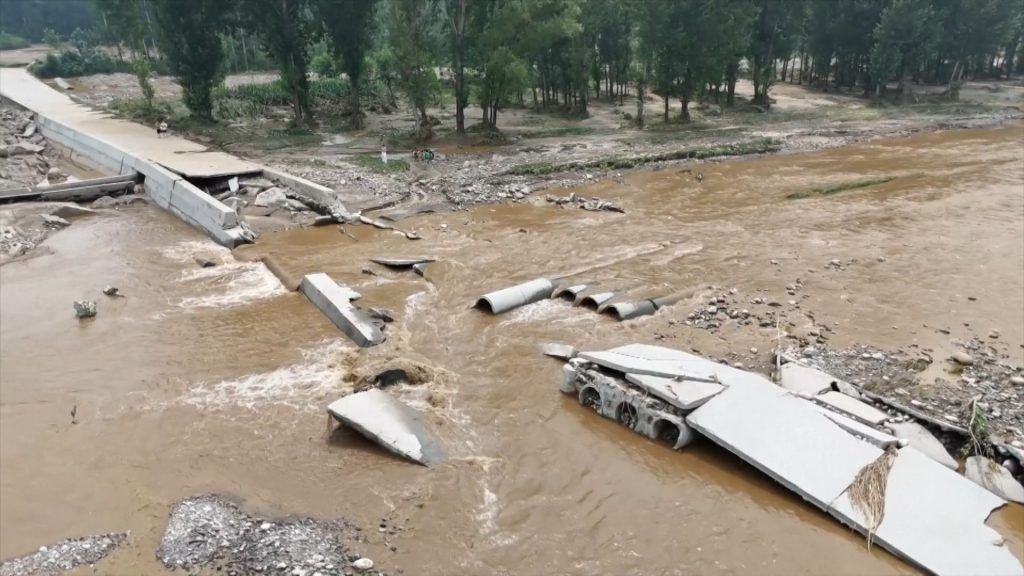
From July 25 to 26, Fuping county in North China's Hebei Province was struck by heavy rainfall, which also lashed Beijing and Inner Mongolia Autonomous Region. The torrential rains had affected 46,235 residents across six townships, resulting in two fatalities and two missing persons, China Central Television (CCTV) reported Sunday, citing data by local authorities.

The report said a total of 4,655 individuals from 1,289 households have been relocated to emergency shelters.  

According to the Baoding meteorological bureau, Fuping experienced an extreme rainstorm that shattered its single-day precipitation record. Monitoring data from national, regional and hydrological stations show that from 5 pm on Friday to 1 am on Saturday, the county received an average rainfall of 140.5 millimeters, CCTV reported.

The heaviest precipitation was recorded at Xizhuang hydrological station, reaching 532 millimeters, while the peak hourly rainfall — 145 millimeters — also occurred there, surpassing all previously documented hourly rainfall extremes in the area, according to the report.

On Sunday evening, Beijing's northern districts experienced intense rainfall with localized extreme downpours. The districts of Miyun, Huairou and Yanqing upgraded their warnings to red alerts — the highest level in China's four-tier rainstorm warning system. This marked Beijing's first regional red alert for heavy rainfall since the beginning of this year's flood season, the Guangming Daily reported.

CCTV reported that torrential rains in northwestern Miyun district triggered severe flooding and landslides, affecting multiple villages. Fengjiayu township was hit the hardest, with roads, power and communication networks cut off in several villages.  

After establishing contact via satellite phone with stranded residents in Fengjiayu, a firefighter rescue team advanced on foot. All affected individuals have now been evacuated and relocated. As of around 1:00 am on Sunday, the flood peak had passed, and water levels began gradually receding, according to CCTV.


Also, according to Xinhua News Agency on Sunday, widespread torrential rain has persisted across Inner Mongolia since Wednesday, triggering flooding in several areas.


In Xilingol League and cities of Ordos and Ulanqab, more than 22,000 people have been relocated. Over 14,000 pieces or sets of machinery, 737 drainage devices and 8,287 sets of rescue supplies have been deployed across the region, according to the regional emergency management department.


From 8:00 am on Friday to 8:00 am on Saturday, precipitation was recorded at 1,854 stations across 12 leagues or prefecture-level areas and 92 banners or counties in Inner Mongolia, with heavy rainfall concentrated in Xilingol League and the cities of Ulanqab, Hohhot and Tongliao, said local meteorological authorities.


In response, the region has activated Level-IV alerts for flooding and geological disasters and a Level-III alert for rainstorms. Currently, it has also allocated 34,000 items or sets of relief supplies to support its affected areas. 

China will steadfastly strive to peak carbon dioxide emissions before 2030 and achieve carbon neutrality before 2060: Chinese FM

Addressing a media question over Teresa Ribera, Executive Vice President of the European Commission, telling the media that China will produce a new national plan to tackle climate change, which would be announced in autumn, whether China has set a final timeline for its climate goals. Additionally, as China and the EU are engaged in climate negotiations, whether both sides will issue a joint statement at the upcoming China-EU summit next week, Chinese Foreign Ministry Spokesperson Lin Jian said on Tuesday that Chinese Vice Premier Ding Xuexiang held the sixth China-EU High-Level Environment and Climate Dialogue with Ribera, and the Chinese side has already released information about it, which the reporter can refer to.

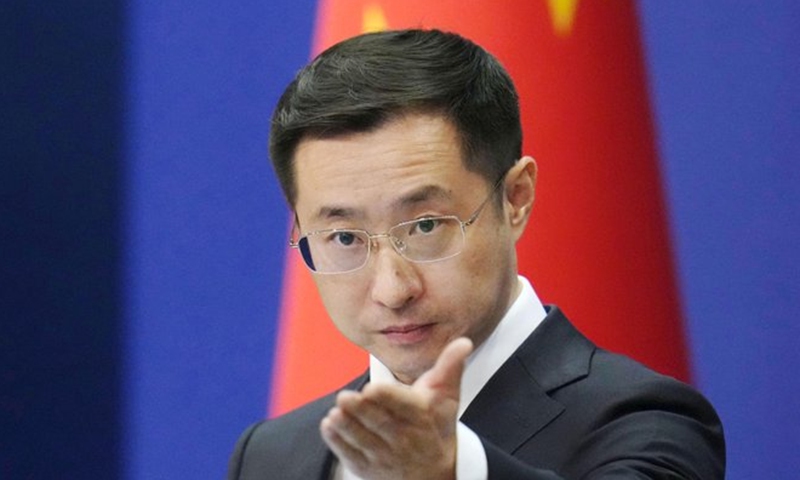
Lin emphasized that China has always actively implemented the United Nations Framework Convention on Climate Change and the Paris Agreement, and is vigorously promoting green and low-carbon development. Regardless of how the international situation changes or how other countries adjust their policies, China will steadfastly strive to peak carbon dioxide emissions before 2030 and achieve carbon neutrality before 2060, said Lin.

PCG 9701 vessel makes dangerous maneuvers, 'will trigger China's strengthened rights protection efforts': analyst

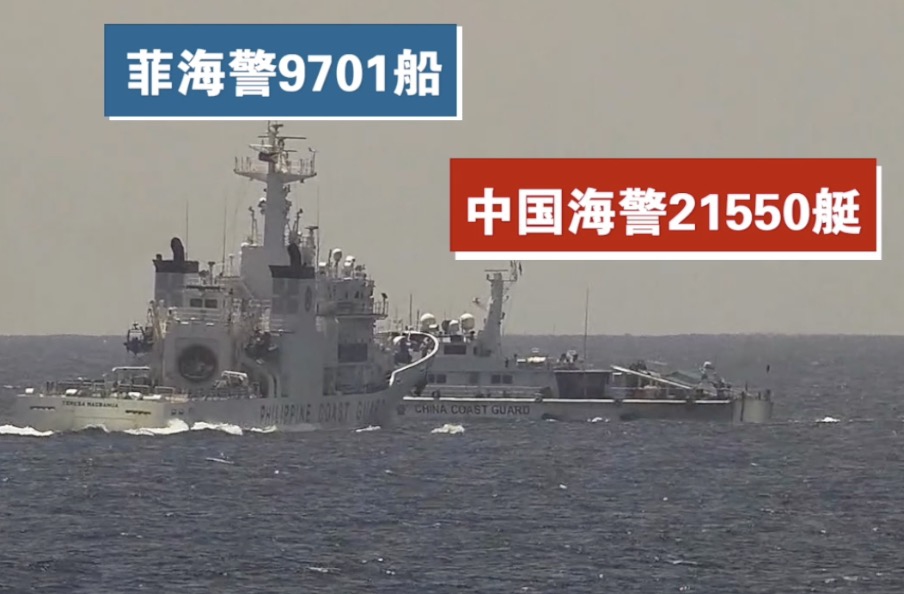
On Tuesday morning, Philippine Coast Guard vessel 9701, operating in the waters near China's Huangyan Dao in the South China Sea, deliberately provoked China Coast Guard (CCG) vessels 21550 and 5009, which were conducting rights protection and law enforcement operations in the area. 

The vessel repeatedly conducted high-speed transits through the stern areas of China Coast Guard law enforcement vessels while dangerously approaching them, with the closest distance being only some 100 meters. This act seriously threatened the navigation safety of the CCG vessels.

Analysts told the Global Times that unlike the previous "hit-and-run" style provocations aimed at portraying an image of "victim," the Philippine's provocative behavior this time was more "arrogant and unreasonable." In connection with a series of recent provocations by the Philippines in the South China Sea, the Philippines has shown a new trend of ignoring international rules, which will undoubtedly force China to further step up rights protection and law enforcement efforts in the South China Sea.

Images sent back by the Global Times reporter dispatched to Huangyan Dao show that at around 10:30 am on Tuesday, while "escorting" two official vessels of the Philippine Bureau of Fisheries and Aquatic Resources to operate in the waters near China's Huangyan Dao, Philippine Coast Guard vessel 9701 provoked CCG vessels 21550 and 5009, which were carrying out rights protection and law enforcement operations in the area. 

The images show that the vessel repeatedly made large-angle course changes at close range and conducted high-speed transits through the sterns of China Coast Guard vessels 21550 and 5009, with the closest distance to the two ships being about 100 meters.

Track charts obtained by the Global Times from the scene also show that within about half an hour, Philippine Coast Guard Ship 9701 was in a state of high maneuverability and irregular navigation, with a haphazard route, seriously disrupting the navigation path of CCG vessels 21550 and 5009, which were sailing normally.

"The Philippines' actions are extremely egregious in nature and seriously endangered the safety of CCG vessels," Yang Xiao, an expert on maritime issues at the China Institutes of Contemporary International Relations, told the Global Times on Tuesday. 

He noted that Philippine vessel 9701 has a displacement of 2,300 tons, while CCG vessels 21550 and 5009 are hundred-ton-class. During the enforcement operation by the two Chinese vessels, the Philippine vessel repeatedly made sharp turns at high speed, at one point closing to within just 100 meters of the Chinese boats. "This constitutes an extremely dangerous and malicious act of provocation. Any collision would have led to catastrophic consequences," the expert stressed.

He further stated that despite the large tonnage of its vessel, the Philippine side made multiple close-range course changes and sailed at high speed. This provocative act by the Philippines is unprecedentedly aggressive, differing from its previous behaviors.

Considering recent actions made by the Philippines, it is clear that Manila has not only disregarded China's restraint, but also completely ignored relevant international rules, attempting to continuously escalate tensions in the South China Sea. This series of provocations warrants high vigilance.

"While the Philippines has been trying to paint China as a 'bully' in the South China Sea on the international stage, the reality is that China has exercised maximum restraint in its rights protection and law enforcement operations, striving to avoid further escalation," said Yang. 

He emphasized that the reckless maneuvers of Philippine vessel 9701 had seriously endangered the safety of CCG vessel 21550. "The Philippine side really needs to think carefully: if it causes the situation to deteriorate further, will it end up shooting itself in the foot?"

Chinese FM responds to Trump's claim that China will soon sentence people to death for fentanyl manufacturing and distribution

In response to the claims made by US President Donald Trump saying that he thinks China will soon sentence people to death for fentanyl manufacturing and distribution, and he expressed optimism about the prospects of reaching an agreement with Beijing on illicit drugs, Chinese Foreign Ministry spokesperson Lin Jian said that China has repeatedly stated that fentanyl is the US' problem, not China's. The responsibility lies in the US itself.

The US has ignored China's goodwill and insisted on imposing fentanyl tariffs on China, which severely impacts China-US dialogue and cooperation on counternarcotics, and significantly harms China's interests. If the US genuinely wants to cooperate with China, it should face the objective facts and engage in dialogue with China on an equal, respectful, and mutually beneficial basis, said Lin.